
Hieromartyr
Zosimas Pepenin
Priest
Priest born in 1888 to a peasant family, who died a martyr in the Karlag camp in 1937; canonized in 2000.
- Feast
- October 20old style November 2
- Reposed
- 193720th century
- Place
- Karlag
- Order
- Martyrs
Life
Holy Hieromartyr Zosimas Pepenin was a Russian priest, born in 1888 to a peasant family in the village of Pepenino and shot on 2 November 1937 at Dolinka, in the Karlag camp in Kazakhstan. The Russian Church numbered him among the saints in 2000, for veneration throughout the Church. He is commemorated on 20 October (2 November by the new calendar) and in the Synaxis of the New Martyrs and Confessors of Russia.
He studied at the parish school, and in his youth spent a year as a novice in a monastery. In 1913 he graduated from the Irkutsk seminary. He married the daughter of the Irkutsk archpriest Michael Chirtsev. From 1913 to 1917 he served as priest in the village of Borisovskoe, near Barnaul.
He was first arrested in April 1921 and imprisoned in the Barnaul prison. He was released in 1922 for good work in the prison cobbler's workshop and then served in Borisovskoe until 1923. He was arrested a second time in 1922, for not paying an increased tax imposed on priests, and was released in 1924, again for his work. After his release he served for a time at Borisovo, and in 1925 he moved to Irkutsk and soon to Moscow. From 1925 to 1927 he was rector and the only priest of the church in the village of Koza (today in Yaroslavl region), then priest in the town of Lyubim. From 1928 to 1929 he served at the church of the Nativity of the Mother of God in the village of Shapkino, in the Kovrov district. From 1929 to 1935 he was priest at the church of the Nativity of the Mother of God in Krylatskoye.
He was arrested a third time in April 1935, on Holy Saturday. On 11 October he was sentenced by the Special Council of the NKVD, under article 58-10, to three years of imprisonment, on a charge of anti-Soviet agitation. He spent the first eight months of detention in the Butyrka prison in Moscow. Then he was sent to Karlag, in the Karaganda region of Kazakhstan, where he served his sentence in the village of Dolinskoe, until 19 September 1937.
On 19 September 1937, on the very day of his release, he was arrested a fourth time in the camp, on a charge that, having close ties with prisoners hostile to Soviet power, he had carried on agitation, saying that under Tsar Nicholas the working class lived better. By decision of the NKVD troika of the Karaganda region on 31 October 1937 he was sentenced to death, under article 58, points 10 and 11, for "anti-Soviet monarchist agitation". He was shot on 2 November 1937 at Dolinka, and the place of burial is unknown.
He was rehabilitated by the prosecutor's office and the KGB administration of the Karaganda region on 30 December 1957, and on 2 December 1989 by a conclusion of the Moscow prosecutor's office. He was numbered among the New Martyrs and Confessors of Russia, for veneration throughout the Church, by the act of the Jubilee Council of Bishops of 13 to 16 August 2000 in Moscow.
Commemorated the same day October 20
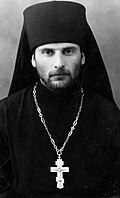 Gabriel of GeorgiaFool-for-Christ · Georgian MonkOct 20
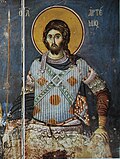 Artemius of AntiochGreat Martyr · Roman general, commander of EgyptOct 20
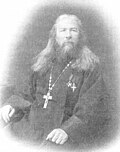 Nicholas LyubomudrovHieromartyr · PriestOct 20
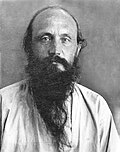 Herman KokelHieromartyr · Bishop of BlagoveshchenskOct 20
- John of BakuNew Martyr · Priest of BakuOct 20
- BarsabiasVenerable Martyr · Abbot and missionary in PersiaOct 20
- Acca of HexhamSaint · Bishop of HexhamOct 20
- Aderald of TroyesVenerableOct 20
- Aidan of MayoSaint · Bishop of MayoOct 20
- Alexander OrlovHieromartyrOct 20
- BachthesonMartyrOct 20
- BasilSaint · Bishop of TrebizondOct 20