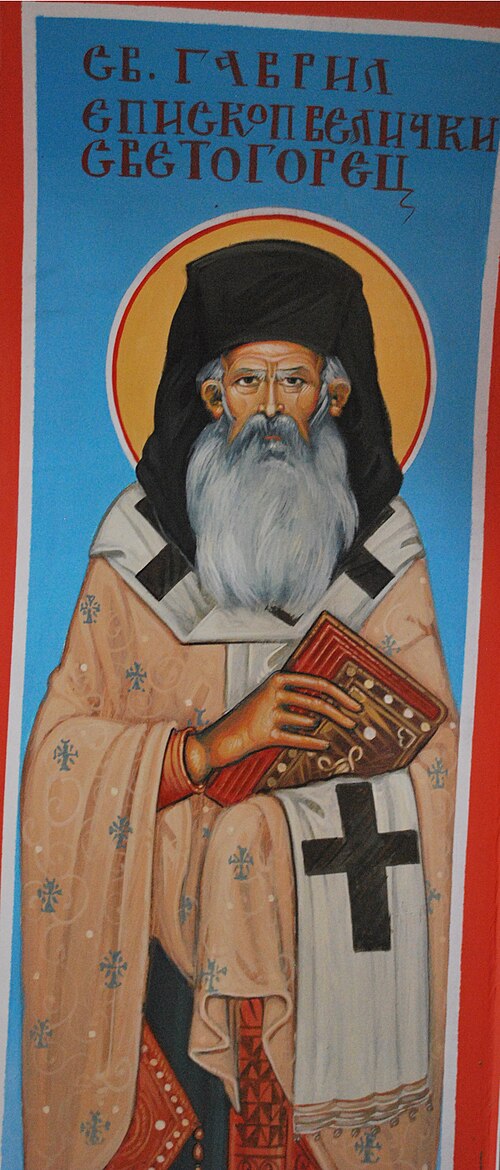
Saint
Gabriel the Athonite
Macedonian bishop
Monk and ascetic on Mount Athos, later a bishop; canonized by the Macedonian Orthodox Church in 2017.
Life
Saint Gabriel the Athonite, also called Gabriel of Veles, was a monk, ascetic and bishop of the Macedonian Orthodox Church, abbot of Lesnovo monastery for the last fifteen years of his life. A former partisan, then a sculptor and teacher, he chose the monastic life and lived for years on Mount Athos, and on his return was spiritual father to many believers in the time of communist atheism. He reposed on 12 January 1990, and in 2017 he was canonized by the Macedonian Orthodox Church, the Archbishopric of Ohrid.
Youth and art
Born Mijalče Parnadžiev, he came into the world on 10 March 1926 at Štip, in the Kingdom of Serbs, Croats and Slovenes, today North Macedonia, in a family of craftsmen. His parents, Metodij and Gorica, were deeply devout Orthodox Christians; his father, a pious man, often stood long at prayer in the night and taught his son the importance of faith. He attended primary school and gymnasium in his native town and became known for gentleness, obedience and a talent for sculpture.
In 1944 he joined the communist resistance as a partisan in the Second World War. In 1947 he served in a border defence unit at Delčevo, Kavadarci and on Mount Kajmakčalan, as clerk and secretary of the youth organization, and was discharged as a sergeant with the Order of Merit for the People. According to the hagiography of the Macedonian Church, he was recommended for membership in the Communist Party but was excluded because he went to church. After the war he worked for a time at the people's committee in Štip and took part in public works, including at New Belgrade. He studied at the faculty of arts of the University of Belgrade and graduated in sculpture in 1955. He was professor of art and art history at the gymnasium and teachers' school in Štip; Borko Lazeski called him one of the most capable teachers in Macedonia. He made sculptures that were placed in the town's parks and elsewhere, and Mayor Risto Kadifkov thanked him for his contribution to beautifying Štip. Only one survives, at the entrance of the "Makedonka" textile factory. In 1959 he went with a group of teachers to the World Exhibition in Brussels, and he had also been to Paris. In 1960 he moved to Skopje, where he worked as a sculptor; among his works are the monument "Fallen Patriots of Kratovo" and "The Face of the Worker".
On Mount Athos
In 1963 a new period began in his life. Following the word "render to Caesar what is Caesar's and to God what is God's", he asked Greece whether he could go to Athos and stay there. At first he was promised that he could go, and he stopped at the Serbian monastery of Hilandar. But things changed: the political situation in Greece was difficult, and he, coming from Macedonia, was suspected of being sent by Bishop Dositej Stojkovski to found a Macedonian monastery. The story says that he walked from Thessalonica toward the Holy Mountain, three days and three nights, alone, and that on reaching the shore of the White Sea, as he bent to wash his face, he saw a woman looking gently at him who then vanished; Fr Gabriel believed it was the Mother of God, since women are not allowed on Athos.
He was tonsured a monk at the monastery of Saint Paul, receiving the name Gabriel, after the archangel Gabriel. He was never formally accepted into any monastery but was always welcomed as an honoured guest. He lived in a cave and often under the open sky, in the Garden of the Mother of God, visited all the Athonite monasteries and spent the longest time at the Russian skete of Kamena, under the guidance of the old monk Tatian Ivanov. It is told that twice there was an attempt to expel him from Athos: once a spider spun a web so large that his pursuers could not see him, and a second time snakes protected him. He asked for Greek citizenship in order to stay, but the request was refused, and in 1971 he returned to Macedonia.
Abbot of Lesnovo
After his return he lived the monastic struggle in several monasteries around Skopje: Pobožje, Matka and Markov. In December 1975 he became abbot of Lesnovo monastery. His father also came to the monastery and became a monk with the name Kiril. On 30 June 1981 the Holy Synod of the Macedonian Church made him archimandrite. He went on living at Lesnovo as hermit and ascetic, pressed for the renewal of monasticism in Macedonia, became spiritual father of many believers and taught them the Jesus Prayer. In an age of atheism he was a true ascetic and bearer of the hesychast tradition, which prepared the revival of monasticism in present-day North Macedonia.
Shortly before his death, on 28 August 1989, the feast of the Dormition of the Mother of God, the Synod consecrated him bishop with the title of Veles, though disputes within the Church overshadowed the consecration. He reposed on 12 January 1990, in his cell at Lesnovo, and was buried beside the main church of the monastery. He was a prolific author of spiritual prose and poetry: "33 Songs for Jerusalem" (1975), "Holy Mountain, Heavenly Land" (1978), "Before the Greatest Jubilee of Man" (1980), "The Two Thousand Years of Christianity Is at the Threshold" (1981), "The Miracles of the Mother of God" (1984, translation), "Rules and Regulations of the Orthodox Church on Fasting" (1994) and "Father Cherubim" (1997).
Veneration
Many have testified that miracles occur at his grave and in prayers addressed to him, and his grave at Lesnovo has become a place of pilgrimage. On 28 May 2017 the Synod of the Macedonian Orthodox Church canonized him, at the cathedral of Saint Nicholas in Štip, in the Bregalnica diocese, where his relics were brought from Lesnovo. He is commemorated each year on 12 January. The relics are kept at Lesnovo monastery and in part at Simonopetra monastery on Athos.
Commemorated the same day July 12
 VeronicaSaint · Woman of JerusalemJul 12
 John the IberianVenerable · Founder of Iviron MonasteryJul 12
 Michael MaleinosVenerable · Monk in Asia MinorJul 12
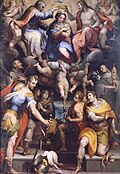 Nabor and FelixHoly MartyrsJul 12
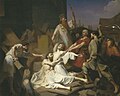 Theodore and John the VarangiansHoly Martyrs · Varangian martyrs of KievJul 12
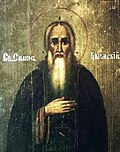 Simon of VolomskVenerable · Founder of the Volomsk HermitageJul 12
- GolindouchConfessorJul 12
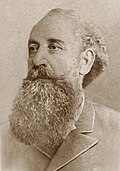 Philemon KoridzeRighteous · Opera singerJul 12
- Arsenius of NovgorodVenerable · Recluse and monastery founderJul 12
 Ansbald of PrümVenerable · Abbot of PrümJul 12
- BalaySaintJul 12
- Colman son of CronVenerableJul 12