Confessor
Golindouch
Persian noblewoman who left Zoroastrianism, baptized Maria, persecuted and tortured under Khosrow; died in 591.
- Feast
- July 12old style July 25
- Reposed
- 5916th century
- Place
- Manbij
- Order
- Confessors
Life
Saint Golindouch (Persian Golen-dokht, Daughter of Roses), baptized Maria, was a Persian noblewoman, wife of a Zoroastrian aristocrat, who converted to Christianity in the time of Shah Khosrau I. She was imprisoned for years and tortured, escaped and professed the faith in Persia, then died in 591. She is commemorated in the Orthodox Church, according to some sources as a martyr, according to others as a confessor. She is commemorated on 12 July (25 July by the new calendar).
Life
Her story is preserved in a Greek life written by Eustratius of Constantinople, a contemporary of hers, who used an older life in Syriac, written by Bishop Stephen of Hierapolis, now lost, and who consulted Bishop Domitian of Melitene, who had known the saint. A Georgian version also survives. Theophylact Simocatta wrote of her at length and Evagrius Scholasticus briefly. It reached Russia through the Lives of the Saints of Demetrius of Rostov. The Byzantine scholar Nikephoros Kallistos Xanthopoulos said, in the fourteenth century, that her father was named Asmodoch and her mother Mizuch and that she had two sons.
Golindouch was of noble family, from Babylon according to one source, and the wife of a Persian aristocrat, a Zoroastrian. One source says she lived three years in marriage with a magus and that after a vision she left her husband. In the time of Shah Khosrau I she converted to Christianity and received at baptism the name Maria. After many exhortations by her husband and the shah that she return to Zoroastrianism, she was imprisoned and remained in prison eighteen years, under Khosrau and his successors, in the Fortress of Oblivion according to one source. Many Persians, amazed at her patience, received the faith of Christ. After eighteen years the Byzantine envoy Aristobulus visited her and told other Greeks about her. After his departure her sufferings increased, as she was tortured several times, it is thought at the demand of the Zoroastrian priests. At last she escaped from prison and hid, helped by the few local Christians.
In a new turmoil in Persia the Byzantine emperor Maurice helped Shah Khosrau II Parviz take the throne. The new shah stopped the persecution, and from Byzantium came the bishop Domitian of Melitene. Maria no longer had to hide and professed the faith openly. She then went to Byzantium and on pilgrimage to Jerusalem, where, according to one source, she refuted the heresy of Severus. On her return she stopped at Hierapolis (today Manbij, Syria), where she met Bishop Stephen.
Her death and place in the calendar
The sources do not agree on the place and circumstances of her death: according to the Russian source she died in an unnamed place near Nisibis, the funeral being held in the church of Saint Sergius, while according to the English and Serbian sources she died in 591 at Mabbog (Hierapolis). One of them calls her a martyr, with a public death, while another does not mention a martyr's death. Demetrius of Rostov writes that she was counted among the martyrs in the Kingdom of Heaven, but in Orthodox texts today she is often called a confessor, and the Orthodox Encyclopedia calls her a martyr for her many sufferings. Scholars say the account shows good knowledge of political facts, among them the overthrow of Hormizd IV and the rise of Khosrau II in 590-591, but note that in Persia not every form of Christianity was forbidden, and it was the Orthodox Church that was persecuted, its members being regarded as allies of Byzantium.
Commemorated the same day July 12
 VeronicaSaint · Woman of JerusalemJul 12
 John the IberianVenerable · Founder of Iviron MonasteryJul 12
 Michael MaleinosVenerable · Monk in Asia MinorJul 12
 Nabor and FelixHoly MartyrsJul 12
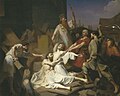 Theodore and John the VarangiansHoly Martyrs · Varangian martyrs of KievJul 12
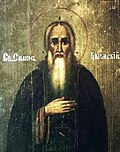 Simon of VolomskVenerable · Founder of the Volomsk HermitageJul 12
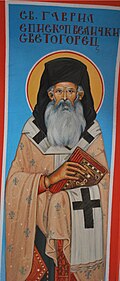 Gabriel the AthoniteSaint · Macedonian bishopJul 12
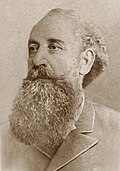 Philemon KoridzeRighteous · Opera singerJul 12
- Arsenius of NovgorodVenerable · Recluse and monastery founderJul 12
 Ansbald of PrümVenerable · Abbot of PrümJul 12
- BalaySaintJul 12
- Colman son of CronVenerableJul 12