
Saint
Gerontius of Moscow
Metropolitan of Moscow
Metropolitan of Moscow and all Rus from 1473 to 1489, the fourth appointed without the approval of Constantinople.
Life
Saint Gerontius of Moscow was Metropolitan of Moscow and all Rus' from 1473 until his death in 1489, the fourth metropolitan set in Moscow without the approval of the Ecumenical Patriarch of Constantinople, as had been the norm. The Russian Church canonized him for church-wide veneration on 3 February 2016, and he is remembered on 28 May.
Shortly before 1445 he became abbot of the Simonov monastery of the Dormition in Moscow, and in 1447 was raised to archimandrite. He took part in the council in Moscow that sent Dmitry Shemyaka a letter demanding that he make peace with Vasily II, under threat of excommunication. In 1453 he was consecrated bishop of Kolomna, and on 29 June (7 July) 1473, after the death of Metropolitan Philip, he was raised to Metropolitan of Moscow and all Rus'. His time was marked by intensive building of churches and other buildings for the metropolia: the metropolitan's house was rebuilt; in 1484 the foundation was laid of the stone metropolitan cathedral of the Deposition of the Robe, which he consecrated in 1486; the building of the present Dormition cathedral was completed.
He often clashed with Grand Prince Ivan Vasilievich on church questions, but supported his military and state undertakings. In October 1477 he blessed the grand prince's campaign against Novgorod. During the Great Standing on the river Ugra, in 1480, he spoke for resisting the Golden Horde to the very end. In 1487 Archbishop Gennady of Novgorod reported to the grand prince and the metropolitan the heresy of the Judaizers that he had uncovered, but no serious measures were taken then; Gerontius held a moderate position toward the heresies that already troubled Moscow and Novgorod. In 1482 he left his post for a time but returned at the request of the grand prince. Several letters and epistles of his had no success, for they were distinguished neither by depth of thought nor by eloquence. He died on 28 May (6 June) 1489 and was buried in the Dormition cathedral in the Moscow Kremlin.
Commemorated the same day May 28
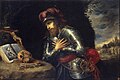 William of GelloneVenerable · Duke of Toulouse, monkMay 28
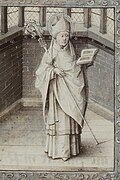 Germain of ParisSaint · Bishop of ParisMay 28
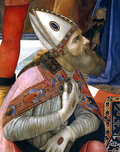 Justus of UrgellSaint · Bishop of UrgellMay 28
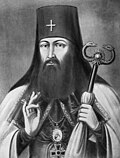 Barlaam of TobolskSaint · Archbishop of TobolskMay 28
 Emilian of CagliariHieromartyr · Bishop of CagliariMay 28
 Ignatius of RostovSaint · Bishop of RostovMay 28
 Nicetas of ChalcedonConfessor · Archbishop of ChalcedonMay 28
 Podius of FlorenceSaint · Bishop of FlorenceMay 28
 Elena of DiveevoVenerable · Virgin at DiveevoMay 28
 Helikonis of CorinthMartyr · Martyr of CorinthMay 28
- HelladiusHieromartyr · Bishop and martyrMay 28
- Helladius, Crescentius, Paul and DioscoridesHoly MartyrsMay 28