Saint
Gregory the Teacher
Metropolitan of Ungro-Wallachia
Metropolitan of Ungro-Wallachia from 1823 until his death in 1834; canonized by the Romanian Church in 2005.
Life
Holy Hierarch Gregory the Teacher (Gregory IV, in the world George) was born in 1765 at Bucharest and fell asleep on 22 June 1834, in the same city. He was metropolitan of Ungro-Wallachia from his enthronement on 11 January 1823 until his death. He was canonized by the Holy Synod of the Romanian Orthodox Church at its session of October 2005, with his feast on 22 June.
Youth and printing
He was born at Bucharest, with the baptismal name George. He attended the school of Saint Sava, where he studied theology, Latin and Greek. At the same time there were at Saint Sava Moldavian youths sent by Metropolitan Veniamin, among them the monk Gherontie, with whom Gregory formed a friendship lasting to death. After their studies he went with Gherontie to Neamț Monastery, where he was tonsured a monk. Having become abbot, Gherontie worked with Gregory on the translation of books of the Holy Fathers. At the request of Metropolitan Dositheus Filitti, the two monks, prized for their skill in translating church books, were sent from Neamț to Bucharest, where they stayed until 1805, translating and printing service books. In 1799 Gregory printed at Bucharest "A Book Profitable for the Soul", and in 1801 the Kyriakodromion on the Gospels.
In 1805, called by Metropolitan Veniamin, Gregory and Gherontie went to Iași, where they worked at the printing press of the Metropolis. When Veniamin withdrew to Neamț in 1808, they followed him. Then they set out on a journey to the Holy Mountain Athos. On the way, Gherontie died as a result of the torments suffered from robbers, near Philippopolis. Gregory returned to Bucharest, where Metropolitan Nectarie appointed him teacher at the clerical school at the Antim monastery. In 1819, being a hierodeacon, he withdrew to the Căldărușani monastery and led a secluded life.
The metropolitan
After the events of 1821 he was chosen metropolitan by the princely divan and confirmed by the prince Grigore IV Ghica, at the beginning of 1823. On 9 January he was ordained hieromonk and made archimandrite, on 10 January he was ordained bishop, and on 11 January 1823 he was enthroned metropolitan of Ungro-Wallachia. In the first years of his rule he took care to fill the suffragan sees with Romanian bishops, appointing Grigorie Rîmniceanu to Argeș, in February 1823, Neofit Gianoglu to Râmnic, in April 1824, and Chesarie Căpățână to Buzău, in April 1825. In 1824 he asked the Patriarchate of Constantinople to stop the ordinations of priests for Wallachia carried out across the Danube.
He took measures to limit fiscal abuses against the clergy, abolishing some taxes and regulating the fees demanded by archpriests. As first ephor of the schools he supported the organisation of education and the initiatives for the development of Romanian schools, sending Petrache Poenaru in 1824 to study in Western Europe.
Exile
During the Russian occupation of the Principalities (1828 to 1834) he came into conflict with the military administration over the imposition of new obligations on priests and the reintroduction of taxes. On 24 January 1829 he was removed from the throne and sent into exile at Chișinău, the bishop Neofit of Râmnic being locum tenens of the metropolitan throne. He left Bucharest on 10 February 1829 and arrived at Chișinău on 29 March 1829, after a stay in quarantine at Leova. He remained in exile until December 1831, keeping in touch with the leadership of the Metropolis and continuing translations. He left Chișinău on 12 January 1832 and was held at Buzău, where he founded a printing press. On 13 April 1833 he withdrew to the Căldărușani monastery, and on 22 August 1833 he was called back to the throne.
Repose
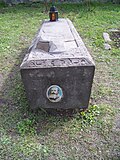
In 1834 work began on the restoration of the metropolitan cathedral in Bucharest. He fell asleep on 22 June 1834. He was first buried near the metropolitan cathedral, but after seven years his remains were taken to the Căldărușani monastery, where they are kept to this day.
Commemorated the same day June 22
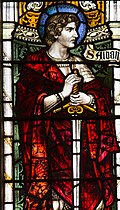 AlbanMartyr · First Martyr of BritainJun 22
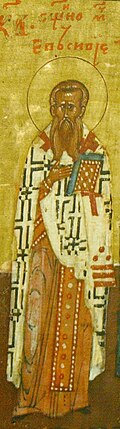 Eusebius of SamosataHieromartyr · Bishop of SamosataJun 22
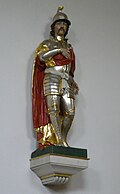 Acacius of ArmeniaMartyrJun 22
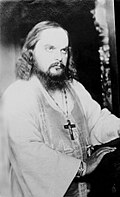 Sergius MechevHieromartyr · Archpriest in MoscowJun 22
 Mikheil KuloshviliSaint · Ingiloi Georgian priestJun 22
- Peter of ChagraVenerableJun 22
- Zeno of PhiladelphiaMartyrJun 22
 Aaron of AlethVenerableJun 22
- AmbrosiosNew MartyrJun 22
- BasilVenerableJun 22
- Basil PatelariyskyVenerableJun 22
- ConsortiaVenerableJun 22