Venerable Martyr
Hierotheus Glazkov
A monastic martyr of the Russian Church, commemorated in the Orthodox calendar.
Life
Holy Venerable Martyr Hierotheus Glazkov (1889-1937), a hieromonk, was a monk of the Holy Trinity monastery of Paul of Obnora and, after its closing, served as hieromonk in the Yaroslavl diocese. In 1930 he was arrested and sentenced to five years in the camps. After his return he continued to preach fearlessly, rebuking the godless authorities. He was arrested again in 1937 for counter-revolutionary agitation. He refused to give testimony against others, was sentenced to death and executed on 4 September 1937. He was glorified in the year 2000.
In the world he was named Nicander Arsenievich Glazkov. He was born on 27 October 1889 in the village of Pankratovo in the Vologda district, in a peasant family, and finished the zemstvo primary school. At nineteen he resolved to leave worldly life and entered the brotherhood of the Holy Trinity monastery of Paul of Obnora, in 1908, in the time of Hegumen Nikon (Chulkov). There he did his first obediences, as baker and sacristan, for some eleven years. In 1919, at thirty, he was tonsured into the mantle with the name Hierotheus (sanctified by God), in memory of the Holy Hieromartyr Hierotheus, bishop of Athens. In 1920 Archbishop Alexander (Trapitsyn) of Vologda ordained him hierodeacon. From 1921 to 1924 he was the monastery's sacristan.
The decision of the presidium of the Gryazovets executive committee of 25 and 26 March 1924 on the closing of monasteries was carried out at Paul's monastery on 13 April 1924. The next day all the monks were ordered to leave and not to come within five kilometres of the monastery. The young hierodeacon bore this tragedy hard and wrote in a poem of the evil people who had destroyed the beautiful flower garden, torn up everything by the root with brutality, and now the monastery stands like an orphan. In 1925 he was received into the clergy of the town of Lyubim, Yaroslavl province. On 25 May of the same year Bishop Sergius (Melnikov) of Lyubim ordained him hieromonk and appointed him rector of the cemetery church of the Entry into the Temple. After three years of diligent service he received the epigonation.
In 1930 the father was arrested and, for anti-Soviet activity, sentenced to five years in the camps. Returned in March 1935, Metropolitan Paul (Borisovsky) of Yaroslavl and Danilov sent him to the same place of service, the church of the Entry. On 4 March 1936 he received the gold pectoral cross. A true monk and pastor, in his sermons he fearlessly rebuked the godless authorities, prophesied their end and the coming war, glorified the new martyrs killed by them and urged believers to rally round the Church. The authorities did not remain without response: on 27 July 1937 a new arrest followed, then transfer from Lyubim to the Yaroslavl prison, interrogations, demands for testimonies about clergy he knew. The hieromonk firmly refused to give such testimonies. The indictment said that he was an active member of a counter-revolutionary group, spread rumours of war and the collapse of Soviet power, carried on counter-revolutionary agitation among the faithful, and praised enemies of the people and Trotskyists. On 19 August 1937 the troika of the UNKVD of Yaroslavl region sentenced him to death, and on 4 September 1937 he was shot at Yaroslavl. The place of his burial is not known.
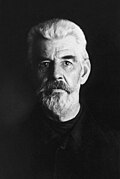
He was rehabilitated on 26 April 1989, and on the basis of the research of the canonisation commission of the Yaroslavl diocese, the Jubilee Council of Bishops of the Russian Church in the year 2000 numbered him among the holy venerable martyrs in the host of the New Martyrs and Confessors of Russia. On 5 February 2002 researchers from Moscow and Vologda found in Lyubim a photograph of the saint, and from it an icon was painted, placed for veneration in the Dormition church of the monastery of Paul of Obnora; for the day of commemoration a service was written that year.
He is commemorated on 4 September, on 7 February, in the Synaxis of the New Martyrs and Confessors of the Russian Church, and on 5 June, in the Synaxis of the Saints of Rostov and Yaroslavl (new style, the second being a movable day).
Commemorated the same day August 22
 AriadneRight-Believing · Byzantine empressAug 22
 Gorazd of PragueHieromartyr · Bishop of PragueAug 22
 Symphorian of AutunMartyr · Martyr of AutunAug 22
 AgathonicusMartyrAug 22
- Alexis OrlovHieromartyr · Archbishop of OmskAug 22
- Isaac of OptinaVenerable · Abbot of OptinaAug 22
- Theodore SmirnovHieromartyr · Bishop of PenzaAug 22
 Basil SmirnovHieromartyr · PriestAug 22
- Bogolep of UglichVenerableAug 22
- Acindynus of PotamiaMartyrAug 22
- Adrian Vozhakov of OleksandriiaHieromartyrAug 22
- Alexander RatkovskyHieromartyrAug 22