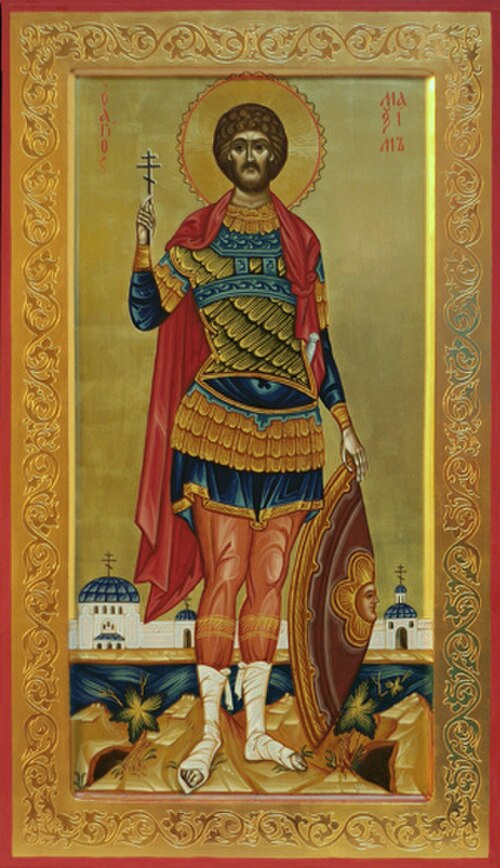
Martyr
Juventinus and Maximinus
Bodyguards of Emperor Julian the Apostate, martyred for the faith at Antioch about 361-363.
- Feast
- September 18old style October 1
- Era
- unknown
- Order
- Martyrs
Life
The Holy Martyrs Juventinus (Eventius) and Maximinus (Maximus) were soldiers in the bodyguard of the emperor Julian the Apostate and received martyrdom at Antioch around the years 361 to 363. They are remembered on 18 September (5 September on the old calendar) and on 22 October (9 October on the old calendar).
The emperor's order
The holy martyrs were shield-bearers, that is, guards, of the last pagan Roman emperor, Julian the Apostate. While at Antioch, the pagan emperor devised a way to bring hidden Christians to light and, wishing to make them partakers in his unclean sacrifices, ordered that the blood of animals sacrificed to the pagan gods be given to his guards, and the guards were to sprinkle this blood, in the sight of all, on the provisions in the markets and the water in the wells of the city.
The confession
Most of the soldiers carried out the order without resistance, but Saints Juventinus and Maximinus opposed this decree. At a feast with the other soldiers they spoke sorrowfully of the emperor's lawlessness and repeated the words of the holy three youths in Babylon: "And thou hast delivered us into the hands of lawless enemies, most hateful rebels, and to an unjust king, the wickedest in all the world" (Daniel 3:32). In the morning they were brought before Julian and, asked whether they had said these words, they answered the truth and, repeating the same words, rebuked and reproached him for his apostasy.
Martyrdom
The emperor, furious, ordered Juventinus and Maximinus arrested, and all their goods, down to their clothes, were taken. When they were ordered to be led naked to prison, the martyrs went without shame, even with joy. First they were beaten without mercy, then thrown into a dungeon. They were put to death, contrary to custom, at midnight, so as not to give the Christians occasion to boast of the courage of the confessors.
Saint John Chrysostom preached a sermon on these martyrs some twenty years after their death. He knew that the emperor had been told that these Christians had criticised the renewal of pagan sacrifices. John writes that it is no longer worth living, breathing and looking at this sun, when the holy laws are trampled, piety is insulted, the common Master of creation is dishonoured, everything is full of the stench and smoke of unclean sacrifices, so that we cannot even breathe clean air.
Commemorated the same day September 18
 RichardisRight-Believing · Carolingian empressSep 18
 Ariadne of PhrygiaMartyr · Martyr of PhrygiaSep 18
 Constantius of the Theban LegionMartyr · Soldier of the Theban LegionSep 18
 Eumenes of GortynaSaint · Bishop of Gortyna in CreteSep 18
 Euphrosyne of SuzdalVenerable · Princess and nun of SuzdalSep 18
 Hilarion of OptinaVenerable · Hieroschemamonk of OptinaSep 18
 Sophia and Irene of EgyptHoly MartyrsSep 18
- Bidzina CholokashviliMartyr · Leader of the Bakhtrioni UprisingSep 18
- Romylos of RavanicaVenerableSep 18
 Amphilochius SkvortsovHieromartyr · Bishop of MelekessSep 18
 Ilarion FeleaConfessor · Priest and theologianSep 18
 Shalva of KsaniMartyr · Duke of KsaniSep 18