Right-Believing
Richardis
Carolingian empress
Carolingian empress, wife of Charles the Fat and founder of Andlau Abbey.
- Feast
- September 18old style October 1
- Reposed
- 8949th century
- Place
- Andlau
Life
Saint Richardis, Carolingian empress, was the wife of the emperor Charles the Fat and founder of the abbey of Andlau, where she was the first abbess. She was known for her piety and, after being repudiated by her husband, became a model of Christian life and wisdom. She fell asleep around 894-896. She is commemorated on 18 September.
Her life
She was born around 840, in Alsace, the daughter of Erchanger, count of the Nordgau, of the family of the Ahalolfinger. She married Charles the Fat in 862 and was crowned with him at Rome, in 881, by Pope John VIII. The marriage was childless. Charles’ reign was troubled by strife and by the raids of the Normans, who plundered the northern coast of France and then the cities along the rivers; Charles, although he had the stronger army, paid for their departure. By 887 Charles seems to have suffered fits of madness. At that time Richardis tried to rule in her husband’s stead, but did not succeed. To bring down the over-powerful bishop Liutward, his archchancellor, or perhaps to replace his childless wife with one who might give heirs, Charles and his courtiers accused her of adultery with Liutward and demanded divorce, saying that the marriage had in fact not been consummated. According to tradition and her life, she was put to the ordeal by fire, which she passed safely; in fact, the commission appointed by the pope found that she was a virgin.
The legend
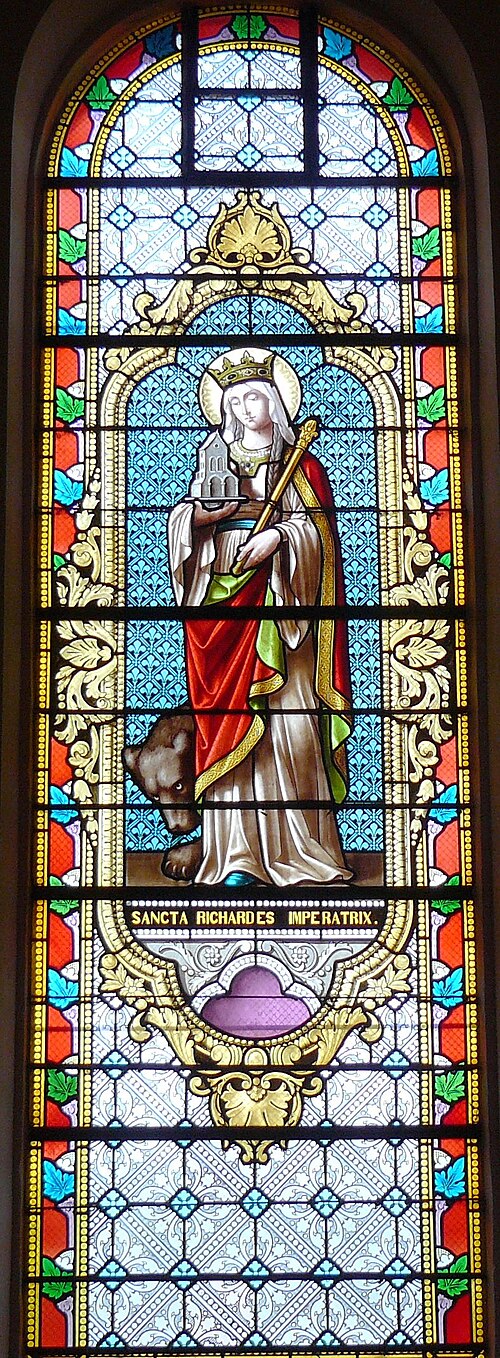
After her death a legend grew. It says that, though she was a blameless wife, her husband accused her for over ten years. To assure him of her innocence, she at last consented to an ordeal by fire: barefoot and in a shirt covered in wax, the flames did not touch her. Grieved at her husband’s mistrust, she left the palace and wandered into the forest, where an angel appeared to her and ordered her to raise a convent at the place a bear would show her. By another account, she found in the forest a mother bear grieving over her dead cub, and when she held the cub, it came back to life; both remained devoted to the saint all their lives. The abbey, however, had been founded seven years before the separation from Charles, and the place had long been tied to the bear. The nuns of Andlau long kept a live bear and gave board and passage to those who travelled with bears. To this day her images are often accompanied by a bear.
Retreat to Andlau
Protected by her family, she withdrew to the abbey of Andlau, which she had founded in 880 on her ancestral lands, where her niece Rotrod was abbess. Earlier she had been lay abbess of foundations at Säckingen and Zürich. She fell asleep at Andlau, on 18 September, and was buried there.
Veneration
She was numbered among the saints in 1049, and her remains were moved in November 1049 by Pope Leo IX to a more impressive tomb in the newly rebuilt abbey church. The present tomb dates from 1350. She is patroness of Andlau and a protection against fires. In icons she is shown as empress and nun, with signs of the ordeal by fire, and with the bear and the ploughshare of the foundation legend.
Commemorated the same day September 18
 Ariadne of PhrygiaMartyr · Martyr of PhrygiaSep 18
 Constantius of the Theban LegionMartyr · Soldier of the Theban LegionSep 18
 Eumenes of GortynaSaint · Bishop of Gortyna in CreteSep 18
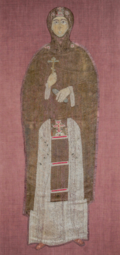 Euphrosyne of SuzdalVenerable · Princess and nun of SuzdalSep 18
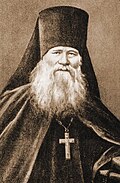 Hilarion of OptinaVenerable · Hieroschemamonk of OptinaSep 18
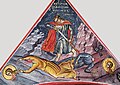 Sophia and Irene of EgyptHoly MartyrsSep 18
- Bidzina CholokashviliMartyr · Leader of the Bakhtrioni UprisingSep 18
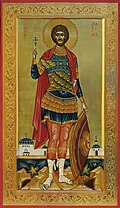 Juventinus and MaximinusMartyrSep 18
- Romylos of RavanicaVenerableSep 18
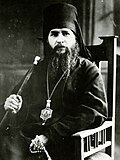 Amphilochius SkvortsovHieromartyr · Bishop of MelekessSep 18
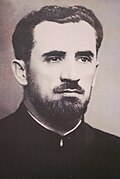 Ilarion FeleaConfessor · Priest and theologianSep 18
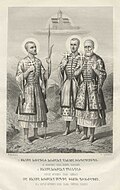 Shalva of KsaniMartyr · Duke of KsaniSep 18