Venerable
Romylos of Ravanica
Bulgarian monk of the fourteenth century, a disciple of Gregory of Sinai, who died in 1385 at Ravanica.
- Feast
- September 18old style October 1
- Reposed
- 138514th century
- Place
- Ravanica
- Order
- Venerables
Life
Saint Romylos of Ravanica (Romylos of Vidin, Romylos the Athonite, in the world Rusko or Rayko) the venerable was a Bulgarian monk of the fourteenth century, a disciple of Saint Gregory of Sinai, a great hesychast, who died at Ravanica in Serbia. He belongs to Bulgarian and Serbian literature alike. He is commemorated on 16 January (29 January in the new style); the Greek version of his Life has 1 November. The date of his death is not certain: the sources give 1375 or 1385, the latter fitting better with the fact that the Ravanica monastery was begun in 1377 and completed in 1381.
Youth
He was born in the first quarter of the fourteenth century (about 1330, according to some sources) in the "valiant and glorious city" of Vidin, in north-western Bulgaria, to a Bulgarian mother and a Greek father, in a wealthy family. He was given the name Rusko or Rayko. He studied at school and impressed by his gifts. At fourteen or fifteen he left Vidin for Tarnovo, the capital, to avoid his parents' plan to marry him. There he became a monk in one of the many monasteries around the capital (by tradition at the monastery of the Mother of God the Guide) and took the name Roman, later changed to Romylos. His complete obedience and piety toward God were known to all the brethren of the Holy Mountain of Tarnovo and of the place called Ustie, where many monks lived, who began to call him "Kaloroman", in Greek "the good Roman".
Paroria
Romylos learned that the famous hesychast Gregory of Sinai had come to live on Bulgarian soil, at Paroria, on the border between Bulgaria and Byzantium. In 1335 Tsar Ivan Alexander had received Gregory and given funds for building a monastery near Paroria in the Strandzha mountains, which attracted monks from Bulgaria, Byzantium and Serbia. Romylos left everything and went to him, was received well and taught the virtues of the true spiritual life. He was one of the most brilliant and fervent supporters of hesychast doctrine as it developed in the mid-fourteenth century. His stay at Paroria was in a hard time: three times he had to flee to the neighbourhood of Tarnovo, to Kilifarevo, because of famine and Turkish brigands. The death of Saint Gregory of Sinai, Turkish attacks and those of brigands forced him to return to the interior of Bulgaria, but the desire for solitude and stillness brought him again to Paroria, where he received the great schema with the name Romylos. Persistent Turkish attacks forced him, in the early 1350s, to flee to Athos, with the disciple Gregory (who wrote his Life), where he struggled in isolation near the Great Lavra, at Melana, and gathered a monastic brotherhood.
To Serbia
After the defeat of the Christians in the battle on the Maritsa in 1371 (26 September), like many others he was forced to leave Athos and moved with his disciples to Valona, on the Adriatic. He found no peace there, because the governors of the region were unjust and the priests unworthy. After the killing of the despot Uglješa (other sources say) or after the disaster of the Maritsa, he went to Serbia, to the Ravanica monastery in the Kučaj mountains, begun in 1377 and completed in 1381 by Prince Lazar, as a refuge for hesychast monks. He stayed there until his death, on 16 January. His remains are kept in the monastery and venerated by both Orthodox and Catholics. His tomb is in the narthex of the monastery church. According to the Serbian source, his relics lay first in the nave of the church, then in the south-eastern part of the narthex, near those of Prince Lazar. Near the monastery there was "Romylos's cave", damaged when a road was built. At Ravanica Constantine of Kostenets (Tsamblak) was with him.
The Life and veneration
His Life was written before 1391 by his disciple from Athos, Gregory (called in the seventeenth century "the Sinaite", that is, Gregory of Gornjak), in Greek, in 1376-1377 on Athos; in autumn 1390-1391 it was translated into Serbian for the Ravanica monastery. P. A. Syrku, who discovered and published the Slavonic text in 1900, was inclined to think it was not a translation but an original Slavonic text. The Life, both Greek and Slavonic, speaks of the time on Athos interlacing hagiographical commonplaces with patristic sermons on the eternal value of the monastic virtues, without essential data about his part in the cultural life of the peninsula. Saint Romylos was not a very well known or widely venerated saint: according to K. Ivanova, his cult is well attested only on Athos and in the region around Ravanica. In Bulgaria there is no church dedicated to him, but he is honoured especially at Vidin and in the diocese of Vidin, on 16 January.
Commemorated the same day September 18
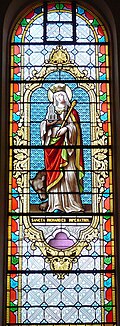 RichardisRight-Believing · Carolingian empressSep 18
 Ariadne of PhrygiaMartyr · Martyr of PhrygiaSep 18
 Constantius of the Theban LegionMartyr · Soldier of the Theban LegionSep 18
 Eumenes of GortynaSaint · Bishop of Gortyna in CreteSep 18
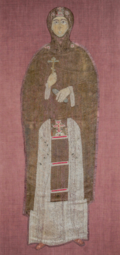 Euphrosyne of SuzdalVenerable · Princess and nun of SuzdalSep 18
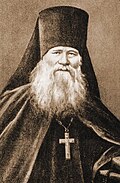 Hilarion of OptinaVenerable · Hieroschemamonk of OptinaSep 18
 Sophia and Irene of EgyptHoly MartyrsSep 18
- Bidzina CholokashviliMartyr · Leader of the Bakhtrioni UprisingSep 18
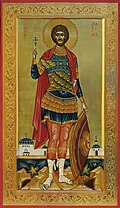 Juventinus and MaximinusMartyrSep 18
 Amphilochius SkvortsovHieromartyr · Bishop of MelekessSep 18
 Ilarion FeleaConfessor · Priest and theologianSep 18
 Shalva of KsaniMartyr · Duke of KsaniSep 18