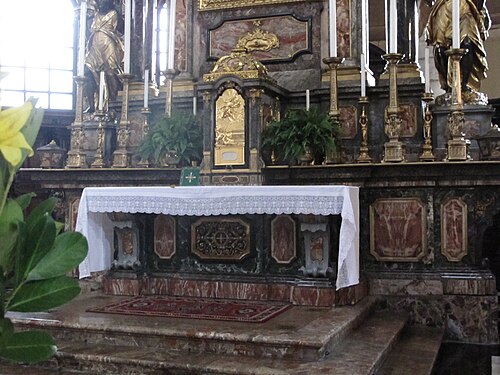
Saint
Lawrence I of Milan
Archbishop of Milan
Archbishop of Milan from 490 to about 511.
Life
Lawrence I was Archbishop of Milan from 490 (or 489) until about 511, protector of the city in the time of the invasions and of the war between Odoacer and Theodoric. He is venerated as a saint in the Roman Catholic Church and is commemorated on 25 July. A Greek source notes that his name no longer appears in the official list of Ambrosian saints. Our sources show no Orthodox act of canonization.
Life
Most of the news about him comes from the writings of Ennodius, bishop of Pavia († 521), a relative and secretary of his. He was elected bishop of Milan around 490 (or 489), by the Latins and by the Heruli who had invaded Italy under Odoacer, according to tradition unanimously and at mature age, in place of Theodore I. In the war between Odoacer and Theodoric, leader of the Ostrogoths, Lawrence supported the latter, hoping that he would better preserve the Latin population, overpowered by the East Germanic tribes, but without intervening in the fighting. When Odoacer besieged Milan he refused to open the gates. Later he went to Ravenna to ask Theodoric to forgive the Latins who had sided with Odoacer.
In a year between 491 and 493 an East Germanic tribe, probably the Rugii, raided Milan, and Lawrence was taken prisoner. After release he returned to a devastated city and led its reconstruction: he renewed the basilica of Saint Calimerius, a baptistery (perhaps San Giovanni alle Fonti) and the church of Saints Nazarius and Celsus, where he ordered the painting of twelve bishops of Milan. He built a house, probably an episcopal residence, added the chapel of Saint Sixtus to the basilica of San Lorenzo Maggiore and restored the basilica of Sant'Ambrogio, where he made the ciborium whose columns can still be seen. Between 493 and 494 he accompanied Bishop Epiphanius of Pavia to Ravenna, to the court of Theodoric, to prevent him from depriving prisoners of war of Roman citizenship, and he himself presented this request publicly. He took into his house, when he was a child and an orphan, the young Arator, raising him as his own son.
The papal schism
Like many bishops of the time, he was involved in the schism of the Church of Rome, of November 498, with the double election of Symmachus and Laurentius. He upheld the legitimacy of the election of Pope Symmachus against the antipope Laurentius, supported by the Byzantine emperor, close to the Monophysites. He gave financial help to Symmachus, and in 502, together with Peter of Ravenna, he presided over a synod in Rome that confirmed Symmachus's right to the papacy. Ennodius praises him for his works of charity and the rebuilding of Milan. He died after twenty-two years of episcopate, around 511, on 25 July, and was buried on 27 July in the chapel of Saint Hippolytus beside the basilica of San Lorenzo Maggiore. A late tradition, without historical basis, links him with the Litta family.
Commemorated the same day July 25
 AnnaRighteous · Mother of the TheotokosJul 25
 Olympias the DeaconessVenerable · Deaconess in ConstantinopleJul 25
 Eupraxia of ConstantinopleVenerable · Nun of ConstantinopleJul 25
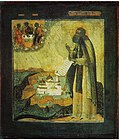 Macarius of UnzhaVenerable · Founder of monasteriesJul 25
- Christopher of KoryazhmaVenerable · Founder of the Christopher HermitageJul 25
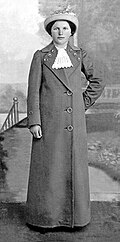 Iraida TikhovaConfessor · Choir directorJul 25
- Attalus of LyonMartyr · Martyr of LyonJul 25
- Elias of ThessalonicaSaintJul 25
- Alexander SakharovHieromartyrJul 25
- Alexander the PhrygianMartyr · PhysicianJul 25
- Banthus of TrierSaint · Bishop of TrierJul 25
- Beatus of TrierVenerable · Monk of TrierJul 25