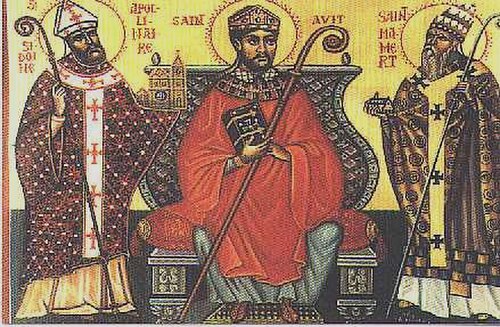
Saint
Mamertus of Vienne
Bishop of Vienne
Bishop of Vienne who introduced litanies before Ascension Day against earthquakes; died around 475.
Life
Saint Mamertus was bishop of Vienne in Gaul in the fifth century, and the Church remembers him above all for establishing the litanies before the Ascension of the Lord, later called the Rogation Days. He fell asleep around 475.
He came from a well-to-do Gallo-Roman family near Lyons. His brother, Claudianus Mamertus, became a theological writer. Like him, Mamertus was distinguished in secular learning and in theology, and before his episcopate he seems to have been married. He was elected and consecrated bishop of Vienne shortly before 462. He called his brother out of a monastery and ordained him priest of Vienne. The activity of the two brothers is described in the letters of Sidonius Apollinaris, one of which is addressed to Mamertus.
In 463 he fell into dispute with Pope Hilarus because, against the arrangement made by Pope Leo the Great, who had fixed the boundaries of the ecclesiastical provinces of Arles and Vienne, he consecrated a bishop named Marcellus for the city of Die. Gundioc, king of the Burgundians, complained to the pope, and a synod ruled against Mamertus. The pope showed mercy: he asked Mamertus to submit to Leo's rule, otherwise he would also lose the four remaining dioceses under Vienne, and the bishop of Die was to be confirmed by the bishop of Arles. During his episcopate the relics of the holy martyr Ferreolus were discovered, and Mamertus moved them to a church in Vienne built in his honour.
According to Sidonius Apollinaris and Mamertus's second successor Avitus, he founded the processions of prayer and fasting held on the Monday, Tuesday and Wednesday before Ascension, asking God for good weather, and for protection from plague and famine. Some sources say they were instituted after calamities such as earthquakes or fire; a later writer says they followed an invasion of wolves. Between 471 and 475 he called a synod at Vienne, and around 475 he took part in the one at Arles, which examined the priest Lucidus's teaching on predestination. Tradition adds that miracles were worked through him and that his prayers once saved the city from a great fire.
His memory is kept on 11 May, a day on which his name stands in the early martyrologies of the West. He is the first of the so-called Ice Saints.
Commemorated the same day May 11
 Cyril and MethodiusHoly Equal-to-the-Apostles · Apostles to the SlavsMay 11
 Rastislav of MoraviaRight-Believing · Prince of MoraviaMay 11
 Gangulphus of BurgundyMartyrMay 11
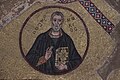 Mocius of AmphipolisHieromartyr · Priest of AmphipolisMay 11
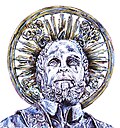 Anthimus of RomeHieromartyr · Priest of RomeMay 11
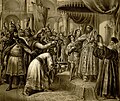 Nikodim I of PećSaint · Archbishop of the SerbsMay 11
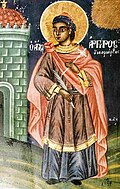 Argyrios of EpanomiNew MartyrMay 11
 Joseph of AstrakhanHieromartyr · Metropolitan of AstrakhanMay 11
- Nepotian of AltinumVenerableMay 11
- Blessed KristesiaSaintMay 11
- OlympiaMartyrMay 11
 Anastasius of LleidaMartyrMay 11