Martyr
Marcellinus of Carthage
Roman official
High official of the Western Roman Empire under Honorius, friend of Augustine, who died a martyr in 413.
- Feast
- September 13old style September 26
- Reposed
- 4135th century
- Place
- Carthage
- Order
- Martyrs
Life
Marcellinus of Carthage was a high official of the Western Roman Empire under the emperor Honorius, a close friend of Blessed Augustine and a correspondent of Saint Jerome, who died a martyr in the year 413. He is commemorated on 13 September. Our sources show him venerated in the Roman Martyrology and show no Orthodox glorification, so he is a saint of the Western Church.
Life
Flavius Marcellinus was born in Toledo in Spain and had a brother, Apringius. He rose to the rank of tribune and notary under Honorius; he is described as a cultured and generous aristocrat, interested in theology. His interest in questions of faith led to a close friendship with Augustine, who wrote him several letters and dedicated several books to him: on the merits and remission of sins, on the baptism of infants, and the first three books of The City of God, written in 413. Jerome also wrote to him. His wife was named Anapsychia.
The Donatist dispute
In Africa the dispute between the Donatists and orthodox Christians was not only doctrinal but also involved regional and social tensions. In 405 an imperial decree declared the Donatists heretics and ordered the confiscation of their property. The fall of Stilicho in 408 gave them hope of a change in policy, but in 410 Marcellinus was instructed to abolish the new superstition. The orthodox bishops hoped the Donatists would be more open to reasoned debate and asked the emperor to call a conference.
Marcellinus was sent to Africa in 411 to preside over the conference of Carthage in June. In his summons to the parties he made no secret of the emperor's position. Bishops of both sides debated; the proceedings were transcribed and survive to this day. As the emperor's representative, Marcellinus ruled that the Donatists were heretics and had to give up their churches to those under orthodox bishops and priests. According to John T. Noonan, the Donatists alleged that Marcellinus had been bribed, since this was a stronger argument than that he was merely enforcing imperial policy.
The judgment was enforced by the Roman army with great severity. The persecution of the Donatists was so bloody that Augustine himself, one of those who had condemned Donatism as heresy, protested against their treatment. Later, some Donatists committed sporadic acts of violence against orthodox priests, and Marcellinus presided at the trials of those arrested. Augustine appealed for clemency to him and to his brother Apringius, proconsul of Africa; Noonan holds that their remaining close friends suggests that the petition was granted.
His end
In 413 the Donatists accused Marcellinus and Apringius of involvement in the rebellion of Heraclian. General Marinus, who had put down the rebellion and had Donatist sympathies, arrested the brothers and put them in prison. Although Augustine intervened for them with Caecilian, the presiding judge of the case, the two brothers were executed on 13 September. The following year Marcellinus was exonerated by the emperor Honorius.
Marcellinus was afterward entered in the Roman Martyrology. A statue of him adorns the spire above the south transept of the cathedral of Milan, and another stands on the southern half of Bernini's colonnade in Saint Peter's Square.
Commemorated the same day September 13
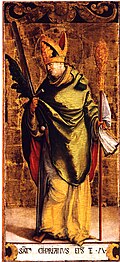 Cyprian of CarthageHieromartyr · Bishop of CarthageSep 13
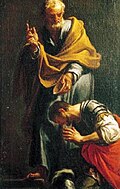 Cornelius the CenturionHieromartyr · Centurion of CaesareaSep 13
 Ketevan the MartyrGreat Martyr · Queen of KakhetiSep 13
 Venerius the HermitVenerable · Hermit of the Gulf of La SpeziaSep 13
- Wulfthryth of WiltonVenerable · Abbess of Wilton AbbeySep 13
- Litorius of ToursSaint · Bishop of ToursSep 13
- Peter of AtroaVenerableSep 13
- Armand of VannesSaint · Bishop of VannesSep 13
- AemilianusSaint · Bishop of ValenceSep 13
- Alexander AksenovHieromartyrSep 13
 AmatusVenerableSep 13
- Amatus of SionSaint · Bishop of SionSep 13