Martyr
Nestavus of Gaza
Christian of Gaza, martyred for the faith of Christ.
- Feast
- September 21old style October 4
- Reposed
- 3624th century
- Order
- Martyrs
Life
Holy Martyr Nestavus of Gaza suffered in the time of the persecution of Julian the Apostate (361-363), together with his Christian brothers Eusebius and Zeno († 361-362). The church historian Sozomen reports that they were first thrown into prison and beaten, then torn apart by the pagan mob, who accused them of having "made use of the circumstances of the past time for the destruction and insult of paganism" (in the reign of the Christian emperor Constantius II, when imperial power, formally declaring its tolerance of paganism, closed pagan shrines under various pretexts). The martyrs were put to death "in the most cruel manner": beaten with sticks and stones, women, coming out from their looms, pricked them with spindles, and the tavern-keepers of the market now seized cauldrons of boiling water from their hearths and poured it on the martyrs, now ran them through with spits.
The bodies of the martyrs were burned outside the city, at the place where the carcasses of animals were usually burned, and their bones were mixed with the remains of camels and asses. But by a divine revelation the remains were found by a Christian woman passing through Gaza at the time and given to a relative of theirs, also named Zeno. At the time of the killing of the martyrs he had fled to the neighbouring town of Anthedon, where the pagans beat him too. Under the emperor Theodosius the Great (379-395) Zeno became bishop of Gaza (more probably of Maiuma of Gaza, the Gazan port), built outside the city a house of prayer, in which he placed the relics of the martyrs, together with the remains of the confessor Nestor, a friend in life of Eusebius, Nestavus and Zeno. Seized by the mob with the martyr brothers, Nestor suffered cruel beatings, but the pagans, seeing his handsome face, took pity and threw him half dead outside the gates. He died in Zeno's house, despite all efforts to heal him.
Julian the Apostate, who in a letter to the Alexandrians condemned the killing by pagans of Bishop George of Alexandria (24 December 361), in his letter to the inhabitants of Gaza did not even mention what had happened. What is more, the emperor removed the then governor of the province of Palestine Prima because he, acting according to law, had taken into custody some of the instigators of the massacre. In the Byzantine synaxaria the commemoration of the martyrs Eusebius, Nestavus and Zeno and of the confessor Nestor is placed on 20, 21 or 22 September; in some cases, together with the saints of Gaza, the martyr Busiris is mentioned, whose death under Julian at Ancyra of Galatia Sozomen also relates. The commemoration was entered in the versified synaxaria and in the printed Greek Menaia on 21 September, and subsequently on that date in the Synaxaristes of Saint Nicodemus the Hagiorite and in the present calendars of the Greek Churches. The commemoration of the martyrs of Gaza does not appear in the early and medieval (Carolingian) martyrologies. Cardinal Caesar Baronius entered their names in the Roman Martyrology on the basis of the synaxaria in the printed Greek Menaia, but arbitrarily placed their commemoration on 8 September. Nestavus is commemorated on 4 October (21 September by the Greek calendar). The Azbyka page notes that his name is not found in the present calendar of the Russian Orthodox Church.
Commemorated the same day September 21
 JonahProphet · The ProphetSep 21
 Quadratus of AthensApostle · Bishop of AthensSep 21
 Demetrius of RostovSaint · Metropolitan of RostovSep 21
 Castor of AptSaint · Bishop of AptSep 21
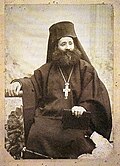 Plato AivazidisHieromartyr · Archimandrite and theologianSep 21
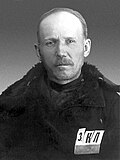 Basil KondratyevMartyrSep 21
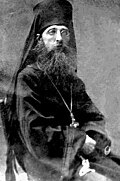 Mavriky PoletaevVenerable Martyr · ArchimandriteSep 21
- Jerome of the CavesVenerable · Recluse of the Kyiv Caves LavraSep 21
- Daniel of ShuzhgoraVenerable · Founder of a monasterySep 21
- Acacius of SitiaSaint · Bishop of SitiaSep 21
- Aedhan son of OissinSaintSep 21
- Alexander BelyakovHieromartyrSep 21