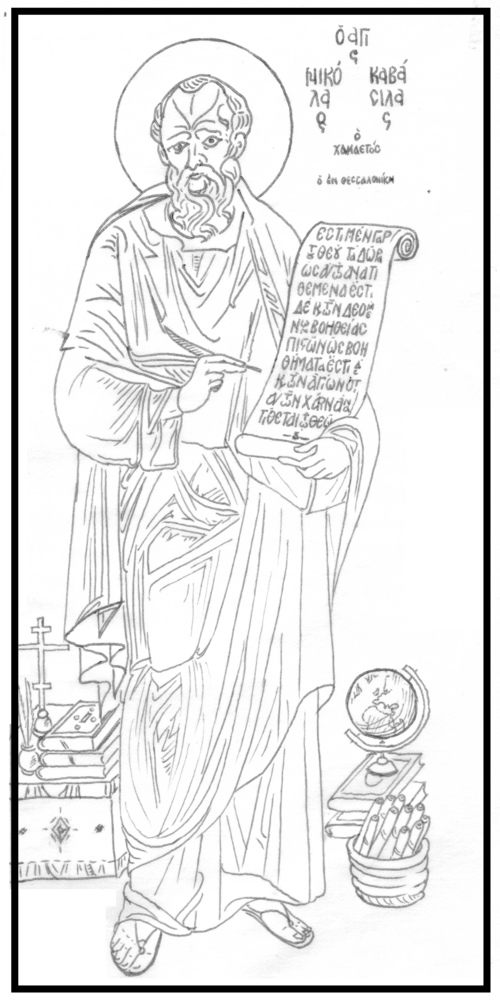
Righteous
Nicholas Cabasilas
Byzantine theologian and mystic
Byzantine mystic and writer of the fourteenth century, author of The Life in Christ.
- Feast
- June 20old style July 3
- Reposed
- 139114th century
- Place
- Constantinople
- Order
- The Righteous
Life
Saint Nicholas Cabasilas was a Byzantine theologian and mystic of the fourteenth century, a lay writer, author of the book On the Life in Christ. He is commemorated on 20 June.
His life
He was born at Thessalonica around 1322, into a distinguished family of ancient lineage, well known in the empire. On his father’s side he came from the family Chamaetos, but in maturity he kept his mother’s name, Cabasilas. He was the nephew of the theologian and hierarch Nilus Cabasilas, who became archbishop of Thessalonica. He studied at Constantinople, where he learned grammar, rhetoric, philosophy and the sciences, and showed himself drawn above all to astronomy. From youth he was close to the hesychast movement, and in the hesychast controversy he took the side of the monks of Athos and of Saint Gregory Palamas.
From 1341 he took part in political and church life. He was a friend and counsellor of the emperor John VI Kantakouzenos, whom he supported in the civil war, and he barely escaped the massacre of the nobles of Thessalonica by the Zealots in August 1345. In 1347 the emperor charged him to accompany Gregory Palamas, elected archbishop of Thessalonica, to his see. The Thessalonians did not accept him, and the two went to the Holy Mountain, where they stayed a year. When the emperor chose to retire to a monastery, in 1354, Nicholas gave himself to writing. It was once believed that he succeeded his uncle in the see of Thessalonica, but the records of the see do not show him; more probably he served as a priest at the Mangana monastery in Constantinople. By all signs he remained a layman to the end. The years of his death are not known for certain, between 1391 and 1397.
His writings
His chief work is On the Life in Christ, in which he shows that union with Christ is accomplished and perfected through three great mysteries: baptism, chrismation and the Eucharist. His Commentary on the Divine Liturgy shows a deep understanding of the liturgical life and the mysteries of the Church. He also wrote homilies on various subjects, a speech against usurers and a eulogy of the holy nun Theodora of Thessalonica. Many of his writings survive in manuscript.
Veneration
The Orthodox Church numbered him among the saints in 1982-1983, and his commemoration is on 20 June.
Commemorated the same day June 20
 Silverius of RomeSaint · Bishop of RomeJun 20
 Naum of OhridVenerable · Disciple of Cyril and MethodiusJun 20
 Methodius of OlympusHieromartyr · Bishop of OlympusJun 20
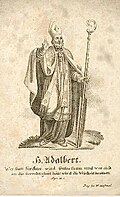 Adalbert of MagdeburgSaint · Archbishop of MagdeburgJun 20
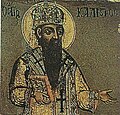 Callistus I of ConstantinopleSaint · Patriarch of ConstantinopleJun 20
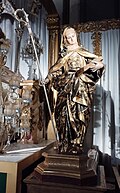 Florentina of CartagenaVenerableJun 20
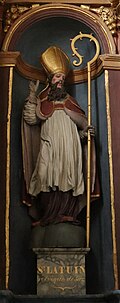 Latuinus of SéesSaint · First bishop of SéesJun 20
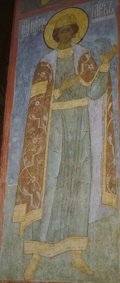 Gleb of VladimirRight-Believing · Prince of VladimirJun 20
 Mina of PolotskSaint · Bishop of PolotskJun 20
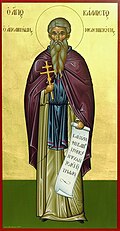 Kallistos AngelikoudesVenerable · Abbot of Katafygi MonasteryJun 20
- HectorSaintJun 20
- Aristocles of SalamisHieromartyrJun 20