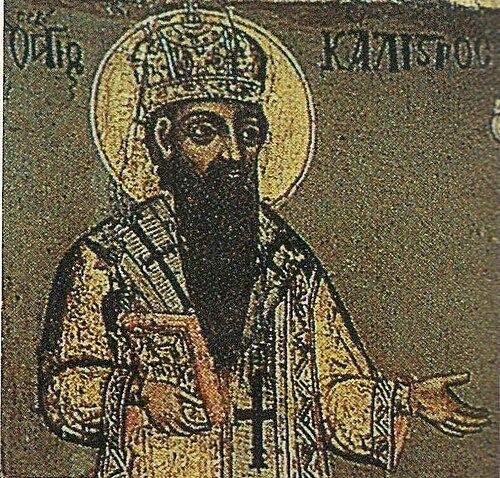
Saint
Callistus I of Constantinople
Patriarch of Constantinople
Athonite monk and supporter of Gregory Palamas, Ecumenical Patriarch in 1350-1353 and 1354-1363.
Life
Saint Callistus I was ecumenical patriarch of Constantinople twice, from 1350 to 1353 and from 1355 to 1363. An Athonite monk and a disciple of Saint Gregory of Sinai, he was a firm supporter of Saint Gregory Palamas and of the Hesychast teaching.
Nothing certain is known of his early years; he is thought to have been born toward the end of the thirteenth century. He lived twenty-eight years on Mount Athos, in the skete of Magoula near the Philotheou monastery, and was connected with the Iviron monastery. He met Gregory of Sinai, followed him on his journeys, among them to Paroria in Thrace, and wrote his life. He was ordained priest on Athos and in 1340-1341 signed the Athonite Tome in defence of the Hesychasts. In 1342 he was part of the delegation of Athonite monks sent to Constantinople to reconcile the sides of the civil war, and he fought the Bogomils on Athos. He was captured by Turkish pirates, and the Athonite community raised the money to ransom him and the others. He also founded the monastery of Saint Mamas on Tenedos.
On 10 June 1350, on the proposal of the emperor John VI Kantakouzenos, he was elected patriarch of Constantinople, after Isidore I. In 1351 he presided over the synod at Blachernae, which confirmed the teaching of Saint Gregory Palamas on the distinction between God's essence and uncreated energies and condemned his opponents; he and the patriarchs after him then led a vigorous campaign for the doctrine to be accepted by the other Orthodox Churches, not without resistance (the metropolitan of Kyiv, for example, firmly rejected it). In December 1350 he issued a sigillion against those who go to sorcerers and gave a homily on the subject. Modern historians, such as Martin Jugie, describe him as a stern man whose zeal against opponents had to be restrained. He broke relations with the Serbian patriarchate proclaimed by Stefan Dušan, excommunicating the Serbian tsar and his archbishop.
In 1353 he refused to crown Matthew Kantakouzenos as emperor beside his father and to stop commemorating the lawful emperor, John V Palaiologos, and he was removed. He withdrew to Athos, then to the monastery of Saint Mamas and to Tenedos, where John V was. When John V came to the throne he returned to the patriarchate in 1355 and remained until the end. He then strengthened the administration of the patriarchate, placed the parishes under the supervision of a patriarchal exarch, helped Saint Athanasius of Meteora raise the monastery of the Transfiguration at Meteora and, in 1355, wrote to the clergy of Tarnovo that Latins baptised by a single immersion must be baptised again.
He died in August 1363, on the way to Serres, as a member of an embassy of John V sent to ask help from Empress Helena of Serbia against the Ottomans. It is told that passing by Athos, the hermit Maximos of Kafsokalyvia greeted him with a joke that the old man would never see his old lady, meaning Constantinople, again, and ended with the psalm Blessed are the blameless in the way. With Ignatius Xanthopoulos he composed the Century, a work of a hundred chapters on the ascetic labour of the Hesychasts, included in the Philokalia. He also wrote the lives of Gregory of Sinai and Theodosius of Tarnovo. His feast is on 20 June.
Commemorated the same day June 20
 Silverius of RomeSaint · Bishop of RomeJun 20
 Naum of OhridVenerable · Disciple of Cyril and MethodiusJun 20
 Nicholas CabasilasRighteous · Byzantine theologian and mysticJun 20
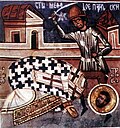 Methodius of OlympusHieromartyr · Bishop of OlympusJun 20
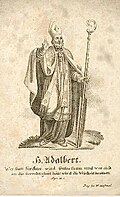 Adalbert of MagdeburgSaint · Archbishop of MagdeburgJun 20
 Florentina of CartagenaVenerableJun 20
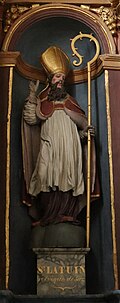 Latuinus of SéesSaint · First bishop of SéesJun 20
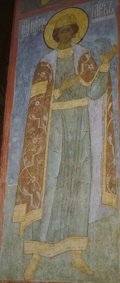 Gleb of VladimirRight-Believing · Prince of VladimirJun 20
 Mina of PolotskSaint · Bishop of PolotskJun 20
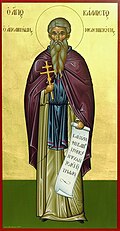 Kallistos AngelikoudesVenerable · Abbot of Katafygi MonasteryJun 20
- HectorSaintJun 20
- Aristocles of SalamisHieromartyrJun 20