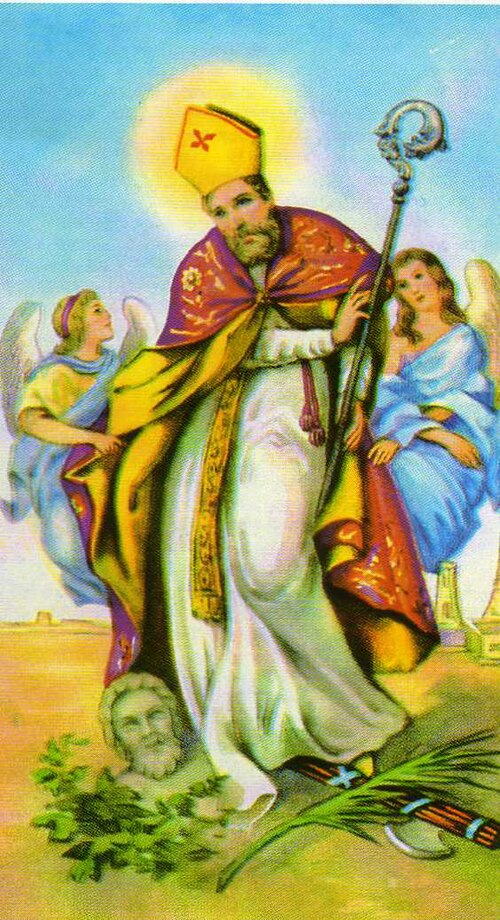
Saint
Orontius of Lecce
First Bishop of Lecce
Regarded as the first bishop of Lecce, honored with Fortunatus and Justus, figures of his legend.
Life
Saint Orontius (Oronzo) is venerated as the first bishop of the city of Lecce in Apulia, together with Fortunatus and Justus, two other figures of his legend. He is patron of the city and is commemorated on 26 August.
A twelfth-century manuscript records one version of the legend. Justus, a disciple of Saint Paul, on his way to Rome was shipwrecked in Salento, on the beach of San Cataldo. He converted to Christianity two citizens of Rudiae (now Lecce), Orontius and his nephew Fortunatus. Orontius' father, Publius, had been treasurer to the emperor, and his son succeeded him in the office.
Orontius and Fortunatus were denounced as Christians and refused to sacrifice to the Roman gods. They were whipped and imprisoned, but later went to Corinth, where Orontius met Saint Paul, who confirmed him as the first bishop of Lecce and named Fortunatus as his successor. When they returned to Lecce they were again persecuted. Antoninus, the representative of Nero, imprisoned them, threatening to kill them if they did not reject their faith. They refused, managed to be released from prison, and continued to preach in Salento and at Bari. In the end Antoninus arrested them again and had them executed with an axe three kilometres from Lecce on 26 August. Justus was also martyred. The hagiographer Frederick George Holweck calls the account "unreliable".
Orontius is patron of the city of Lecce and is invoked for rain. In 1658 the separate feasts of Orontius, Fortunatus and Justus were combined into one celebration. Orontius enjoyed a wider cult than the other two, especially in Salento, Apulia and Basilicata. In the sixteenth century many priests in Ostuni were named Rontius, a variant of Orontius. He was identified with the martyr Arontius of Potenza, recorded in the Martyrologium Hieronymianum. His cult at Lecce was revived when the end of a plague there in 1656 was attributed to him. A spring near Ostuni, considered miraculous, is associated with his cult.
He is also patron of the town of Turi, where, according to legend, he hid in a cave nearby; the end of a cholera outbreak in 1851 was attributed to him. He is also believed to have hidden in a cave near Ostuni, where he is patron, and a church and sanctuary were dedicated to him there, and the procession known as the "Cavalcata di Sant'Oronzo" is still held. Each year a three-day festival is held at Ostuni and Lecce, from 25 to 27 August, in his honour.
Commemorated the same day August 26
 ZephyrinusSaint · Bishop of RomeAug 26
 Hadrian of NicomediaMartyr · Roman officerAug 26
 Adrian and NataliaHoly MartyrsAug 26
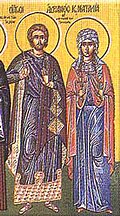 Natalia of NicomediaMartyr · Wife of Saint Adrian of NicomediaAug 26
 Elena of MoscowVenerable · First Abbess of Novodevichy ConventAug 26
 Maria of DiveevoFool-for-Christ · Fool for ChristAug 26
- Adrian of UglichVenerable · HieromonkAug 26
- Cyprian of StorozhevoVenerableAug 26
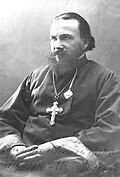 Roman MedvedConfessor · PriestAug 26
- Rufinus of CapuaSaint · Bishop of CapuaAug 26
- AireidVenerableAug 26
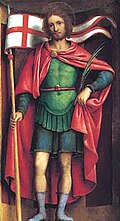 Alexander of BergamoMartyrAug 26