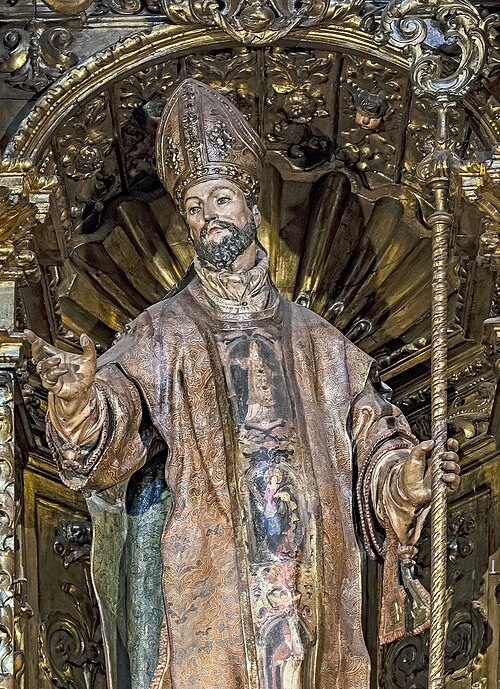
Saint
Pacian of Barcelona
Bishop of Barcelona
Bishop of Barcelona in the fourth century and church writer, who died around 391.
Life
Saint Pacian was Bishop of Barcelona in the second half of the fourth century and a church writer, counted among the Fathers of the Church in Spain. He was born around 310 and departed to the Lord around 391.
Life
According to tradition, he was born in Barcelona or in a village near it, of a well-to-do Roman family, and in youth received a classical education. Before ordination he was married and had a son, Dexter, who rose to high office under the emperor Theodosius I, among other things as proconsul and praetorian prefect. From about 365 he was Bishop of Barcelona, succeeding Praetextatus, the first known bishop of the city, who had taken part in the council of Sardica in 347.
Saint Jerome mentions him in his work On Illustrious Men, praising his eloquence, learning, chastity and holiness of life. Jerome did not know Pacian personally, but he knew his son, to whom the book is dedicated.
Writings
His works survive only in part: three letters to Sympronianus, a short treatise called Paraenesis ad Poenitentiam, that is, An Exhortation to Penance, and, according to some sources, a sermon on Baptism. He is counted as the first church writer of Catalonia whose writings have come down to us. Pacian wrote on Church discipline, on Baptism, on the primacy of the bishop of Rome, and on penance, against Novatianism, which was then flourishing in Spain.
In 373 he corresponded with Sympronianus, a man known in the neighbourhood of the city and honoured for his life, who followed Novatian teaching. The Novatians did not receive back those who had fallen into grave sins. In his letters Pacian set out the teaching of the Church on the power of binding and loosing, given to the apostles and passed on to the bishops. A phrase of his is remembered: "My name is Christian, my surname is Catholic."
Veneration
He was honoured in the West and in the East as one of the Fathers of the Church, for the firmness with which he confessed and defended the faith. His commemoration is on 9 March. In 2023 a study found in his writings the first hints of the Catalan language, in words like ceruulus, meaning stag, and subinde, meaning often.
Commemorated the same day March 9
 Forty Martyrs of SebasteHoly Martyrs · Soldiers of the Twelfth LegionMar 9
 Bruno of QuerfurtHieromartyr · Missionary ArchbishopMar 9
 Caesarius of NazianzusSaint · Brother of Gregory the TheologianMar 9
- Urpasianus of NicomediaMartyrMar 9
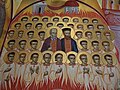 The 42 Martyrs of MomišićiHoly New MartyrsMar 9
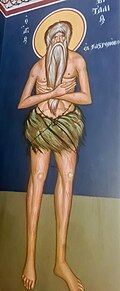 Vitalis of CastronovoVenerable · Hermit and abbot in southern ItalyMar 9
- Aetius of SebasteMartyrMar 9
- Aglaius of SebasteMartyrMar 9
- Alexander of SebasteMartyrMar 9
- Alexandra SamoylovaVenerable MartyrMar 9
- Alexis SmirnovHieromartyrMar 9
- AngiasSaintMar 9