Saint
Paul I of Brescia
Bishop of Brescia
Bishop of Brescia from 410 or 412, who died in the first half of the fifth century.
Life
Saint Paul I (Paulinus I) was bishop of Brescia from 410 or 412 and died in the first half of the fifth century. He is a locally venerated saint and is commemorated by the Roman Catholic Church on 4 March. We have no Orthodox act of canonization, so we call him a saint of the undivided Church in the West.
In the lists of the heads of the diocese of Brescia, Saint Paul I appears as successor of Bishop Gaudentius, according to some testimonies his brother. The last certain testimony about Gaudentius is from 405 or 406, and he died a few years later. On these grounds Paul's accession to the see of Brescia is dated between 410 and 412. The opinion that Paul was a native of Roman Africa, a notary and deacon of the diocese of Milan is mistaken. Nor are the three hagiographical writings attributed to Paul of Brescia his: "Vita S. Ambrosii", "Libellum Zozimo Papae in gratiarum actionem ob Pelagium" and "De Benedictionibus Patriarcarum".
No certain testimonies have survived of Paul I's work as head of the diocese. Probably through his care Bishop Gaudentius was buried in the church of All Saints. He is credited with the founding of the church of Sant'Eusebio al Goletto in the hills of Ronchi, but it was most likely laid down under Bishop Paul II. Possibly in Paul I's time an altar was raised over the grave of Philastrius of Brescia, and services in honour of this saint began in the church where it stood. One historian placed Paul I's death around 430, but so precise a date is not supported by ancient or medieval sources. It is certain only that he died in the first half of the fifth century and was buried in one of the churches of Brescia (perhaps San Floriano, Sant'Andrea or San Salvatore).
In 1497 the grave with the bishop's relics was opened and the remains were moved to the church of Sant'Eusebio al Goletto. On 3 March of the next year they were taken to another church, where they were placed beside the relics of the holy bishops of Brescia Paul II, Cyprian and Deusdedit. On 9 February 1798 Paul I's remains were moved to the church of Sant'Agata, where they remain today. Paul I's successor was Bishop Theophilus. Like all the heads of the diocese of Brescia from the third to the seventh century, from Anatolius to Deusdedit, Paul I too was counted already in the Middle Ages among the locally venerated saints. The first reports of his cult are from the eleventh century. At first Paul I was commemorated together with other holy bishops of Brescia (Silvinus, Paul II, Cyprian and Deusdedit) on the fourth Sunday after Easter and on 3 March, the day of the translation of the relics. Now the day of his commemoration is 4 March.
Commemorated the same day March 4
 Lucius ISaint · Bishop of RomeMar 4
 Daniel of MoscowRight-Believing · Prince of MoscowMar 4
 Gerasimus of the JordanVenerable · Abbot in the Jordan desertMar 4
 Vasilko of RostovRight-Believing · Prince of RostovMar 4
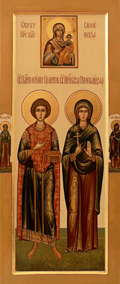 Paul and JulianaHoly MartyrsMar 4
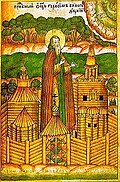 Gerasimus of VologdaVenerable · First wonderworker of VologdaMar 4
 Felix of RhuysVenerable · Abbot of Saint-Gildas-de-RhuysMar 4
 Joasaph of PskovVenerable · Founder of Snetogorsk MonasteryMar 4
- Gregory of AssosSaint · Bishop of AssosMar 4
- Peter of TomskRighteousMar 4
- Acacius of PtolemaisMartyrMar 4
- Adrian and CompanionsHoly MartyrsMar 4