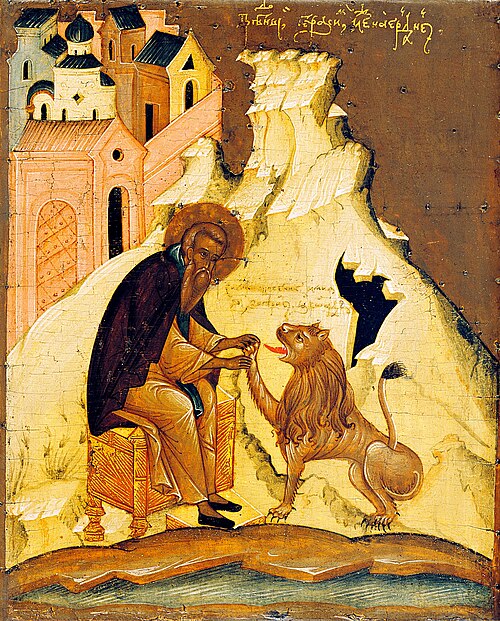
Venerable
Gerasimus of the Jordan
Abbot in the Jordan desert
Monk and abbot of the fifth century who lived in the desert near the Jordan.
- Feast
- March 4old style March 17
- Reposed
- 4755th century
- Place
- Jordan River
- Order
- Venerables
Life
Venerable Gerasimus of the Jordan was a monk and abbot of the fifth century, founder of a great lavra in the desert near the River Jordan. He came from Lycia in the south of Asia Minor and fell asleep in the Lord in 475, according to most sources, or in 451 according to others. He is best known for the story of the lion he tamed and for the strict rule of his monastery. The Orthodox Church commemorates him on 4 March, by the old calendar.
Youth and struggle
Gerasimus was born into a wealthy family in Lycia, according to some sources at Myra, between 376 and 391, and was raised as a Christian. Leaving his wealth and the cares of the world, he chose monastic life. He spent time in the desert of the Thebaid in Egypt, then returned to Lycia, where, with the blessing of his spiritual father, he lived alone in the wilderness, devoted to prayer, scant food and short sleep. One saying of his holds that the bed is a kind of coffin, because it keeps us from activity, which is the foundation of life.
Around 450, having wished since childhood to see the Holy Places, he went to Palestine and settled in the desert near the River Jordan. There he founded a monastery, to which many monks came, and around it a lavra of caves for the more experienced as hermits. He is said to have joined in this way community life and the life of the hermit.
The rule of his monastery
Gerasimus gave the monastery a strict rule, which became famous. Five days a week each monk stayed in his own cell in complete silence, praying and weaving baskets and mats from palm leaves, without fire, and ate only dry bread, dates and water. The cells were left unlocked, so that anyone might take from them what he needed. On Saturday and Sunday they gathered in church for the Liturgy and Holy Communion, ate together a cooked meal with a little wine, and set before the abbot the work of the five days. Each had a single garment. The community numbered about seventy monks. In Great Lent Gerasimus ate nothing, nourished only by Holy Communion.
The Council of Chalcedon
In those years the Monophysite teaching was spreading in Palestine. As Cyril of Scythopolis writes in the life of Saint Euthymius, Gerasimus fell into it for a time but soon renounced the error, with the help of Saint Euthymius the Great, who lived in the desert of Ruba. Gerasimus took part in the Fourth Ecumenical Council at Chalcedon in 451, where he was a defender of the right faith. Euthymius valued him so highly that he sent to him the monks who wished to reach perfection. When Euthymius died, in 473, tradition says that Gerasimus saw angels carrying his soul up to heaven. The best known of his disciples was Saint Cyriacus the Anchorite.
The lion
The best known story is the one told by John Moschus in the Spiritual Meadow. Gerasimus found a lion roaring in pain with a thorn in its paw; he drew out the thorn and healed it. The lion, named Jordan, followed him to the monastery and obeyed him, never leaving it for more than five years. According to tradition, when Gerasimus died the lion pined away at his grave and was buried beside him. From this story came the icon in which the saint appears with the lion at his feet. The earliest known image is a fresco of 1125 in the Antoniev monastery in Novgorod, and the cycle of his life appears from the fourteenth century.
Veneration
The Greek Orthodox monastery of Deir Hajla near Jericho preserves the memory of Saint Gerasimus, whose lavra stood nearby. He is commemorated on 4 March, and the Roman Catholic Church remembers him on 5 March.
Commemorated the same day March 4
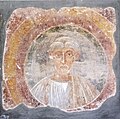 Lucius ISaint · Bishop of RomeMar 4
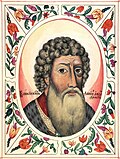 Daniel of MoscowRight-Believing · Prince of MoscowMar 4
 Vasilko of RostovRight-Believing · Prince of RostovMar 4
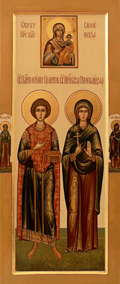 Paul and JulianaHoly MartyrsMar 4
 Gerasimus of VologdaVenerable · First wonderworker of VologdaMar 4
 Felix of RhuysVenerable · Abbot of Saint-Gildas-de-RhuysMar 4
 Joasaph of PskovVenerable · Founder of Snetogorsk MonasteryMar 4
- Gregory of AssosSaint · Bishop of AssosMar 4
- Paul I of BresciaSaint · Bishop of BresciaMar 4
- Peter of TomskRighteousMar 4
- Acacius of PtolemaisMartyrMar 4
- Adrian and CompanionsHoly MartyrsMar 4