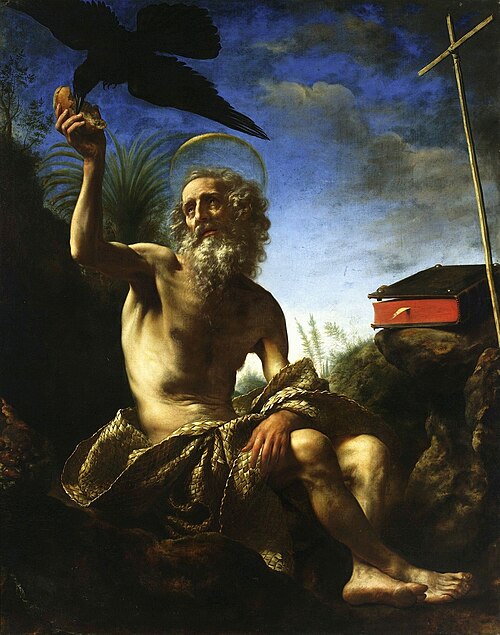
Venerable
Paul of Thebes
The First Hermit
Hermit of Egypt, regarded as the first desert hermit, who lived many years in the Thebaid.
- Feast
- January 15old style January 28
- Reposed
- 3414th century
- Place
- Thebaid
- Order
- Venerables
Life
Venerable Paul of Thebes, called the First Hermit, was an ascetic of Egypt and is regarded as the first Christian hermit. He lived in the desert of the Thebaid, according to the account, almost a hundred years. His life was written by Blessed Jerome around 375. The Orthodox Church commemorates him on 15 January, and the West on 10 January.
Flight to the desert
Paul was born around 227 in the Thebaid of Egypt, into a well-to-do family, and received a fine education in Greek and Egyptian. Orphaned young, he lived with an older sister, who was married. When the persecution of Decius (249 to 251) began, his brother-in-law wished to hand him over to the persecutors in order to seize their property. Paul, fifteen or sixteen years old, fled to the desert. He meant to stay only until the persecution passed, but he found in a mountain a cave with a spring and a date palm, and stayed.
Life in the desert
Jerome says that he lived in the cave for decades, praying, clothed in palm leaves and fed on its fruit. From the age of forty-three a raven brought him half a loaf of bread every day. Near the end of his life, Saint Anthony the Great, ninety years old, thought that he was the first of the hermits. One night he was told there was another better than he, and Anthony set out to look for him. According to Jerome's Life, he walked several days through the desert and found the cave. Paul hid, but in the end let him enter. The two embraced and spoke about the world, and the raven brought a whole loaf instead of half.
Repose
Paul was then a hundred and thirteen years old. He told Anthony that the hour of his death had come and asked him to bring the cloak he had received from Saint Athanasius, to wrap him in. Anthony went for the cloak, and as he returned he saw the soul of Paul rising among angels, prophets and apostles, shining like the sun. The body was kneeling in prayer. Anthony had nothing to dig with, and two lions came and dug the grave with their claws. He buried him in the cloak of Athanasius and took the tunic of palm leaves, which he wore only at Pascha and Pentecost. Paul died around 341.
Veneration
The life written by Jerome made his name known in West and East, and some scholars regard it as more literary work than history. His veneration, however, is ancient. He founded no monastery, but after him came many imitators who filled the desert with monasteries. His relics were brought in the twelfth century to Constantinople, to the Peribleptos monastery, and later reached Venice and Hungary. The Copts believe his cave to be at the monastery of Deir Anba Bula near the Red Sea, and they commemorate him on 2 Meshir. The Order of Saint Paul the First Hermit in Hungary took its name from him. He is not to be confused with Saint Paul the Simple, commemorated on 4 October.
Commemorated the same day January 15
 RachelRighteous · The MatriarchJan 15
 Remigius of ReimsSaint · Archbishop of ReimsJan 15
 Remigius of RouenSaint · Archbishop of RouenJan 15
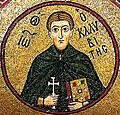 John the Hut-dwellerVenerable · Hermit of ConstantinopleJan 15
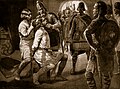 Ceolwulf of NorthumbriaRight-Believing · King of NorthumbriaJan 15
- EugippiusVenerable · Abbot of LucullanumJan 15
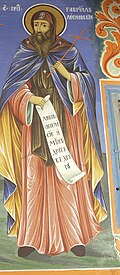 Gabriel of LesnovoVenerable · Hermit of LesnovoJan 15
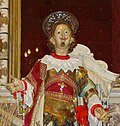 Ephysius of CagliariMartyr · Patron of CagliariJan 15
 Viator of BergamoSaint · Bishop of BergamoJan 15
 Nektary TelyashinSaint · Archbishop of Siberia and TobolskJan 15
- Salome of UjarmaRight-Believing · Queen of IberiaJan 15
 Pansophius of AlexandriaMartyrJan 15