
Fool-for-Christ
Pelagia of Diveevo
Fool for Christ
Fool for Christ born at Arzamas into a merchant family, who after Saint Seraphim watched over the sisters of the convent.
- Feast
- January 30old style February 12
- Reposed
- 188419th century
- Place
- Diveyevo
- Order
- Fools-for-Christ
Life
Blessed Pelagia of Diveevo (in the world Pelagia Ivanovna Serebrennikova, born Surina, 1807 or 1809-1884) was a fool for Christ, the first of the three blessed women of the Saint Seraphim Monastery of Diveevo. At the command of Saint Seraphim she took upon herself foolishness for Christ and, after his death, watched over the sisters of the convent. She fell asleep on 30 January 1884. She was glorified as a local saint in 2004 and then for veneration throughout the Church. She is commemorated on 30 January.
Beginnings
She was born at Arzamas, into a rich merchant family, and grew up in the house of a severe stepfather. The year of her birth varies in the sources: 1807 in one, 1809 in the inscription on her grave. According to her mother, she was peculiar from childhood, and her mother hurried to marry her off, as a fool. At the betrothal she feigned madness, but the bridegroom did not renounce her. Her three children, two sons and a daughter, died in infancy.
In 1828 the young couple visited the Sarov Hermitage to receive Saint Seraphim's guidance. Saint Seraphim spoke long with Pelagia and showed her the way of self-denial and laid on her foolishness for Christ, as necessary for her salvation, foretelling that she would live at Diveevo and replace him. He told her to go at once to his convent and protect his orphans: Many will be saved through you, and you will be a light to the world. She then learned the Jesus Prayer. By day she seemed to lose her reason more and more, running through the streets of Arzamas screaming, drawing gossip and insults, which sincerely gladdened her. At night she prayed on the church porch. Her husband did not understand her labour, beat her, mocked her and kept her in chains. At his request the town chief punished her cruelly; it is told that her body hung in shreds, and she did not utter a groan. The town chief saw in a dream the cauldron prepared for him.
Her husband renounced her, and in 1837 her mother placed her in the Diveevo convent, where at first she continued her foolishness, endured want, never asked for food but ate a little of what was offered, went barefoot all year, did not wash, slept on the floor on a felt mat, never took money, spoke in parables and had the gift of foresight. Forty-six years she lived in the convent. During a disturbance she fought in her own way for justice and, rebuking a bishop, struck him on the cheek. Her war seemed raving madness, but after the fights, with dishes broken, furniture smashed and clothing torn, the sisters were calmed and enlightened.
Her last years
After the disturbance ended, the blessed one changed, loved flowers and took care of them. Abbess Maria did nothing without her counsel. Who should be sent to obedience, who accepted or sent from the convent was decided with the blessing of the blessed one. Spiritual gifts drew to her people of all kinds, who came or wrote. Consoling and healing, guiding and rebuking, she directed many onto the way of salvation. Her cell attendant said that she told each only what the Lord showed her and what he needed for salvation: one she caressed, another she scolded, with one she wept, with another she sighed, one she took in, another she drove off, and with another, however long he sat, she would not say a word. The painter M. P. Petrov described her in 1874: an old, bent and dirty woman with huge nails, but when she stood up she was a well-built woman with extraordinarily lively, shining eyes.
On 11 January 1884 she fell, and a few days later began to bow to everyone to the ground, asking forgiveness. On 20 January she fell ill with pneumonia. On 23 January the priest came to give her communion, but she pushed the Holy Chalice aside several times, saying: May it be done a second time? Those present understood that an angel of the Lord had already given her communion. She fell asleep on 30 January. She was buried in a cypress coffin, adorned with cherubim, and over the grave, before the altar of the Trinity Cathedral, a monument with inscriptions was raised. Contemporaries called her the second Seraphim. In Diveevo the blessed Paraskeva and, last, Anna Vasilievna Bobkova followed.
Glorification
On 31 July 2004 she was glorified as a locally venerated saint of the Nizhny Novgorod diocese, and in October 2004 the Council of Bishops decided on her veneration throughout the Church. Her relics were found in September 2004 and rest in the Kazan church of the Diveevo monastery. One of its eight side chapels is dedicated to her.
Commemorated the same day January 30
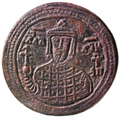 Peter of BulgariaRight-Believing · Tsar of BulgariaJan 30
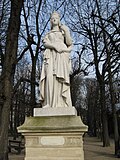 BalthildRight-Believing · Queen of the FranksJan 30
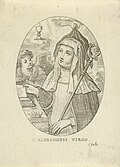 Aldegund of MaubeugeVenerable · Abbess of MaubeugeJan 30
- Agrippinus of AlexandriaSaint · Patriarch of AlexandriaJan 30
- Matthias of JerusalemSaint · Bishop of JerusalemJan 30
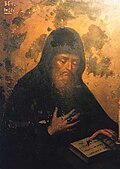 Zeno the FasterVenerable · Schemamonk of the Kiev CavesJan 30
- Stephen NalivaikoNew Martyr · Exiled to NorilskJan 30
- Zeno of CappadociaVenerable · Syrian hermitJan 30
- Demetrius of SlivenNew MartyrJan 30
- Theodore of MytileneNew MartyrJan 30
- Ailbhe son of RonanSaintJan 30
- Amandinus of RomeMartyrJan 30