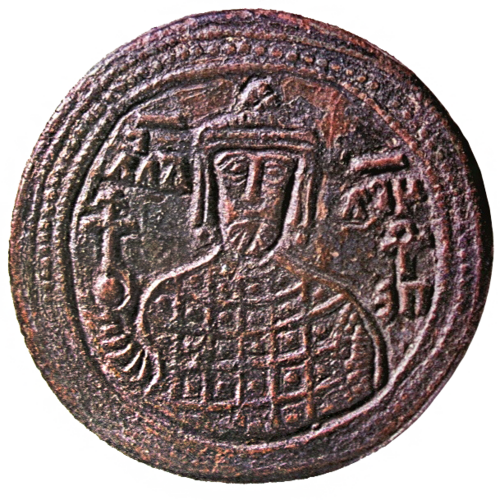
Right-Believing
Peter of Bulgaria
Tsar of Bulgaria
Tsar of Bulgaria from 927 to 969, who faced Bogomilism and retired as a monk at the end of his life.
- Feast
- January 30old style February 12
- Reposed
- 97010th century
- Place
- Constantinople
Life
Saint Peter was tsar of Bulgaria from 927 to 969, the son of Simeon the Great. He gave his country a long peace, won recognition of the Bulgarian patriarchate, built and endowed churches and monasteries, opposed the Bogomil heresy and, at the end of his life, gave up the throne and became a monk. The Bulgarian Orthodox Church honours him as a saint, and his memory is kept on 30 January (12 February by the new calendar).
The young tsar
Peter was the son of Simeon by his second marriage, to a sister of George Sursuvul. Simeon had made his elder son Michael a monk and named Peter as his heir. Peter came to the throne in 927, in a Bulgarian-Byzantine war that his father had left unfinished. He began with a quick offensive in Byzantine Thrace and then, before the Byzantines could reply, offered peace. The emperor Romanos Lekapenos readily accepted.
In October 927 Peter went to Constantinople. The treaty was signed and on 8 November he married the emperor's granddaughter Maria in the church of the Zoodochos Pege. She was renamed Irene, "peace," to mark the new age. By the treaty Byzantium recognized his title of tsar and the independent, autocephalous status of the Bulgarian Church and its patriarch, and paid a yearly sum. The peace lasted until 966, nearly forty years, and Bulgaria in this time appears to have been prosperous and well ordered.
Troubles and the Church
The reign had its troubles. About 930 his brother John rebelled and was exiled to Byzantium. Michael left his monastery and led a stronger revolt that ended with his early death. In 933 the Serbian prince Časlav fled from Preslav and Serbia won back its independence. Magyar bands also crossed Bulgarian lands.
Peter was generous to the Church, so generous that even churchmen such as the priest Cosmas thought the wealth of the Church was a danger. Bogomilism spread in his time, and the tsar acted against it and asked for the counsel of well known hermits and of the patriarch of Constantinople. He turned often to Saint John of Rila, asking for his prayers and spiritual advice.
The last years
After Irene died in the mid-960s, the emperor Nikephoros Phokas stopped paying the yearly sum and encouraged Prince Sviatoslav of Kiev to attack Bulgaria. In 968 Sviatoslav took some eighty fortresses. Peter managed to draw the Rus away, by inciting the Pechenegs to attack Kiev, but Sviatoslav returned in 969. Peter suffered a stroke, left the throne to his son Boris II and became a monk. Modern historical works date his death to 30 January 970, while the Orthodox Church in America and the Greek synaxarion give 967, so the sources do not agree on the year.
Commemorated the same day January 30
 BalthildRight-Believing · Queen of the FranksJan 30
 Aldegund of MaubeugeVenerable · Abbess of MaubeugeJan 30
- Agrippinus of AlexandriaSaint · Patriarch of AlexandriaJan 30
- Matthias of JerusalemSaint · Bishop of JerusalemJan 30
 Zeno the FasterVenerable · Schemamonk of the Kiev CavesJan 30
 Pelagia of DiveevoFool-for-Christ · Fool for ChristJan 30
- Stephen NalivaikoNew Martyr · Exiled to NorilskJan 30
- Zeno of CappadociaVenerable · Syrian hermitJan 30
- Demetrius of SlivenNew MartyrJan 30
- Theodore of MytileneNew MartyrJan 30
- Ailbhe son of RonanSaintJan 30
- Amandinus of RomeMartyrJan 30