Hieromartyr
Philoumenos Hasapis
Abbot of Jacob's Well
Cypriot abbot of the Greek monastery of Jacob's Well, killed near Nablus in November 1979.
- Feast
- November 16old style November 29
- Reposed
- 197920th century
- Place
- Nablus
- Order
- Martyrs
Life
Holy Hieromartyr Philoumenos Hasapis was a Cypriot archimandrite of the Patriarchate of Jerusalem who lived from 1913 to 1979. In the last months of his life he was abbot of the Greek monastery at Jacob's Well near Nablus (Shechem) in Samaria, the place where the Saviour spoke with the Samaritan woman.
On 29 November 1979 he was killed in his monastery while serving Vespers. The Patriarchate of Jerusalem numbered him among the saints in 2009, and his relics now rest at Jacob's Well itself.
Childhood in Cyprus
Sophocles Hasapis was born on 15 October 1913 in the village of Orounta, in the Morphou district of Cyprus, not far from Nicosia (other sources say in Nicosia itself). His parents, George and Magdalene, were devout people and had thirteen children.
From an early age he showed a love for holy things. Together with his twin brother Alexander, he was raised in the Orthodox faith above all by their grandmother, Loxandra.
Novice at Stavrovouni
In 1927, at the age of fourteen, the two brothers left home and walked to the Monastery of Stavrovouni, known for its strict and ascetic life. They were received by the discerning Elder Barnabas and, with their parents' blessing, stayed on as novices.
They lived in Cyprus for about six years. Then, at the invitation of the Exarch of the Holy Sepulchre, they went to the Holy Land, arriving in 1934.
Monk in the Holy Land
In Jerusalem the brothers attended the Patriarchate's high school and the school of Holy Sion. In 1937 they were tonsured monks: Sophocles received the name Philoumenos and Alexander the name Elpidios. On 5 September of that year Philoumenos was ordained hierodeacon.
After finishing their studies in 1939, Elpidios left the Holy Land and served elsewhere, including the Machairas Monastery in Cyprus and Mount Athos. Philoumenos remained in Jerusalem for forty-five years, until his death.
He carried out various obediences in the Patriarchate and lived for some years in the Lavra of Saint Sabbas the Sanctified. On 1 November 1944 (the Greek source says 1943) he was ordained hieromonk, and he was later raised to the rank of archimandrite.
As a trusted priest of the Patriarchate, he served in turn as priest and superior of several Greek churches and monasteries in the Holy Land, in Jerusalem, Jaffa and Ramallah.
At Jacob's Well
On 8 May 1979 he was appointed abbot of the monastery at Jacob's Well in Samaria.
The hagiographic sources say that soon after his appointment a group of people demanded that he remove the crosses and icons near the well, which they regarded as a holy place of their own. Father Philoumenos refused, recalling that the well had been an Orthodox holy place for many centuries, and the men left with threats.
Martyrdom
On the evening of 29 November 1979 (the feast of the Martyr Philoumenos; 16 November in the Julian calendar, the feast of the Holy Apostle Matthew), while Father Philoumenos was serving Vespers, a man entered the monastery and threw a hand grenade, which caused heavy damage. According to investigators, the abbot tried to escape the explosion and fire but was pursued and struck several times with an axe.
His wounds showed that he had tried to shield his face with his hands, and the blows severed fingers from his hands. The church was then desecrated: the crucifix was hacked and the holy vessels were scattered.
The killer fled undetected. The body of Archimandrite Philoumenos was buried in the cemetery of the Brotherhood of the Holy Sepulchre on Mount Zion.
The killer's arrest
The Israeli police investigation at first failed to identify the attacker. On 17 November 1982 Asher Raby, a 37-year-old man from Tel Aviv, was caught as he again tried to climb into the monastery over the wall, carrying hand grenades.
He confessed to the killing of Father Philoumenos and to other crimes and assaults, among them the murder of a Jewish doctor in Tel Aviv and a serious attack on a nun at Jacob's Well in April 1982. Investigators found that he had acted alone, without any link to a religious or political group.
Psychiatric examinations found him mentally ill and unfit to stand trial, and he was committed to a psychiatric hospital. In court it was stated that he was convinced the monastery stood on the site of the ancient Temple.
On the accounts of his death
The first reports blamed the murder on a group of extremist settlers, and some added cruel details not found in the police investigation. Researchers such as David Gurevich and Yisca Harani showed in 2017 that these versions kept circulating even after the killer's arrest, some of them echoing the pattern of old false accusations against Jews.
The canonisation decree of the Patriarchate of Jerusalem speaks only of a fanatical visitor of another faith, without accusing any people.
The finding of the relics
On 30 November 1983 Patriarch Diodoros of Jerusalem, with bishops, priests and monks, opened the grave of Father Philoumenos. Witnesses testified that the body was found almost incorrupt and giving off a pleasant fragrance.
The relics were washed, wrapped in a new shroud and placed in the Church of the Holy Trinity at the Greek seminary on Zion. After a few months they were buried again, and on 8 January 1985 they were taken up once more and placed in a reliquary in the same church.
On 29 August 2008, before the consecration of the rebuilt Church of Saint Photini the Samaritan woman at Jacob's Well, the relics were solemnly carried from Jerusalem to Nablus.
Glorification and veneration
On 11 September 2009 Patriarch Theophilos III of Jerusalem numbered him among the saints as a new hieromartyr. On 29 November 2009, thirty years after his death, the glorification was celebrated at Jacob's Well with a procession and a great gathering of pilgrims.
His services were composed by the hymnographer Charalambos Bousias and by Metropolitan Ioel of Edessa, at the request of Patriarch Theophilos. On 5 March 2010 the Holy Synod of the Russian Orthodox Church also entered his name in its calendar.
A new church in Nicosia was dedicated to him in 2004, and his relics have been brought for veneration to his native Cyprus. Holy Hieromartyr Philoumenos is commemorated on 29 November, that is 16 November in the Julian calendar, the day of his martyrdom.
Commemorated the same day November 16
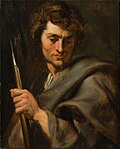 MatthewApostle · Apostle and EvangelistNov 16
 Othmar of St. GallVenerable · First Abbot of St. GallNov 16
 Fidentius of PaduaMartyrNov 16
 Sergius of Malaya PinegaVenerable · HieroschemamonkNov 16
- Africus of CommingesSaint · Bishop of CommingesNov 16
 Michael AbramovHieromartyr · ArchpriestNov 16
- Akylina of DramaVenerable · Abbess in DramaNov 16
- Aelfric of AbingdonSaint · Archbishop of CanterburyNov 16
- AfanSaintNov 16
- Ananias BoykovMartyrNov 16
 Anianus of AstiSaint · Bishop of AstiNov 16
- AugustineMartyr · Martyr of CapuaNov 16