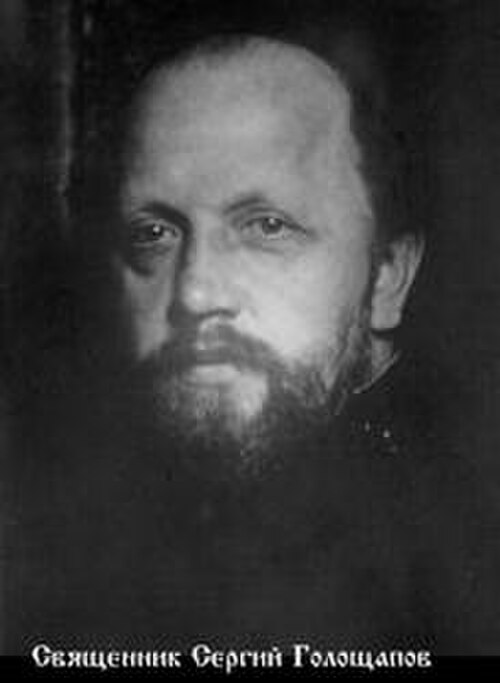
Hieromartyr
Sergius Goloshchapov
Archpriest
Archpriest born in 1882 near Moscow, shot at the Butovo firing range in 1937; canonized in 2000.
- Feast
- December 7old style December 20
- Reposed
- 193720th century
- Place
- Butovo firing range
- Order
- Martyrs
Life
Saint Sergius Goloshchapov (1882-1937), hieromartyr, was an archpriest in Moscow, a professor of philosophy, a defender of Orthodoxy in the time of the Josephite movement and a martyr, shot at the Butovo firing range on 19 December 1937. He was glorified in 2000. He is commemorated on 19 December (or, by the calendar in our sources, on 7 December and 22 August).
Formation
He was born on 6 (18) June 1882 in the settlement of Banki near Pavshino, Moscow district. His father, Ivan Alexandrovich, was a textile designer at the Znamenskaya manufactory and the family was poor, but bound by deep religiosity. He graduated from the Zaikonospassky church school (1898), the Moscow seminary (1904) and the Moscow Theological Academy (1908), third in his class, as candidate of theology, with a work on the divinity of Christianity. He was a professorial scholar in 1908-1909. From 1909 he was assistant inspector of the seminary, from 1910 teacher of philosophy, logic and psychology. Ill with tuberculosis, he took a kumis cure in Bashkiria. In March 1916 he presented to the Academy a master's dissertation, God in the Flesh. In 1917-1918 he was a clerk in the department for supreme church administration of the Local Council. In 1918-1926 he taught Russian and literature at secondary school, then retired on disability. In 1908 he married Olga Borisovna Kormer and they had a son, Pavel.
The priest
From February 1920 he was deacon, from May priest. He decided on ordination after a conversation with Patriarch Tikhon. In 1920-1923 he was rector of the church of Saint Nicholas at Pokrovskoe, where he worked to found a parish school in which the faithful could learn Holy Scripture, the typikon and chanting. From 1921 he was archpriest and taught systematic philosophy at the Moscow Theological Academy, which functioned unofficially, as docent. From 1922 he served at the church of the Nikolsky Edinoverie monastery. From 1925 or 1926 he was rector of the church of the Georgian Icon of the Mother of God in Nikitniki, where he sought to restore the services in strict order. Archimandrite Sergius (Savelyev), who in youth was a parishioner of this church, remembered the vigils on great feasts, which began about ten in the evening and ended at five or six in the morning, in which the warmth of common prayer changed everything, and the brotherly meal after the service was poor, but full of spiritual sweetness, like an echo of the love feast of the early Christians.
The Josephite and martyr
In 1927 he sharply criticized the declaration of Metropolitan Sergius, which made great concessions to Soviet power, and entered canonical communion with Metropolitan Joseph (Petrovykh). The Georgian church was closed on 30 September 1929. On 4 October 1929 he was imprisoned at Butyrka and sentenced to three years in camp, served at Solovki, where he did heavy labour, fell ill with a heart attack and typhus, then worked as assistant pharmacist, knowing Latin. In 1932 he was exiled to Mezen, where his wife was also exiled. The family lived on tutoring and selling paper flowers. From 1934 they lived at Murom and then Mozhaisk. His son remembered that despite hardships Father Sergius did not lose heart and always supported those around him. In the small room he rented at Mozhaisk he made a small altar, before which he served morning and evening services.
On 7 December 1937 he was arrested at home, during the vigil. The indictment said he had vestments with him and secretly went round houses performing religious rites, and though he did not admit guilt, he was convicted by the testimony of a witness. On 16 December he was sentenced to death by the NKVD troika and on 19 December shot at Butovo. By decision of the Holy Synod of 27 December 2000 his name was entered among the New Martyrs and Confessors of Russia of the twentieth century.
Commemorated the same day December 7
 Ambrose of MilanSaint · Bishop of MilanDec 7
 Sabinus of SpoletoHieromartyr · Bishop of SpoletoDec 7
 Anthony of SiyaVenerable · Founder of Antonievo-Siysky MonasteryDec 7
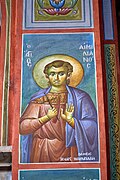 Aemilianus the PhysicianMartyr · Physician and confessor of AfricaDec 7
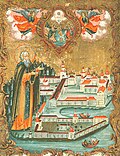 Nil of StolobnyVenerable · Founder of the Stolobny hermitageDec 7
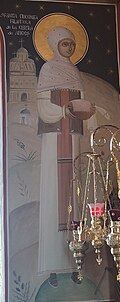 Philofteia of Curtea de ArgeșVenerable Martyr · Patron of Curtea de ArgeșDec 7
- Gregory of GornjakVenerableDec 7
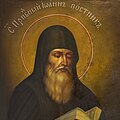 John the Faster of the Kiev CavesVenerable · Monk of the Kiev CavesDec 7
- Mastridia of AlexandriaVenerableDec 7
- Gregory the HesychastVenerable · Hesychast monk of AthosDec 7
- Romanus of SinaiSaint · Monk of SinaiDec 7
- Paul the ObedientVenerableDec 7