Venerable
Simeon of Philotheou
Venerable Athonite monk of Philotheou Monastery.
- Feast
- April 19old style May 2
- Reposed
- 159416th century
- Place
- Philotheou
- Order
- Venerables
Life
Venerable Simeon of Philotheou, called Simeon the Barefoot (Bosoi), was the son of a priest. At fifteen he came under the guidance of Pachomius, bishop of Demetrias (Larissa diocese), who tonsured him and ordained him hierodeacon. Desiring a strict monastic life, he soon went to a monastery near Mount Olympus, then to the Holy Mountain, to the Lavra of Saint Athanasius. By humility and obedience he won the respect of the brethren and was ordained hieromonk. Transferred to Philotheou Monastery, he intensified his labors, became an example to the brethren and was unanimously chosen abbot. Later, through the cunning of the Enemy, he had to endure the complaints of monks who thought him too strict.
Leaving to God the judgment of the culprits, he left the monastery and went to Mount Phlamourion on Mount Pelion. There, in solitude and quiet, with neither roof nor fire, the hermit struggled in old clothing, with almost no food, in constant prayer standing or on bended knees. After three years he was found by God-loving people, who, inspired with reverence for his way of life, begged him to let them live with him. After seven years, through his efforts, a monastery was formed, with a church in honor of the Most Holy Trinity, where he served the Divine Liturgy every day. When the life of the brethren had been put in order, he left and began to preach the Word of God in Epirus, Thessaly and Athens. He strengthened the wavering in faith, set those in error on the path of salvation, made the strong stronger and taught everyone to love one another and to attend church on Sundays and feast days.
The boldness of the holy confessor aroused the malice of the opponents of Christianity. In the city of Euripa they slandered him before the city ruler, Ayan, accusing him of converting a Turk to Christianity. He was arrested and sentenced to public burning, but God did not permit the unjust sentence to be carried out. Led to interrogation in shackles, barefoot (bosoi) and in an old rassa, Simeon, inspired by the Holy Spirit, answered the governor so wisely that Ayan could not impose the death sentence. The saint received his freedom and continued his efforts, sealing his preaching with healings and miracles. Many followed him, and he accepted everyone, blessed them for the monastic life and sent them to his monastery.
Simeon ended his life at Constantinople, fell asleep in the Lord and was buried by the Patriarch at Chalke in a church dedicated to the Most Holy Theotokos. After two years, when the monks of the Phlamourion monastery decided to transfer his relics to their monastery and opened his grave, an ineffable fragrance came forth and healings began. His Life and Service were published at Smyrna in 1646. According to the list of the saints of Philotheou, he died in 1594. He is commemorated on 19 April (new style; 2 May on the old calendar).
Commemorated the same day April 19
 ExpeditusMartyr · Centurion of MeliteneApr 19
 Alphege of CanterburyHieromartyr · Archbishop of CanterburyApr 19
 Tryphon of ConstantinopleSaint · Patriarch of ConstantinopleApr 19
 Viktor OstrovidovConfessor · Bishop of Izhevsk and VotkinskApr 19
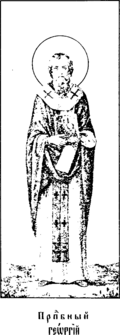 George the ConfessorSaint · Bishop of Antioch in PisidiaApr 19
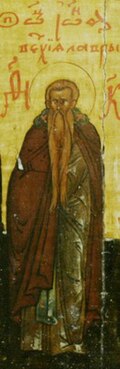 John PalaiolavritesVenerableApr 19
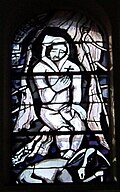 Gerold of WalsertalVenerable · Hermit in VorarlbergApr 19
- Agathangelos of EsphigmenouNew Martyr · Monk of EsphigmenouApr 19
- Agathangelus of SmyrnaVenerable MartyrApr 19
- Antoninus of NicomediaMartyrApr 19
- AristonicusMartyrApr 19
- BassusMartyr · Martyr of AfricaApr 19