Saint
Simion Ștefan
Metropolitan of Transylvania
Scholar and translator, Metropolitan of Transylvania from 1643 to 1656, canonized by the Romanian Orthodox Church in 2011.
Life
Holy Hierarch Simion Ștefan was a Romanian scholar and translator, metropolitan of Transylvania from 1643 to 1656. He was canonized by the Romanian Orthodox Church on 21 July 2011 and is commemorated on 24 April.
A native of Alba Iulia, he studied at a monastery school near the capital of Transylvania and was elected in 1643 archbishop and metropolitan in the see of Bălgrad and Vad and Maramureș and all the land of Transylvania. In the year 1651 he consecrated at Alba Iulia a Basilian monk as bishop of Mukachevo.
The New Testament, printed by himself at Alba Iulia in 1648 (of which about 330 copies have survived), under the patronage of the Reformed prince of Transylvania, George Rákóczi I, is of great importance for the Preface he composed. After paying homage to Rákóczi, through whose care the book was printed and who sent him to his brethren across the mountains to learn, he gives some notable opinions on the unification of the language, as well as on some elements of renewal brought into the Orthodox Church of the Transylvanian Romanians. He is the first Romanian scholar who defines the notion of the circulation of words through a comparison from the field of money of his time, when gold coins were good everywhere: words must be like coins, good are those that pass in all lands, and likewise good words are those that all understand. He also observed the great capacity of the Romanian language to be enriched with new words. The Preface ends with the well-known formula of the time from the Pravila of Govora, which all writers then used: the reader should consider in this book that it was not written by angels from heaven, but by a sinful hand, made of dust.
Another great work of Metropolitan Simion Ștefan is the Psalter of Bălgrad (of which about forty copies have survived today), printed by the same group of scholars, three years later, in 1651.
Commemorated the same day April 24
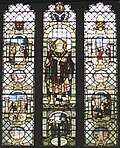 MellitusSaint · Archbishop of CanterburyApr 24
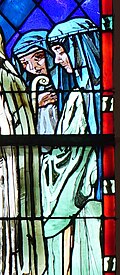 Doda of ReimsVenerable · Abbess of Saint Peter's, ReimsApr 24
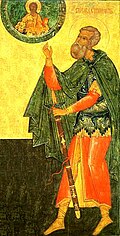 Sabbas StratelatesMartyr · Roman generalApr 24
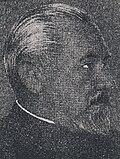 Branko DobrosavljevićHieromartyr · Serbian Orthodox priestApr 24
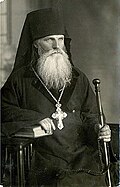 Alexis KabalyukVenerable · Schema-archimandrite in TranscarpathiaApr 24
- Sava II BrankovićSaint · Metropolitan of TransylvaniaApr 24
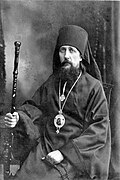 Ignatius SadkovskyHieromartyr · Bishop of SkopinApr 24
- Sava of the CavesVenerable · Monk of the Kyiv Caves LavraApr 24
- Alexis the RecluseVenerable · Recluse of the Kiev CavesApr 24
- Joseph the ConfessorSaint · Bishop of MaramureșApr 24
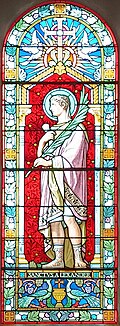 Alexander of LyonMartyr · Martyr of LyonApr 24
- PasicratesMartyr · Martyr of Lower MoesiaApr 24