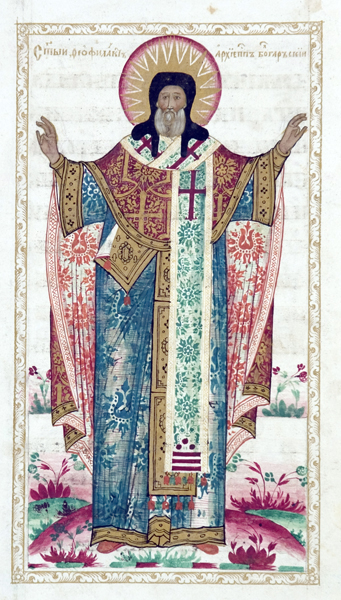
Saint
Theophylact of Ohrid
Archbishop of Ohrid
Byzantine archbishop of Ohrid and commentator on the Holy Scriptures.
- Feast
- December 31old style January 13
- Reposed
- 112612th century
- Place
- Ohrid
- Order
- Hierarchs
Life
Saint Theophylact of Ohrid was a Byzantine archbishop of Ohrid and an interpreter of Holy Scripture, in the second half of the eleventh century and the beginning of the twelfth. He was born around 1055 at Euripos (Chalcis) on the island of Euboea and died after 1107, perhaps not until after 1125. He is commemorated on 31 December. His commentaries on the Gospels and the Epistles are read in the Church to this day.
Formation and the call to Ohrid
Theophylact was born of Greek parents and was sent to study at Constantinople, where, according to some sources, he was a pupil of the scholar Michael Psellos. He became a deacon and rhetor of the Great Church and won a high reputation as a learned man. He was tutor to Constantine Doukas, son of the emperor Michael VII, for whom he wrote The Education of Princes. Under the patronage of the empress Maria he produced other notable works.
Between 1078 and 1092, the sources disagree about the year, he was made archbishop of Ohrid, in the Byzantine province of Bulgaria. According to some scholars his departure from the capital was a form of exile, tied to the disgrace of the emperor Michael's family, and Theophylact took it as banishment. According to others, the emperor and the patriarch saw in him the most suitable man to order an archdiocese that was hard to govern.
Ministry
In Ohrid he served for nearly twenty years, with diligence and care. Though Greek by upbringing and outlook, he looked after the Bulgarian Church and defended its interests. He opposed the teachings of the Paulicians and the Bogomils. In time he came to value the simple, sincere piety of the people, and they loved him for his labours.
In his letters, of which about 130 survive, he often complains of the rough manners of the local people and asks to be relieved of his office, without success. Yet these letters are a precious source for the history of the age: they tell of the wars with the Pechenegs, the Magyars and the Normans, which destroyed the food of the land and drove many people to flee into the forests, of popular uprisings, and of the passing of the crusader armies. He also wrote the life of Saint Clement of Ohrid, known as the Comprehensive Life, and an encomium of the fifteen martyrs of Tiberioupolis.
Writings
His commentaries on the four Gospels, the Acts, the Epistles of Saint Paul and the Minor Prophets rest on those of Saint John Chrysostom. Alongside them stand homilies, orations, minor pieces and a work against the Latins written in a conciliatory spirit. Towards the end of his life he withdrew, according to some sources, to Thessalonica. Bishop Nikolaj Velimirović judged his commentaries the finest of their kind after those of Saint John Chrysostom. They were used in the West as well: Thomas Aquinas took from them in the Catena Aurea, and Erasmus of Rotterdam drew on them for his edition of the New Testament.
Veneration
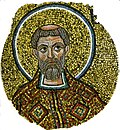
The time of his canonization is not known; in manuscripts he is called blessed and holy, and sometimes father and teacher of the Church. The churches of Serbia, Bulgaria, Greece and Russia commemorate him on 31 December. His image appears in church painting, among other places in the church of Saint George at the Zographou monastery on Mount Athos.
Commemorated the same day December 31
- Marius of AvenchesSaint · Bishop of AvenchesDec 31
 Melania the YoungerVenerable · Ascetic of RomeDec 31
 Columba of SensMartyrDec 31
 Dositej VasićConfessor · Metropolitan of ZagrebDec 31
- Sabiana of SamtskheVenerable · Abbess in SamtskheDec 31
- Gelasius of NilopolisVenerable · Abbot in EgyptDec 31
- Hermes of BononiaSaint · Exorcist of BononiaDec 31
- Michael BerezinHieromartyr · PriestDec 31
 Barbatian of RavennaVenerableDec 31
- Cyriacus of BisericaniVenerableDec 31
- Cyriacus of TazlauVenerableDec 31
- Dominanda of RomeMartyrDec 31