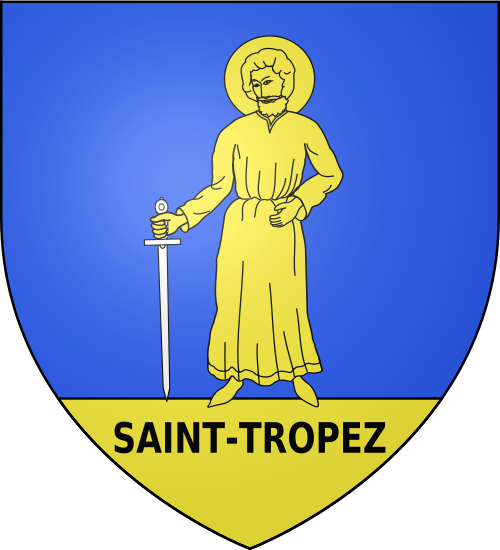
Martyr
Torpes of Pisa
Martyr of Pisa
Martyr of Pisa, killed by tradition in the persecution of Nero; the town of Saint-Tropez bears his name.
Life
Saint Torpes the Martyr of Pisa was, according to tradition, killed in the persecution of Nero, around 65. The town of Saint-Tropez in France bears his name. He is commemorated on 29 April. Some of the accounts about him are considered unreliable, and the first mention dates from the ninth century.
According to tradition he was a gladiator or knight from the emperor Nero's entourage, or head of his personal bodyguard. His full name was Caius Silvius Torpetius and he was from Pisa. He was converted by the Apostle Paul. He professed his faith when Nero declared Diana the creator of the universe. Nero did not want to kill him at once but asked him to renounce, and when he refused, beheaded him. According to another account, Torpes left Rome for Pisa, but was recognized as a Christian by the prefect Satellicus, who had him killed. His head was thrown into the Arno and was later claimed by Pisa. His body was put in a rotten boat with a cock and a dog, to feed on the saint's body. The boat floated toward Liguria. A holy woman, Celerina, had a vision in a dream of the arrival of the body, and the boat reached the place where she lived, now Saint-Tropez, near the sailors' cemetery. The body was untouched by cock and dog. The cock flew toward the village later called Cogolin, the dog ran toward the village later called Grimaud. The inhabitants named the village for the saint. The theme of relics carried across the sea in a small boat appears in the legends of other saints of the region, like Reparata and Devota, and places on the coasts of Spain and Portugal also claim to be where his boat landed. He was venerated at Pisa, Genoa and in Portugal, being patron of sailors.
The earliest church in Pisa dedicated to him dates from the eleventh century. The civil code of the Republic of Pisa of 1284 set 29 April as his feast. The Pisans credit him with ending a terrible plague in 1633. In Genoa, where veneration was brought by Pisan merchants, there is the church of San Torpete. At Saint-Tropez his bust is honoured at the festival of Les Bravades in mid-May and in June at Les Bravades des Espagnols, a religious and military celebration commemorating the victory of the Tropezian militia over the Spanish in 1637.
Commemorated the same day April 29
 Basil of OstrogSaint · Bishop of ZahumljeApr 29
 Memnon the WonderworkerVenerable · Abbot in Egypt and wonderworkerApr 29
 Amphilochius of PochayivVenerable · Monk of the Pochayiv LavraApr 29
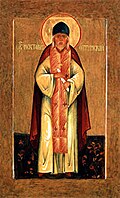 Nectarius of OptinaVenerable · Elder of OptinaApr 29
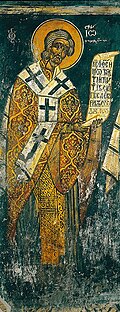 John Kaloktenes the NewSaint · Metropolitan of ThebesApr 29
- Three Hundred Laz MartyrsHoly New MartyrsApr 29
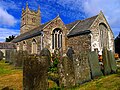 EndelientaVenerable · Hermit of CornwallApr 29
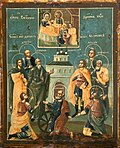 Nine Martyrs of CyzicusHoly Martyrs · Martyrs of CyzicusApr 29
- Sopater of BereaApostle · of BereaApr 29
- AemilianusMartyr · Martyr of CirtaApr 29
- Agapius and CompanionsHoly MartyrsApr 29
- Agapius and SecundinusHoly HieromartyrsApr 29