Venerable
Endelienta
Hermit of Cornwall
Cornish saint of the 5th-6th century, believed a daughter of the Welsh king Brychan, settled in north Cornwall.
- Feast
- April 29old style May 12
- Reposed
- 5016th century
- Place
- Cornwall
- Order
- Venerables
Life
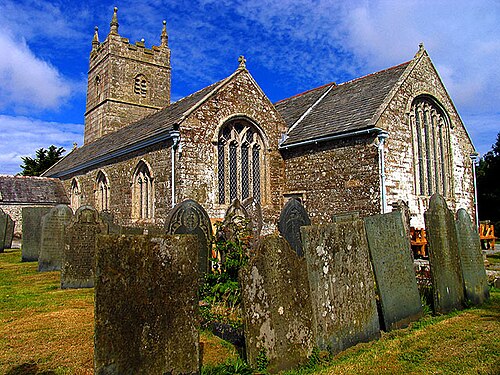
Saint Endelienta was a hermit of Cornwall, of the fifth and sixth centuries, held to be a daughter of the Welsh king Brychan of Brycheiniog, who came to north Cornwall to join her brothers and sisters in proclaiming the faith of Christ to the local people. She is remembered on 29 April. Our sources describe her as a saint of Cornwall known from local tradition and legend, and show no formal Orthodox canonization.
Her life according to tradition
Tradition makes her a daughter of King Brychan of Brycheiniog, in south Wales. The village of Saint Endellion in Cornwall, which bears her name, is the place from which she is said to have preached to the local people. Two old wells nearby bear her name. In the Welsh sources she is called Cenheidlon or Cynheiddon, and Endelienta is a Latinised form of that name. She is believed to have been born in south Wales and to have crossed the Bristol Channel to join her siblings in converting north Cornwall to Christianity.
On the way she first landed on the island of Lundy, where she is believed to have founded a small chapel, which was later wrongly rededicated to Saint Helen. Then she crossed to the mainland, stayed with her brother, Saint Nectan, at Hartland, and at length chose to settle at Trentinney, south-west of the present village, though she returned from time to time to Lundy, to withdraw for meditation.
The hermitage
She lived at Trentinney as a hermit, and legend says she lived only on the milk of a cow and the water of two nearby wells. Her sister, Saint Dilic (whose church is at Landulph), settled nearby, and the two often met on a path whose grass afterwards grew greener than elsewhere. The cow was killed by the lord of Trentinney, after it had strayed onto his land. He was, according to the story, killed in his turn by Endelienta's godfather, said to be King Arthur, angered by the deed, who sent his men to take revenge. Endelienta, however, was unhappy that Trentinney had been killed in her name and brought the nobleman back to life.
Her death and veneration
After a vision of her death, the saint is said to have asked that at her death her body be placed on a sledge or a cart drawn by oxen and be buried where they should stop. She is thought to have died on 29 April in the sixth century, perhaps at the hands of Saxon pirates. She was buried on top of a hill and a church was built over her grave. The present church at Saint Endellion stands on this site.
According to the local folklorist Nicholas Roscarrock, a chapel dedicated to her stood on the site of her hermitage at Trenteney until the sixteenth century, and her shrine in the church of Saint Endellion was a place of pilgrimage throughout the Middle Ages. It was almost destroyed at the Reformation, but the base survives and can still be seen. In the church at Saint Endellion music festivals are held every year, at Easter and in summer. Endelienta is depicted in the Langdale rosary, a sixteenth-century work, now in the Victoria and Albert Museum. In 2005 a local iconographer was asked to produce an icon of Saint Endelienta, though no known images of her existed to work from.
Commemorated the same day April 29
 Basil of OstrogSaint · Bishop of ZahumljeApr 29
 Torpes of PisaMartyr · Martyr of PisaApr 29
 Memnon the WonderworkerVenerable · Abbot in Egypt and wonderworkerApr 29
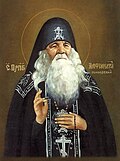 Amphilochius of PochayivVenerable · Monk of the Pochayiv LavraApr 29
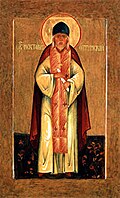 Nectarius of OptinaVenerable · Elder of OptinaApr 29
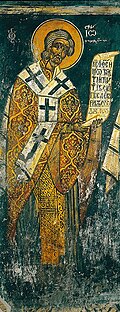 John Kaloktenes the NewSaint · Metropolitan of ThebesApr 29
- Three Hundred Laz MartyrsHoly New MartyrsApr 29
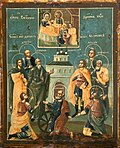 Nine Martyrs of CyzicusHoly Martyrs · Martyrs of CyzicusApr 29
- Sopater of BereaApostle · of BereaApr 29
- AemilianusMartyr · Martyr of CirtaApr 29
- Agapius and CompanionsHoly MartyrsApr 29
- Agapius and SecundinusHoly HieromartyrsApr 29