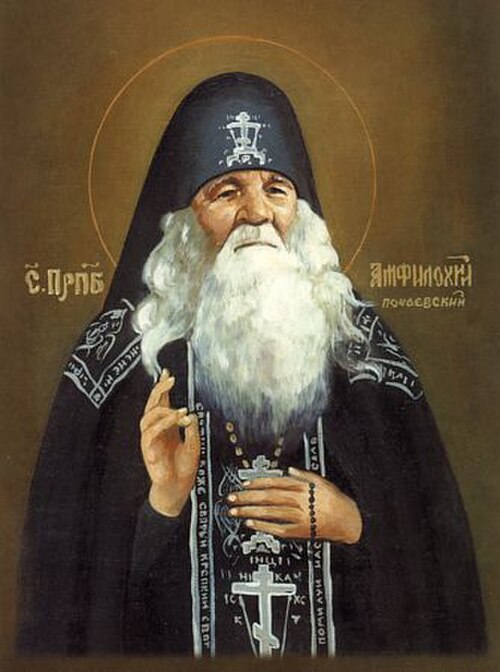
Venerable
Amphilochius of Pochayiv
Monk of the Pochayiv Lavra
Ukrainian monk from the Ternopil region who lived from 1894 to 1971 at the Pochayiv Lavra.
- Feast
- April 29old style May 12
- Reposed
- 197120th century
- Place
- Mala Ilovytsia
- Order
- Venerables
Life
Saint Amphilochius of Pochaiv (born Yakov Varnavovich Golovatyuk) was a schema-monk and spiritual father of the Dormition Lavra of Pochaiv, an elder, healer and clairvoyant of western Ukraine, who lived most of his life under communist persecution. Born in 1894 in the village of Mala Ilovytsia in the Ternopil region, he passed to the Lord on 1 January 1971. The Church commemorates him on 29 April Old Style.
Childhood and youth
He was born on 27 November 1894 (9 December New Style) in the village of Mala Ilovytsia, among the Kremenets hills, the northernmost village of the Ternopil region, then in the Russian Empire, into a peasant family of ten children, and was baptized Yakov. His father, Varnava, was a skilled craftsman who made shoe lasts and sleighs and was known as a good bone setter; Yakov often helped him care for people who came for help. His mother, Anna, was a God-fearing woman who instilled in her children a love of prayer and of the church.
In 1912 he was drafted into the tsar's army. He served at Lutsk and then at Tomsk, where he was a hospital attendant, and fought as a field medic at the front. He was taken prisoner by the Austrians and worked three years for a farmer in the Alps, winning his trust, and in 1919 managed to escape and return home. He thought of marrying, but a conversation with his parish priest changed his course.
In the lavra
In 1925 he entered the Dormition Lavra at Pochaiv, choosing the narrow path of monasticism. He carried out his obediences with humility and diligence, making sleighs and wheels and singing in the choir. On 8 July 1932, with the blessing of Metropolitan Dionysius of Warsaw and all Poland, he was tonsured a monk with the name Joseph, on 27 September 1933 he was ordained hierodeacon by Bishop Anthony Marchenko, and on 27 September 1936 hieromonk. He spent much time praying before the wonder-working icons of Pochaiv and was keeper of the Footprint of the Mother of God, the rock that, according to tradition, bears her footprint from her appearance at Pochaiv around 1240.
His labours beside his father and his experience as a medic had given him some skill in healing, and crowds came to the lavra seeking his help, especially as a bone setter. Doctors noted that he could point out the place of fractures without seeing X-rays, a sign of the gift of discernment. The abbot told him: "You are a good monk, but because of you the brothers have no peace by day or night; move to the cemetery and live and heal there." Fr Joseph settled in a small house by the monastery cemetery, with Hieromonk Irinarch, and spent more than twenty years there ministering to the sick. In the time of the Polish occupation treatment by doctors was expensive, and simple people came to him, and he healed them without payment. Sometimes he received gifts of food, which in hard years saved the lavra's brethren from hunger. He recalled how at the beginning of the Second World War, lying down at the hayfield, he heard German speech and the tramp of feet and arms when no one was around, and in the evening the Germans entered Pochaiv. From then on, he said, he knew who was coming to him, what ailed him and how long he had to live.
According to the memories of some fighters, Fr Joseph secretly helped wounded soldiers of the UPA more than once, dressed in lay clothes, so that those healed did not know who had helped them. He did not meddle in politics, but he said: "There is a Ukrainian nation and there must be a Ukrainian state. But we are powerless, we have no weapons." To those he trusted he said he prayed ceaselessly for the fallen, for the survivors and for those in exile. Many Ukrainian prisoners of Stalin's camps regard him as their protector. After the war secret police agents and UPA fighters began visiting his cottage at the cemetery, and one evening, an hour before midnight, fourteen armed men burst into his poor dwelling and demanded supper; he barely escaped being shot. Then he was moved into the lavra, where the stream of the sick continued, and doctors asked the abbot to forbid an man without a diploma to practise. He went on receiving even demoniacs brought from all over the Soviet Union.
Defending the lavra
At the end of the 1950s a new persecution of the Church began. The monks stayed steadfast, ready to die for the lavra's holy things. The authorities threatened to drown them in the holy well, and Fr Joseph answered calmly: "That is just what we desire", meaning martyrdom. In autumn 1962, when the lavra was on the verge of closure and the authorities wanted to take the Trinity cathedral, a novice ran to say that the militia had taken the keys from the abbot. Ten militiamen stood at the cathedral door with their chief. The father went to meet them, snatched the bunch of keys from the chief's hand and gave it to the young abbot Bartholomew, then cried to the local people gathered, who attacked the militiamen and forced them to retreat. He knew what awaited him.
After a week he was taken by force to the psychiatric hospital at Budaniv, more than a hundred kilometres from Pochaiv, shorn, deprived of his cross and clothes and held in a ward of forty naked patients, where he was given drugs that swelled his whole body. Numerous letters, and the plea of Svetlana Alliluyeva, Stalin's daughter, whom he had earlier cured of a mental illness, made it possible for him to leave the hospital. He was not allowed to return to the lavra and settled with his nephew in Mala Ilovytsia, where he continued to serve the people, often holding a moleben with the blessing of water in the yard. He was believed to have the gift of prophecy and of working miracles.
At the instigation of the local authorities, one of his nineteen nephews and nieces, a tractor driver, took him outside the village to the swamp, beat him and threw him in icy water. At the point of death he was taken to the lavra and, thought to be dying, tonsured into the great schema with the name Amphilochius, after Saint Amphilochius of Iconium. He recovered slowly, but without the right of residence in the lavra he returned to the village and resumed his ministry of healing. The story is told that he once raised a little girl who had died on the road while her mother was carrying her from afar to the elder. He passed to the Lord on 1 January 1971, at the age of seventy-six.
Canonization and veneration
On 23 April 2002 the Holy Synod of the Orthodox Church in Ukraine (Moscow Patriarchate) decided to glorify the Pochaiv elder Schema-Hegumen Amphilochius. The rite of glorification was performed by Metropolitan Vladimir of Kyiv on Sunday, 12 May 2002, in the Dormition church of the lavra, and on 13 May the relics were moved from the Dormition cathedral to the crypt church of Saint Job of Pochaiv beneath it, where they rest beside his relics. On 3 February 2016 the Council of Bishops of the Russian Church established his veneration throughout the Church. He is commemorated on 29 April (Old Style), on 1 January, the day of his repose, and on 12 May, the day of his glorification.
Commemorated the same day April 29
 Basil of OstrogSaint · Bishop of ZahumljeApr 29
 Torpes of PisaMartyr · Martyr of PisaApr 29
 Memnon the WonderworkerVenerable · Abbot in Egypt and wonderworkerApr 29
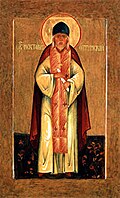 Nectarius of OptinaVenerable · Elder of OptinaApr 29
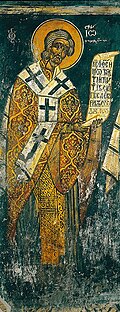 John Kaloktenes the NewSaint · Metropolitan of ThebesApr 29
- Three Hundred Laz MartyrsHoly New MartyrsApr 29
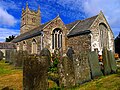 EndelientaVenerable · Hermit of CornwallApr 29
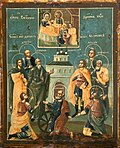 Nine Martyrs of CyzicusHoly Martyrs · Martyrs of CyzicusApr 29
- Sopater of BereaApostle · of BereaApr 29
- AemilianusMartyr · Martyr of CirtaApr 29
- Agapius and CompanionsHoly MartyrsApr 29
- Agapius and SecundinusHoly HieromartyrsApr 29