Venerable
Vitalis of Gaza
Hermit of Gaza
Egyptian hermit who died around 625, venerated as a saint in the Orthodox and Catholic Churches.
- Feast
- April 22old style May 5
- Reposed
- 6257th century
- Place
- Alexandria
- Order
- Venerables
Life
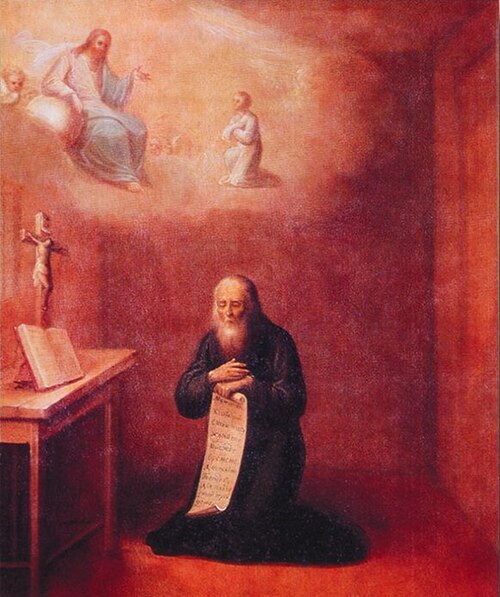
Saint Vitalis was a monk from Gaza who lived in Alexandria at the beginning of the seventh century and is known for his hidden works of mercy toward fallen women. His Life forms part of the Life of Saint John the Almsgiver, Patriarch of Alexandria, written by Leontius of Neapolis. He is commemorated on 22 April and on 11 January.
Vitalis was a monk of the monastery of Abba Seridos near Gaza. At the age of sixty he went to Alexandria, where he began to preach repentance to the prostitutes of the city. By day he worked as a day labourer, asking twelve copper coins, of which he spent one on food and gave the rest to a woman, asking that she keep from sin that night. He stayed in her room and spent the night in prayer, and in the morning, as he left, he asked her to tell no one. His preaching bore fruit, and many women left that life, some becoming nuns, others marrying or finding honest work.
The townspeople, however, believed that Vitalis gave himself nightly to vice. They despised him, spat at him, sometimes struck him. They told him to marry and leave monasticism, so as not to shame the other monks. To hide his deed Vitalis admitted that monks too have bodily weaknesses. Patriarch John did not believe the accusation and shamed the accusers. One day on the threshold of a brothel a young man struck him in the face and rebuked him for his imagined sin. The old man told him that he too would receive a blow and cry out until all Alexandria came running. Then Vitalis shut himself in his cell, where he fell asleep in the Lord. At that time a demon appeared to the young man and struck him on the cheek, saying: "Take the blow the monk Vitalis sent you." The young man fell under demonic power, tore his clothes and cried out, and many came. When Vitalis died, the women he had helped told the truth, and at his burial, according to tradition, they carried candles and lanterns behind his body. In the West he is regarded as a patron of day labourers.
Commemorated the same day April 22
 SoterSaint · Bishop of RomeApr 22
 Caius of RomeSaint · Bishop of RomeApr 22
 Theodore of SykeonVenerable · Byzantine asceticApr 22
 Leonides of AlexandriaMartyr · Father of OrigenApr 22
 Nathanael of CanaApostle · Disciple from Cana of GalileeApr 22
 Opportuna of MontreuilVenerable · Abbess of MontreuilApr 22
 Platon of Banja LukaHieromartyr · Bishop of Banja LukaApr 22
 EpipodiusMartyr · Martyr of LyonApr 22
- Eustathius MalakhovskyNew Martyr · Priest in TurkestanApr 22
- Abdiesus and AzadanHoly MartyrsApr 22
- AcepsimasHieromartyr · Bishop of HnaitaApr 22
 Altfrid of MünsterSaint · Bishop of MünsterApr 22