Right-Believing
Wigstan
Prince of Mercia
Prince of Mercia, son of Wigmund and Ælfflæd, who died around 840 and is venerated as a saint.
- Feast
- June 1old style June 14
- Reposed
- 8499th century
Life
Saint Wigstan (also called Wystan) was a prince of Mercia, grandson of kings, who chose the spiritual life over a crown and was murdered in the year 849 for opposing an unlawful marriage. He is venerated as a saint in England, and the Church commemorates him on 1 June.
Life
Little is known of him. He was the son of Wigmund and Ælfflæd, both descended from kings of Mercia: Wigmund was the son of King Wiglaf, and Ælfflæd the daughter of King Ceolwulf I. According to the Croyland Chronicle, Wigmund died of dysentery before his father, so Wigstan was heir to the kingdom. When Wiglaf died, around 839-840, Wigstan declined the throne, preferring monastic life, and became a cleric. The king became Beorhtwulf, possibly his great-uncle and, according to some sources, his godfather.
Beorhtwulf wished to marry Wigstan's widowed mother, Ælfflæd, to his own son Beorhtfrith. Wigstan opposed it, because the two were too closely related. According to William of Malmesbury, Beorhtfrith then visited him, apparently in peace, and as they greeted each other struck him on the head with the hilt of his dagger, and a servant ran him through with a sword. He was killed on 1 June 849. The place of his death is disputed, with Wistanstow in Shropshire and Wistow in Leicestershire both named. The chronicler Florence of Worcester records that after the killing a column of light rose to heaven and stayed visible for thirty days.
Veneration
His body was taken to Repton Abbey in Derbyshire, where his grandfather Wiglaf was also buried. At Wigston, where it rested overnight, a small shrine was set up that became the site of an annual pilgrimage on his feast, replaced in 1086 by a chapel and later by a church. His cult grew and Repton became a centre of pilgrimage, and in the time of King Cnut the Great his relics were moved to Evesham Abbey. His life was written in the early twelfth century by Dominic of Evesham. The abbey was destroyed at the Dissolution of the Monasteries in the sixteenth century.
His name survives in Wigston, Wistow and Wistanstow, and a four-mile pilgrimage route, St Wistan's Way, leads from the church of Saint Wistan in Wistow to Wigston.
Commemorated the same day June 1
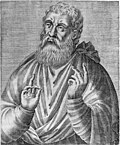 Justin MartyrMartyr · Christian apologistJun 1
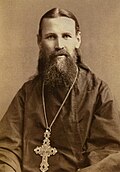 John of KronstadtRighteous · Archpriest at Kronstadt and preacherJun 1
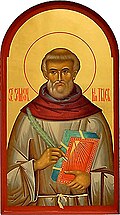 Simeon of TrierVenerable · Recluse at TrierJun 1
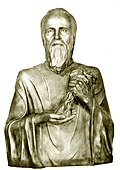 Agapetus of the Kyiv CavesVenerable · Physician of the Kyiv Caves LavraJun 1
 CrescentinusMartyr · Patron of UrbinoJun 1
 Proculus of BolognaMartyr · Martyr of BolognaJun 1
 Clarus of AlbiSaint · First bishop of AlbiJun 1
 Dionysius of GlushitsaVenerable · Icon painter and monastery founderJun 1
 Reverianus of AutunHieromartyr · Bishop of AutunJun 1
 Fortunatus of SpoletoSaint · Parish priest near SpoletoJun 1
- Thespesius of CappadociaMartyrJun 1
- Ammon, Zeno, Ptolemy, Ingenuus and TheophilusHoly Martyrs · Martyrs of AlexandriaJun 1