Martyr
Wite
A saint of Dorset, honored as a martyr, of the 9th century.
Life
Saint Wite (Witta, Candida) was a Saxon holy woman from Dorset in England, killed by marauding Danes around 831. She is regarded as patron of Dorset and is commemorated on 1 June, also celebrated as Dorset Day.
According to local tradition she lived as a hermit on the secluded cliffs of the coast, in prayer and solitude, and kept fires as beacons to guide sailors. She was killed by Danish Vikings during a raid on Charmouth, which agrees with a landing at Charmouth of about fifteen thousand Vikings around 831 and the battle of Chardown Hill. The chroniclers William of Worcester and John Gerard recorded her history in the fifteenth and sixteenth centuries, and Thomas More noted the custom of offering cakes or cheese to the saint on her feast day. Some have suggested that she was Saint Candida, the fourth-century martyr of Carthage, or the Breton Saint Gwen Teirbron.
Her shrine at the church of Whitchurch Canonicorum holds her relics and is the only such shrine to survive in a parish church in England, having escaped desecration in the Reformation. In 1900 the tomb was opened and found to hold a lead casket with the bones of a small woman about forty years old, and the Latin inscription saying that here lie the remains of Saint Wite. Pilgrims honour her to this day, and there is a holy well associated with her at nearby Morcombelake, first documented in 1630. In the Middle Ages her shrine was one of England's most visited pilgrimage sites, with openings for diseased limbs and separate ones for lepers.
Commemorated the same day June 1
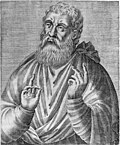 Justin MartyrMartyr · Christian apologistJun 1
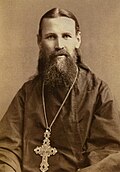 John of KronstadtRighteous · Archpriest at Kronstadt and preacherJun 1
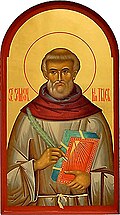 Simeon of TrierVenerable · Recluse at TrierJun 1
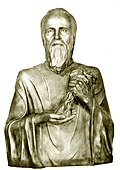 Agapetus of the Kyiv CavesVenerable · Physician of the Kyiv Caves LavraJun 1
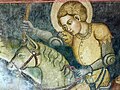 CrescentinusMartyr · Patron of UrbinoJun 1
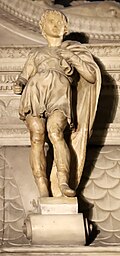 Proculus of BolognaMartyr · Martyr of BolognaJun 1
- WigstanRight-Believing · Prince of MerciaJun 1
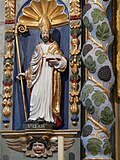 Clarus of AlbiSaint · First bishop of AlbiJun 1
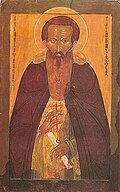 Dionysius of GlushitsaVenerable · Icon painter and monastery founderJun 1
 Reverianus of AutunHieromartyr · Bishop of AutunJun 1
 Fortunatus of SpoletoSaint · Parish priest near SpoletoJun 1
- Thespesius of CappadociaMartyrJun 1