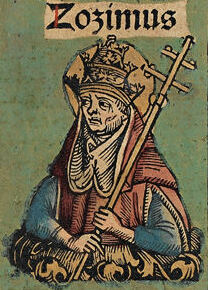
Saint
Zosimus of Rome
Bishop of Rome
Bishop of Rome from 417 to 418, involved in the dispute between the sees of Arles and Vienne.
- Feast
- December 26old style January 8
- Reposed
- 4185th century
- Place
- Rome
- Order
- Hierarchs
Life
Zosimus of Rome was bishop of Rome from 18 March 417 until his death on 26 December 418. His ministry lasted less than two years, in a time of turmoil for the Church of the West. Orthodox calendars commemorate him on 26 December.
According to the Liber Pontificalis he was a Greek, and his father's name was Abramius. Nothing is known of his life before his election. He was consecrated bishop of Rome on 18 March 417, with Patroclus, bishop of Arles, present at the service.
In those years Zosimus gave Patroclus metropolitan rights over the Gallic provinces of Viennensis and Narbonensis I and II, and made him a kind of papal vicar for all Gaul. The bishops of Vienne, Narbonne and Marseilles saw in this an infringement of their rights, and the dispute remained unsettled until the pontificate of Pope Leo the Great.
More important was the matter of the Pelagians. Caelestius, a disciple of Pelagius who had been condemned under Pope Innocent I, came to Rome to appeal to the new bishop. In the summer of 418 Zosimus gathered the Roman clergy in the basilica of Saint Clement, and Caelestius gave a confession of faith which the bishop accepted. Zosimus also received a confession from Pelagius and wrote to the bishops of Africa, reproving them for acting too hastily. The synod at Carthage under Aurelius answered that he had been deceived by heretics. After the African council of 1 May 418 and the measures of Emperor Honorius against the Pelagians, Zosimus issued the letter called the Tractoria, in which Pelagianism and its authors were finally condemned.
At the same time he fell into a dispute with the African bishops over the priest Apiarius of Sicca. Excommunicated by his own bishop, Apiarius appealed directly to Rome, and Zosimus relied on a canon he believed to belong to the Council of Nicaea. In truth the canon was from the Council of Sardica, and the African copies of the Nicene canons did not contain it. The disagreement went on after his death.
Zosimus reposed at Rome and was buried in the basilica of Saint Lawrence outside the Walls.
Commemorated the same day December 26
 Dionysius of RomeSaint · Bishop of RomeDec 26
 Nicodemus of TismanaVenerable · Founder of Tismana MonasteryDec 26
 Euthymius of SardisHieromartyr · Metropolitan of SardisDec 26
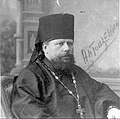 Leonid AntoshchenkoHieromartyr · Bishop of MariDec 26
- Augusta ZashchukVenerable Martyr · Abbess and schemanunDec 26
- Isaac Bobrakov of OptinaVenerable Martyr · Last abbot of old OptinaDec 26
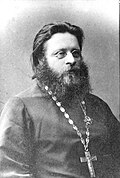 Michael CheltsovHieromartyr · Archpriest and theologianDec 26
- Constantine of SynadaVenerableDec 26
- Constantine the RussianVenerable Martyr · HieromonkDec 26
- AbadiuHieromartyr · Bishop of AntinoeDec 26
- Agrippina LesinaMartyrDec 26
- Alexander KrylovHieromartyrDec 26