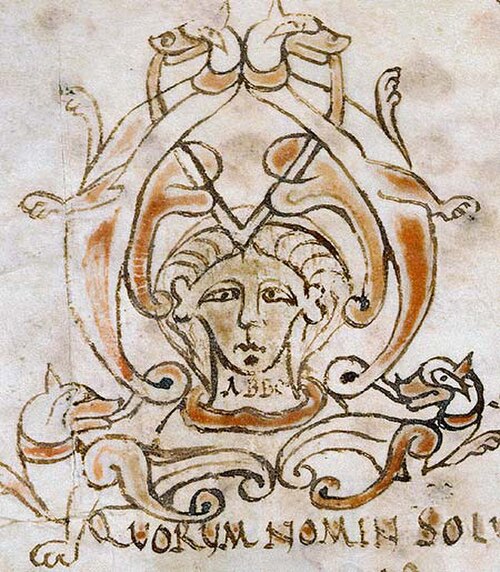
Venerable Martyr
Abbo of Fleury
Abbot of Fleury Abbey
Monk and abbot of Fleury Abbey near Orléans, who died in 1004 at La Réole.
- Feast
- November 13old style November 26
- Reposed
- 100411th century
- Place
- La Réole
- Order
- Martyrs
Life
Saint Abbo of Fleury, venerable, was a monk and abbot of the monastery of Fleury, near Orléans, a scholar of broad mind, killed in 1004 at La Réole, while trying to quell a quarrel between monks. He is commemorated on 13 November.
Beginnings
Abbo was born around 945, near Orléans, and was raised in the Benedictine monastery of Fleury. He studied at Paris and Reims, devoting himself to philosophy, mathematics and astronomy. For two years, between 985 and 987, he stayed in England, mostly at the newly founded monastery of Ramsey, helping Archbishop Oswald of York to strengthen monastic life, and was there abbot and head of the school. He returned to Fleury in 988 and, after the death of Abbot Oilbold, was chosen abbot. Another monk, who had the support of the king and of the bishop of Orléans, contested the choice, and the matter took on importance for the whole country; Gerbert of Aurillac, later Pope Sylvester II, decided in Abbo’s favour.
In the affairs of the Church
As abbot, Abbo took part in the affairs of his time. He attended the synod of Verzy, near Reims, where Archbishop Arnulf of Reims was tried for treason and deposed, to make way for Gerbert. He had disputes, between 988 and 994, with Arnulf of Orléans over monastic reform. In 996 King Robert II the Pious sent him to Rome, to ward off a papal interdict over his marriage to Bertha of Burgundy. On the way he met Pope Gregory V, a fugitive from Rome, driven out by the antipope John XVI; between the pope and the abbot there was great esteem and affection. The king’s request for dispensation was rejected. Abbo succeeded in bringing Arnulf back to the see of Reims. He had great influence in calming the unrest and fear of the end of the world that was widespread in Europe in the year 1000.
His writings
When he was in England he learned of the martyrdom of Edmund of East Anglia, in 870, and wrote in Latin a Passion about him. He also wrote a Latin grammar for his English pupils, three poems to Dunstan, a simplification of the computus for the date of Easter, a summary of the Lives of the popes, a Collection of canons, a commentary on the “Calculus” of Victorius of Aquitaine, and other treatises and letters. Much of his writing is in the Patrologia Latina. A biography from his time was written by his disciple, Aimoin.
Martyrdom
In 1004 he tried to put order in the monastery of La Réole, in Gascony, by moving there some monks of Fleury. The disputes grew, fighting began between the two parties, and when he tried to separate them, he was pierced in the side with a lance. He hid the wound, reached his cell and died in the arms of his faithful disciple Aimoin, who left an account of his labours and virtues. The miracles at his tomb soon made the people of Gaul regard him as a saint and martyr, although Rome does not seem to have canonized him officially. The Orthodox Church venerates him as a saint.
Commemorated the same day November 13
 John ChrysostomSaint · Archbishop of ConstantinopleNov 13
 Nicholas I of RomeSaint · Bishop of RomeNov 13
 Mitre of AixSaint · Saint of Aix-en-ProvenceNov 13
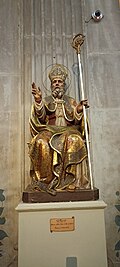 Floridus of Città di CastelloSaint · Bishop of Città di CastelloNov 13
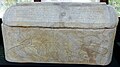 Leonianus of VienneVenerableNov 13
- Arcadius of AfricaMartyrNov 13
- Amantius of Città di CastelloVenerableNov 13
- AnthusaSaintNov 13
- Antoninus of Caesarea in PalestineHieromartyrNov 13
- Arcadius, Paschasius, Probus and Eutychian of AfricaHoly Martyrs · Martyrs of AfricaNov 13
- BairrfionnSaintNov 13
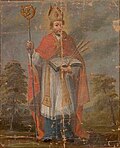 Brice of ToursSaint · Bishop of ToursNov 13