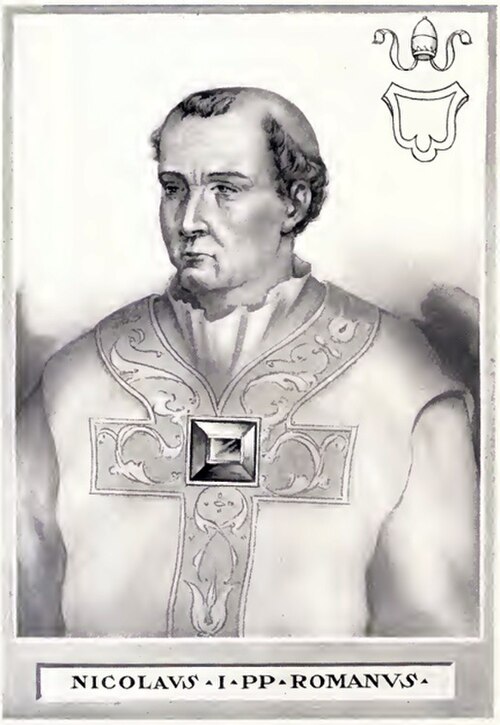
Saint
Nicholas I of Rome
Bishop of Rome
Bishop of Rome from 858 to 867, involved in the dispute with Patriarch Photius of Constantinople.
- Feast
- November 13old style November 26
- Reposed
- 8679th century
- Place
- Rome
- Order
- Hierarchs
Life
Nicholas I of Rome was bishop of Rome from 24 April 858 until his death on 13 November 867. He was one of the most forceful men to occupy the see of Rome in the ninth century, and in the West he is called Nicholas the Great. He is venerated as a saint in the Roman Catholic Church, with his feast on 13 November, but he is not commemorated in the Orthodox calendars: in the East he is remembered above all for his quarrel with Saint Photius of Constantinople. His name is tied to the defence of marriage, to the mission among the Bulgarians, and to claims of papal authority which deepened the division between East and West.
Early life
He was born in Rome, of a noble family, the son of the defensor Theodore, and received a careful education. Pope Sergius II made him a subdeacon and Pope Leo IV a deacon. After the death of Pope Benedict III in April 858, Emperor Louis II came to Rome to influence the election. Nicholas was elected on 24 April, consecrated and enthroned in the Basilica of Saint Peter in the presence of the emperor.
Governing the West
Nicholas held a very high view of his office. He taught that the bishop of Rome has authority over all Christians, even kings, in matters of faith and morals, and he called powerful bishops to account. Archbishop John of Ravenna, accused of oppressing his clergy and the people and of forging documents against the Roman see, was excommunicated and in the end submitted. Bishop Rothad of Soissons, deposed by a local synod, appealed to Rome, and Archbishop Hincmar of Reims had to accept that such appeals were allowed. Historians disagree about how far Nicholas relied on the forged Pseudo-Isidorian decretals.
The best-known case was that of King Lothair II of Lotharingia, who left his wife Theutberga to marry Waldrada. Bishops of his kingdom approved the union, and the papal legates, bribed by the king, agreed with them. Nicholas annulled these decisions, deposed the archbishops of Cologne and Trier who had supported the king, and held firm even when the emperor's army besieged Rome and the pope took refuge for two days in Saint Peter's. He also defended the freedom of marriage in the case of Judith, daughter of Charles the Bald, and urged mercy for her.
The quarrel with Photius
In the East, Nicholas took the side of Patriarch Ignatius, who had been removed from Constantinople, and refused to recognise Photius, whom the Church of Constantinople holds to have been elected lawfully and canonically in 858. The legates he sent to the council of 861 did not follow his instructions. In 862 he wrote to the Eastern patriarchs calling on them to reject Photius, and in 863 a Roman synod excommunicated him. To the Greeks this was an attempt to rule over the Church, not to hold the first place of honour among equals.
The dispute also touched Bulgaria. Prince Boris, baptized in secret by the Byzantine rite after the empire's invasion, grew unhappy with Byzantine influence and in 866 sent Nicholas 106 questions on Christian teaching and discipline. The pope answered them and sent missionaries led by Bishop Formosus. Rome did not grant the Bulgarians the independent church they wanted, and in 870 a council in Constantinople gave it to them. In 867 a synod headed by Photius condemned Nicholas, his claims of primacy, his pressure on Bulgaria and the addition of the Filioque to the Creed in parts of the Latin Church. News of this reached Rome only after his death.
Last years and veneration
Nicholas encouraged missions, among them the work of Ansgar in the North, rebuilt and endowed churches in Rome and led a life of ascetic piety. He reposed on 13 November 867. After his death he was regarded as a saint in the West, and his cult was confirmed by Pope Urban VIII in 1630. For Orthodox readers he remains a figure of history: a pious and able pope, but one whose policy toward Photius and Bulgaria stands at the beginning of the long estrangement between Rome and Constantinople.
Commemorated the same day November 13
 John ChrysostomSaint · Archbishop of ConstantinopleNov 13
 Abbo of FleuryVenerable Martyr · Abbot of Fleury AbbeyNov 13
 Mitre of AixSaint · Saint of Aix-en-ProvenceNov 13
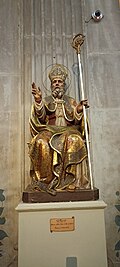 Floridus of Città di CastelloSaint · Bishop of Città di CastelloNov 13
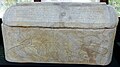 Leonianus of VienneVenerableNov 13
- Arcadius of AfricaMartyrNov 13
- Amantius of Città di CastelloVenerableNov 13
- AnthusaSaintNov 13
- Antoninus of Caesarea in PalestineHieromartyrNov 13
- Arcadius, Paschasius, Probus and Eutychian of AfricaHoly Martyrs · Martyrs of AfricaNov 13
- BairrfionnSaintNov 13
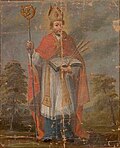 Brice of ToursSaint · Bishop of ToursNov 13