Saint
Acacius of Amida
Bishop of Amida
Bishop of Amida in Mesopotamia from 400 to 425, mentioned by the historian Socrates Scholasticus.
Life
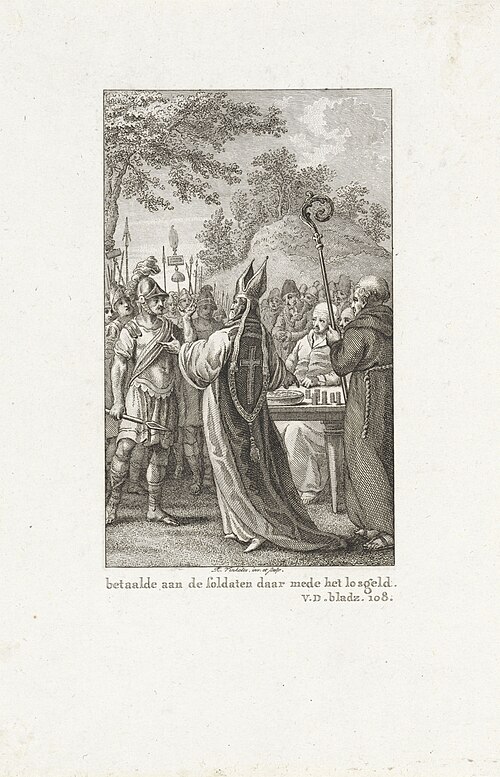
Saint Acacius was bishop of the city of Amida in Mesopotamia (now in Turkey) between 400 and 425, in the time of the emperor Theodosius II. No writings of his survive, but his life is known from the Church History of Socrates Scholasticus. The Church remembers him as a merciful bishop who sold the sacred vessels of the Church to ransom prisoners.
Around 422, during a war with the Persians, the Roman soldiers would not return to the Persian king the captives they had taken; there were nearly seven thousand of them, perishing from hunger in the devastated land of Azazene and held at Amida. The king of Persia was greatly distressed by this. Acacius, moved by compassion, judged that the matter must not be neglected. He gathered his clergy and said to them: Our God, my brethren, needs neither dishes nor cups, for he neither eats nor drinks nor lacks anything. Since the Church has, from the gifts of the faithful, many vessels of gold and silver, it is fitting to sell them, so that with the money we may ransom the prisoners and feed them. He ordered the vessels melted down and, with the proceeds, paid the soldiers a ransom; he fed the captives, clothed them and supplied what they needed for the journey, then sent them back to their king.
This deed astonished the Persian king, as if the Romans conquered their enemies by kindness as well as by valour. It is said that the king wished to see Acacius and that, at the order of Theodosius, his wish was granted. Many wrote speeches of praise for the emperor, and the empress Eudocia composed a poem. According to other sources, in 419 Acacius had been sent by Theodosius II as envoy to the Christians of Persia; during his visit the synod of Seleucia-Ctesiphon was held (420), where the Persian Church accepted the decisions of the First Ecumenical Council and of other local councils.
He fell asleep in 425. His feast is on 9 April.
Commemorated the same day April 9
- Maximus of AlexandriaSaint · Patriarch of AlexandriaApr 9
 Bademus of PersiaVenerable Martyr · Abbot and martyr of PersiaApr 9
 Raphael, Nicholas and Irene of LesbosHoly Venerable MartyrsApr 9
 Aedesius of AlexandriaMartyr · Brother of Saint AmphianApr 9
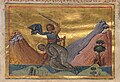 Eupsychius of CaesareaMartyr · Martyr of Caesarea in CappadociaApr 9
- ClementinaMartyrApr 9
- Theodore of CrowlandVenerable Martyr · Abbot of CrowlandApr 9
- Abdies of PersiaMartyrApr 9
- AedhachSaintApr 9
- Bat Emas of PersiaMartyrApr 9
- BroganSaintApr 9
 Casilda of ToledoVenerableApr 9