Martyr
Eupsychius of Caesarea
Martyr of Caesarea in Cappadocia
Christian of Caesarea in Cappadocia, executed in 362 for causing the destruction of a pagan temple.
Life
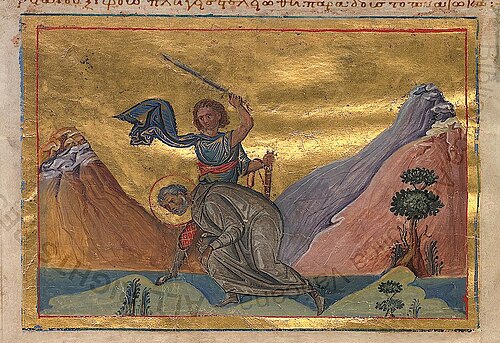
Holy Martyr Eupsychius of Caesarea in Cappadocia was a young nobleman and Christian, put to death in the year 362, in the time of the emperor Julian the Apostate, for causing the destruction of a pagan temple. The Orthodox Church commemorates him on 9 April (22 April by the new calendar, in the Serbian Church).
The story seems to have a historical basis, although later writers have embellished it with additions. Sozomen, in his Church History, writing of the reign of Julian (361 to 363), says that Eupsychius, a nobleman of Caesarea in Cappadocia, newly married, was put to death for causing the destruction of the temple of Tyche. Arethas of Caesarea also mentions that Eupsychius was newly married when he was martyred. The Serbian source adds that he was of high birth but raised from childhood in the Christian spirit, and that he took as wife a girl of good standing. He did not live a single day of married life, for at the time of his wedding there was a festival with sacrifice to the idol Fortuna. Eupsychius, with his companions, went and smashed all the idols in the temple and destroyed the temple too.
The emperor was angry with all the citizens of Caesarea, and those who took part in the destruction of the temple were punished with death or exile. According to the Serbian source, Julian ordered that the culprits be put to the sword, that many Christians be taken into the army, that a huge tribute be laid on the Christians, that the temple of Fortuna be rebuilt at their expense, and that the city be deprived of its honorary name Caesarea, given by Claudius, and be called again by its former name, Mazaca.
Later redactions expanded the story. The Synaxarion of Constantinople says that he was put on the rack and cruelly flogged, then an angel appeared and strengthened him. He was hung again on the rack and scourged until his inner organs were exposed, then beheaded. Instead of blood, milk and water flowed, a strange sight for all to see. According to the Serbian source, he was bound to a tree and tormented harshly, then beheaded, in 362.
Commemorated the same day April 9
- Maximus of AlexandriaSaint · Patriarch of AlexandriaApr 9
 Acacius of AmidaSaint · Bishop of AmidaApr 9
 Bademus of PersiaVenerable Martyr · Abbot and martyr of PersiaApr 9
 Raphael, Nicholas and Irene of LesbosHoly Venerable MartyrsApr 9
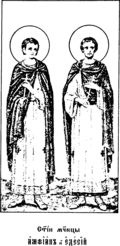 Aedesius of AlexandriaMartyr · Brother of Saint AmphianApr 9
- ClementinaMartyrApr 9
- Theodore of CrowlandVenerable Martyr · Abbot of CrowlandApr 9
- Abdies of PersiaMartyrApr 9
- AedhachSaintApr 9
- Bat Emas of PersiaMartyrApr 9
- BroganSaintApr 9
 Casilda of ToledoVenerableApr 9