Martyr
Acacius the Younger
Martyr put to death under Emperor Licinius for openly confessing Christ; commemorated on 10 August.
Life
Holy Martyr Acacius the Younger lived at the end of the third century and the beginning of the fourth and was put to death in the time of the emperor Licinius because he openly confessed faith in Christ. The Church commemorates him on 10 August (28 July by the old calendar).
What is known of his life is mainly the torments he endured, which did him no harm. He was young in years when he was brought to trial before Licinius. After confessing Christ he was hung up and scraped, then handed over to the governor Terentius, who cast him into a cauldron full of boiling pitch, oil and vinegar, but the saint, guarded by the grace of God, remained unharmed. After that he was forced to run behind the governor, who was travelling to Apamea and Apollonia. Arriving there, he was led into a pagan temple and, by his prayer, all the idols there were smashed.
He was then brought before the tribune Zilikintios, who, seeing that the martyr stood firm in faith in Christ, ordered him to be beaten severely. He then set a lion on him, but the martyr remained untouched and was beaten again. Then, by the tribune's order, he was thrown into a blazing furnace, but remained unburned. The tribune, thinking the furnace had cooled, drew near to make sure, but in that same moment he was burned, and his body turned to ashes.
After the tribune's death the martyr was handed over for judgment to Posidonius, who, seeing that he remained unshaken in faith in Christ, put him in heavy chains and sent him to the city of Miletus. There he was led into a temple of idols and commanded the idols to fall to the ground and shatter. He was then led to another temple and did the same. For this his head was cut off, and instead of blood milk flowed from his neck. So the blessed sufferer received the crown of martyrdom. His holy relics were taken by the presbyter Leontius, who anointed them with myrrh and buried them in the city of Synada.
Commemorated the same day July 28
 Victor ISaint · Bishop of RomeJul 28
 ProchorusApostle · One of the Seven DeaconsJul 28
- ParmenasApostle · One of the Seven DeaconsJul 28
 Irene of ChrysobalantonVenerable · Abbess of Chrysobalanton MonasteryJul 28
- Nicolas the DeaconApostle · One of the Seven DeaconsJul 28
 Paul of XeropotamouVenerable · Athonite asceticJul 28
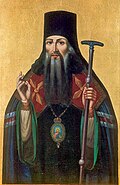 Pitirim of TambovSaint · Bishop of TambovJul 28
- Ardwyne of CepranoSaintJul 28
- Acatius of MiletusMartyr · Martyr of MiletusJul 28
- Anastasia KamaevaVenerable MartyrJul 28
- Anthimus of SaraiHieromartyrJul 28
- Arefa EremkinMartyrJul 28