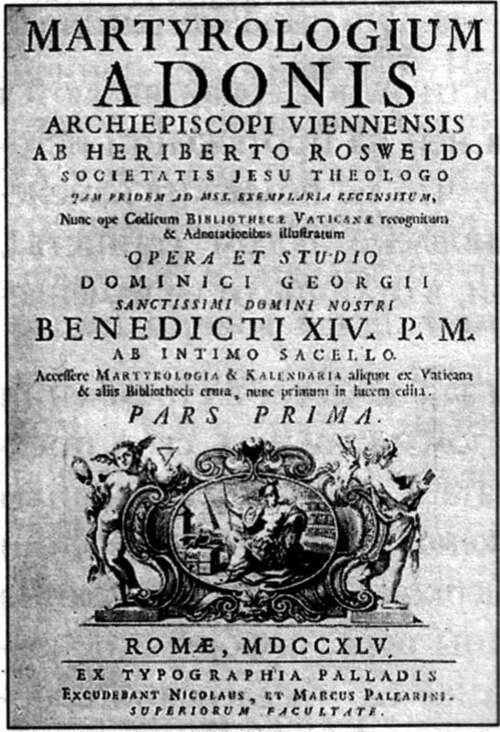
Saint
Ado of Vienne
Archbishop of Vienne
Frankish churchman and writer, archbishop of Vienne from 850 to 874, author of hagiography and history.
- Feast
- December 16old style December 29
- Reposed
- 8759th century
- Place
- Vienne
- Order
- Hierarchs
Life
Saint Ado was archbishop of Vienne from 860 until his repose on 16 December 874 (in other sources, 875), a Frankish cleric, chronicler and writer. He belonged to the Carolingian renaissance and is venerated as a saint, commemorated on 16 December.
He was born into a noble Frankish family, around 800. In youth he was sent to be taught, first by Sigulf, abbot of Ferrières, then by Marcward, abbot of Prüm, near Trier; at Ferrières he had as teacher Lupus Servatus, one of the most learned men of the time. He received the Benedictine rule. After Marcward's death, in 853, he went to Rome, where he stayed nearly five years, then to Ravenna, where he discovered an old martyrology, used as the basis of his own, later enlarged with extracts from Bede. On his return, Remigius, archbishop of Lyon, gave him the parish of Saint-Romain near Vienne. In August or September 860 he was elected and consecrated archbishop of Vienne, despite the opposition of Count Girard and his wife Bertha. As early as 22 October 860 he took part in the council of Tousy, near Toul, and in 861 he received the pallium from Pope Nicholas I. As archbishop he carried out reforms, bringing order into monastic and parish life, and held a synod at Vienne in 870.
He defended Queen Theutberga, unjustly cast off by King Lothair II, at the time when bribed papal legates allowed the king to marry his concubine Waldrada; Ado informed the pope, who annulled that permission. He kept up a wide correspondence; several letters survive and show an energetic man of wide connections and great influence.
His chief works are a martyrology and a chronicle, Chronicon de sex aetatibus mundi (Chronicle of the Six Ages of the World), which comes down to 869, based on Bede and on other usual sources, in which world history is divided, after Augustine, into six ages and which traces the unity of the Roman Empire in the succession of emperors, from Constantine to Charlemagne and his heirs. The scholar Wilhelm Wattenbach thought it a history written from the point of view of authority. He also wrote a book on the miracles of Saint Bernard of Vienne, a life of Saint Desiderius, bishop of Vienne (died 608), and a life of Saint Theuderius. He was buried in the Church of the Apostles at Vienne, now the church of Saint Peter, the usual burial place of the archbishops of Vienne.
Commemorated the same day December 16
 HaggaiProphet · The ProphetDec 16
 Adelaide of BurgundyRight-Believing · Holy Roman EmpressDec 16
 TheophanoRight-Believing · Empress, wife of Leo VIDec 16
 Eberhard of FriuliRight-Believing · Duke of FriuliDec 16
 Nicholas II ChrysobergesSaint · Patriarch of ConstantinopleDec 16
 Sophia of SuzdalVenerable · Former Grand Princess of MoscowDec 16
 AlbinaMartyr · Virgin martyrDec 16
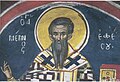 Memnon of EphesusSaint · Metropolitan of EphesusDec 16
 Job of ManiavaVenerable · Founder of Maniava SketeDec 16
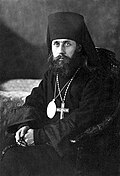 Arkady OstalskyHieromartyr · Bishop of BezhetskDec 16
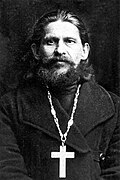 Peter ZinovyevHieromartyr · PriestDec 16
- Irenion of GazaSaint · Bishop of GazaDec 16