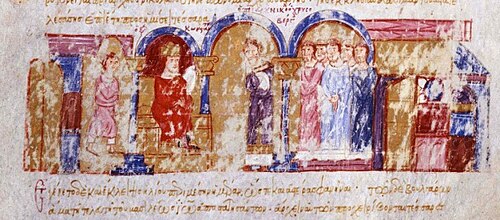
Saint
Nicholas II Chrysoberges
Patriarch of Constantinople
Ecumenical Patriarch of Constantinople from 980 to 991.
- Feast
- December 16old style December 29
- Reposed
- 99110th century
- Place
- Constantinople
- Order
- Hierarchs
Life
Saint Nicholas II Chrysoberges was patriarch of Constantinople from 980 (according to other sources 979 or 984) until his death on 16 December 991 (according to other sources 12 October 991 or 992). In his time the Christianisation of Kievan Rus was completed and the first metropolitan of Rus, Michael I of Kyiv, was appointed. He is commemorated on 16 December, by both the Orthodox and the Catholic Church.
Monk and patriarch "Chrysoberges" means in Greek "golden rod" or "golden chain", a nickname that became a family name of the Byzantine aristocracy. As metropolitan of Adrianople he received in 976 the deathbed confession of the emperor John I Tzimiskes. He was a monk, linked with Mount Olympus in Bithynia (the nickname "Olympites" from a manuscript list) and with Athanasius the Athonite, founder of the Great Lavra; he himself mentioned this in a document of 989. A thirteenth-century historian, Theodore Skutariotes, ascribes to him the founding of the monastery of Smilakiou there. After about two years' vacancy, which followed the resignation of Anthony III, he became patriarch in the spring of 980, at the time of the end of the first revolt of Bardas Skleros against Basil II (according to Yahya of Antioch, he was appointed on 12 February 979). His family gave many clergy to the Church of Constantinople and Antioch in the next two centuries. According to one source he tried to win tax privileges from the emperor Basil II while he was busy with civil war.
One of Nicholas's first ordinations was that of Symeon the New Theologian as priest, around 980, according to the Serbian source when the latter was chosen abbot of the monastery of Saint Mamas in Constantinople. In the following years he dealt with monastery and property affairs: in 987 he confirmed an agreement between the monasteries on Latros, and in 989 he entrusted the decayed monastery of the Mother of God Gomatou near Hierissos to the Great Lavra, with the duty of maintaining it, limits on alienating its property and keeping the rights of the patriarchate. The boundary between church and imperial jurisdiction was not without conflict: in the matter of the monastery of Piperata, the imperial court rejected his request to recognize it as a patriarchal monastery. Other documents and letters show he took the part of the people against oppression and ordered monastic life. Seals of his survive, with the title of archbishop of Constantinople, New Rome.
Axion Estin In 980, in his patriarchate, the Archangel Gabriel is believed to have appeared in the guise of a monk to the disciple of a monk at the Monastery of the Pantocrator on Mount Athos (according to the Serbian source, at Karyes, in the Holy Mountain). The monk reported that the angel sang a new verse of the matins hymn, recorded by him on a slate still held at the monastery; according to the Serbian source the angel taught the monks to praise the Most Holy Theotokos with the song "It Is Truly Meet", written on a slab in the church of a cell, called since then the cell "Axion Estin". Nicholas received the relic in the cathedral of Hagia Sophia. "It Is Truly Meet" is still sung in Orthodox services.
Rus Nicholas ordained the first metropolitan of Rus, Michael, whom he sent to Rus, in 988, with six bishops and many lesser clergy for the Christianisation of the Russians (the Greek source calls Michael the Syrian). According to the Primary Chronicle, the envoys of Prince Vladimir were led, at the emperor's order, to a festal service in Hagia Sophia; the connection of this account with Nicholas's patriarchate is usually made, but the details of the patriarch's personal participation are not equally attested by the sources. According to one source, in 991 Patriarch Nicholas served in Hagia Sophia in the presence of Emperor Basil II and the Russian envoys. In the same year, learning that Vladimir had sent an envoy to the pope of Rome, Nicholas wrote letters to Prince Vladimir and to Metropolitan Michael. He was patriarch, according to one source, twelve years and eight months.
Commemorated the same day December 16
 HaggaiProphet · The ProphetDec 16
 Adelaide of BurgundyRight-Believing · Holy Roman EmpressDec 16
 Ado of VienneSaint · Archbishop of VienneDec 16
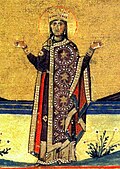 TheophanoRight-Believing · Empress, wife of Leo VIDec 16
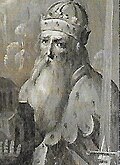 Eberhard of FriuliRight-Believing · Duke of FriuliDec 16
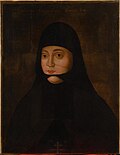 Sophia of SuzdalVenerable · Former Grand Princess of MoscowDec 16
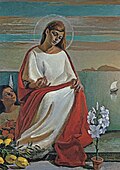 AlbinaMartyr · Virgin martyrDec 16
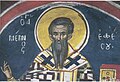 Memnon of EphesusSaint · Metropolitan of EphesusDec 16
 Job of ManiavaVenerable · Founder of Maniava SketeDec 16
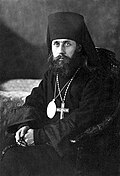 Arkady OstalskyHieromartyr · Bishop of BezhetskDec 16
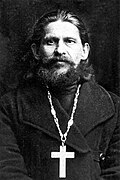 Peter ZinovyevHieromartyr · PriestDec 16
- Irenion of GazaSaint · Bishop of GazaDec 16