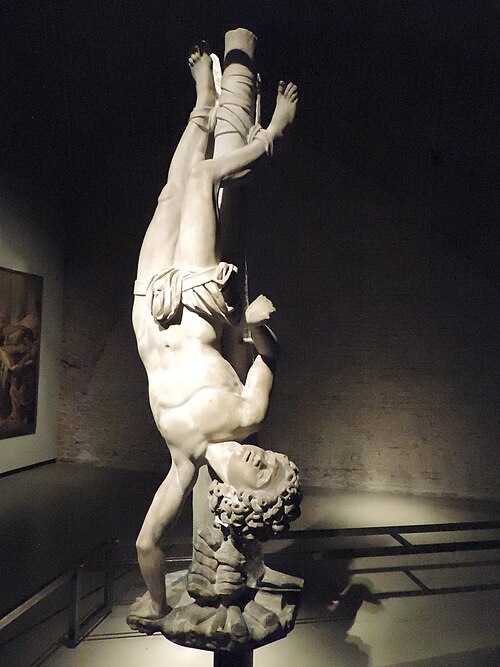
Martyr
Agapitus of Praeneste
Martyr of Praeneste
Youth of about sixteen from Praeneste, condemned to death for his Christian faith under Emperor Aurelian.
Life
The Holy Martyr Agapitus of Praeneste (now Palestrina, in Lazio) was, according to tradition, a youth of about fifteen or sixteen, condemned to death for the Christian faith in the time of the emperor Aurelian, around 273 or 274 (the date is not certain). His feast is on 18 August.
Life and martyrdom
According to one account, he was born around 258 at Praeneste, probably in the noble Anicia family, and went as a young man to Rome to study Roman law; there he learned of the life of Christ and His preaching, and decided to devote his life to the faith, to renounce the worship of the Roman gods and, as a consequence, to live as a fugitive because of the Roman persecution.
It is said that, seized in the persecution of Aurelian, he was tortured; the Roman Martyrology of 1586 says that, being fifteen years old and burning with love for Christ, by Aurelian's order he was stretched on the rack and beaten long with raw scourges; then, under the prefect Antiochus, he suffered still more cruel torments, and at last, exposed to lions and receiving no harm, he received the crown by beheading. The beasts would not touch him, and so he was beheaded, in the arena of Palestrina.
Veneration
Agapitus is mentioned in the ancient martyrologies, among them the Hieronymian and that of Fulda. Because of doubts regarding the details of his martyrdom, some of which were related in earlier editions of the Roman Martyrology, editions from the end of the twentieth century give only: "In Palestrina, Lazio, Saint Agapitus, martyr." Around the fifth century Pope Felix III built a basilica in his honour on the supposed site of his suffering. His relics were kept in the basilica, and a cemetery grew around it. At some uncertain date the relics were moved to the present cathedral of Palestrina; some of them were taken to Besancon and other places in Europe. He was honoured in the Tridentine calendar by a commemoration added to the Mass and the canonical hours on the day within the octave of the Assumption, and in the General Roman Calendar of 1960 the celebration of Saint Agapitus appears as a commemoration at the ordinary weekday Mass.
Commemorated the same day August 18
 Sixtus IIISaint · Bishop of RomeAug 18
 George I of ConstantinopleSaint · Patriarch of ConstantinopleAug 18
 Florus and LaurusHoly MartyrsAug 18
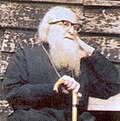 Sophrony of EssexVenerable · Archimandrite, disciple of SilouanAug 18
- John V of ConstantinopleSaint · Patriarch of ConstantinopleAug 18
 Inan of IrvineSaintAug 18
- Agapius of GalatistaHieromartyr · HieromonkAug 18
- Christopher of TrebizondVenerable · Abbot of Soumela MonasteryAug 18
- Daig of InniskeenSaint · Bishop of Inis-Caoin-DeaghaAug 18
- Aeonius of ArlesSaint · Bishop of ArlesAug 18
- AgonSaintAug 18
- Andrea GuasconiSaintAug 18