Saint
Inan of Irvine
Patron of Irvine in Scotland, a Celtic monk who according to tradition came from Iona and died at Irvine in the 9th century.
- Feast
- August 18old style August 31
- Reposed
- 9009th century
- Place
- Irvine
Life
Saint Inan (Evan, Innan) is the patron saint of Irvine, in Ayrshire, Scotland, where, according to tradition, he lived in the ninth century. He is said to have come as a monk of the Celtic Church from Iona Abbey and to have died at Irvine, where his tomb was reputed to have been the site of miracles. Our sources show him as a saint with local Scottish veneration and show no Orthodox glorification. The day 28 September on the record is not supported by the source; the source says that Tennant's Day, the fair of Beith, was formerly held on the saint's day, 18 August, and is now held in June.
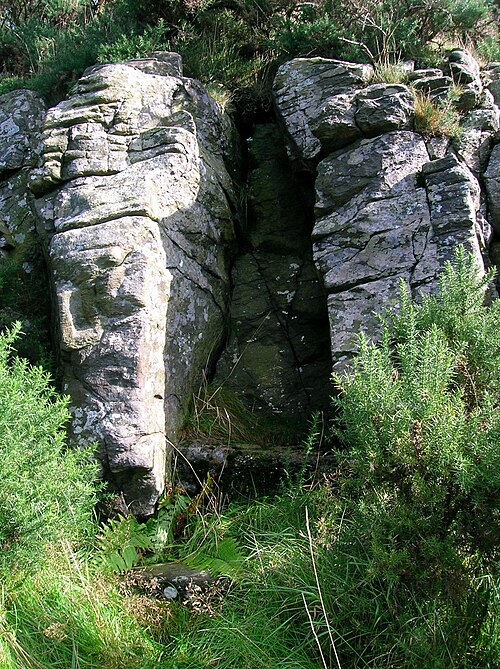
Although he is said to have been a hermit, according to tradition Inan often visited the town of Beith, at Cuff Hill with its rocking stone and other prehistoric monuments. A cleft in the west front of Lochlands Hill is still called Saint Inan's Chair and is said to have been used by the saint as a pulpit; a crystal-clear holy well existed nearby, now sadly covered over (2006). In the nineteenth century Colonel Mure of Caldwell made an unsuccessful search for the saint's writings, which were said to be preserved in the library of Bonci, archbishop of Pisa. He is said to have preached to the assembled people from the chair on the hill and stayed on the site of Cauldhame Cottage. At that time the population was sparse and the people lived not in Beith but up on the Bigholm. The saints of old went where the people were, and also tended to go where there had been worship of heathen gods.
The well is usually known as Saint Mary's or the Chapel Well. Close to it stood probably a chapel dedicated to Saint Mary; above the opening is a small stone plaque stating Saint Inan's Well AD 839. Saint Inan's chapel stood on the site of the old church in Beith, the dedication later being changed to Saint Mary the Virgin. After journeying to Rome and Jerusalem, he is said to have settled at Irvine, where he died, and where his tomb was much frequented on account of the reputed miracles wrought at it. A Saint Inan's well is said once to have existed at Fullarton, south of the present harbour. Dundonald Castle once had a chapel dedicated to Saint Inan. Inchinnan (Renfrewshire) is said to signify Inan's Isle.
His name has several recorded spellings: Evan, Innan, Inin, Innen, Enen, Ennen and latterly Annan, Anan, Tinnan or even Tennant. He is remembered in local names such as Southannan, near Fairlie, where there was another church or chapel bearing his name; a charter of James IV in 1509 confirms the donation of John, Lord Sempill, of a perpetual Mass there. Saint Ninian and Saint Inan may in fact be one and the same person. Beith's annual fair, called Tennant's or Saint Tinnan's Day, was formerly held on the saint's day, 18 August; in ancient times it is said to have been held on Cuff Hill and was famous for its show, cadgers' races and sale of horses.
Commemorated the same day August 18
 Sixtus IIISaint · Bishop of RomeAug 18
 George I of ConstantinopleSaint · Patriarch of ConstantinopleAug 18
 Agapitus of PraenesteMartyr · Martyr of PraenesteAug 18
 Florus and LaurusHoly MartyrsAug 18
 Sophrony of EssexVenerable · Archimandrite, disciple of SilouanAug 18
- John V of ConstantinopleSaint · Patriarch of ConstantinopleAug 18
- Agapius of GalatistaHieromartyr · HieromonkAug 18
- Christopher of TrebizondVenerable · Abbot of Soumela MonasteryAug 18
- Daig of InniskeenSaint · Bishop of Inis-Caoin-DeaghaAug 18
- Aeonius of ArlesSaint · Bishop of ArlesAug 18
- AgonSaintAug 18
- Andrea GuasconiSaintAug 18