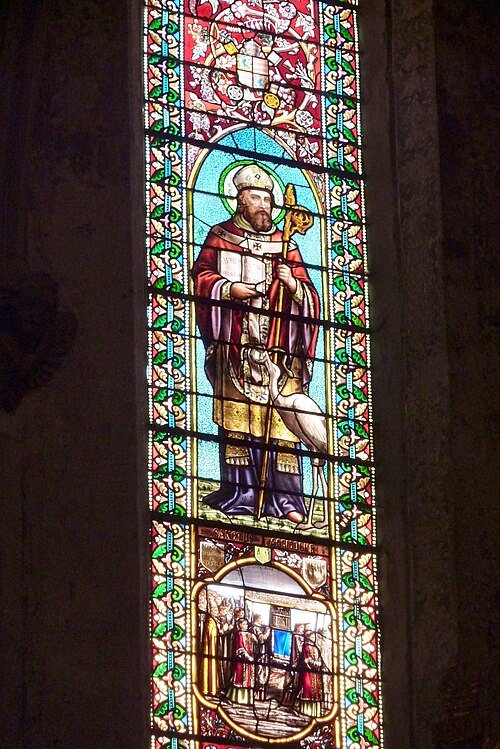
Saint
Agricola of Avignon
Bishop of Avignon
Bishop of Avignon, by tradition the son of Saint Magnus, also a bishop of the city.
- Feast
- September 2old style September 15
- Reposed
- 7007th century
- Place
- Avignon
- Order
- Hierarchs
Life
Saint Agricola (Agricol, Agricolus) was bishop of Avignon from about 660 to 700. According to tradition he was the son of Saint Magnus, also a bishop of the city. His name means "tiller of the field". He is commemorated on 2 September.
At sixteen he was tonsured a monk at the Abbey of Lérins, where he was ordained archdeacon. At thirty, his father Magnus summoned him to Avignon and made him coadjutor. When Magnus died in 660, Agricola succeeded him as bishop. He built a church in the city, staffed by the monks of Lérins, and a convent for Benedictine nuns. He was a well-known preacher, famous for charity and for defending the poor and the sick before the civil authorities. He died of natural causes and was succeeded by Saint Veredemus.
A charter of 919 records that the saint had been buried in the church of Saint Peter in Avignon. At the end of the eleventh century Bishop Arbert of Avignon made a donation to the abbey of Saint-Agricol. The church of Saint-Agricol, probably built in the twelfth century, was made collegiate in 1321 by Pope John XXII, one of the Avignon popes, who gave it a statute and revenues. It is possible that the relics were then moved from Saint-Pierre to Saint-Agricol, where they are still kept.
His veneration grew in the fourteenth and fifteenth centuries. Fifteenth-century documents say that by his blessing an invasion of storks was driven away, and for this reason he is regarded as patron of storks and shown with them. In 1647 Archbishop César Argelli declared him patron of the city of Avignon. Devotees pray to him for fine weather, good harvests and rain in time of drought, and also against plague and misfortune of every kind.
Commemorated the same day September 2
 Mammes of CaesareaMartyrSep 2
 NonnosusVenerable · Prior of Monte SoratteSep 2
 Antoninus of PamiersMartyr · Apostle of the RouergueSep 2
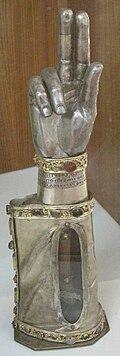 Justus of LyonSaint · Bishop of LyonSep 2
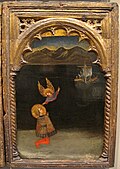 Elpidius the CappadocianVenerable · Abbot of CappadociaSep 2
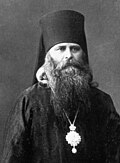 Barsanuphius LebedevHieromartyr · Bishop of KirillovSep 2
- Maxima of RomeMartyrSep 2
 Vladimir MorinskyHieromartyr · PriestSep 2
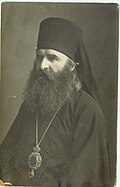 Damascene TsedrikHieromartyr · Bishop of GlukhovSep 2
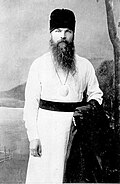 German RyashentsevHieromartyr · Bishop of VyaznikiSep 2
- Hieu of TadcasterVenerable · Abbess of TadcasterSep 2
- John MelnichenkoHieromartyr · PriestSep 2