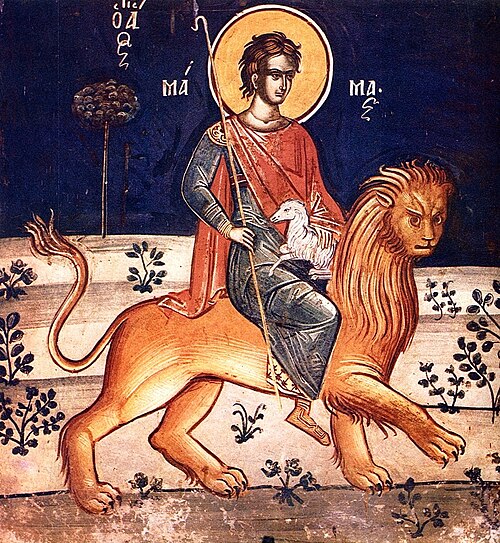
Martyr
Mammes of Caesarea
Young martyr of the third century, martyred at Caesarea, son of Sts. Theodotus and Rufina.
- Feast
- September 2old style September 15
- Reposed
- 2753rd century
- Place
- Kayseri
- Order
- Martyrs
Life
Saint Mammes of Caesarea, martyr, was a young martyr of the third century, in the time of the emperor Aurelian. His parents, Theodotus and Rufina, also died for the faith. He is venerated in East and West, from Cyprus and Lebanon to Spain and France. His feast is on 2 September, and in Lebanon also on 15 September.
Birth and childhood
He was born in prison, where his Christian parents, Theodotus and Rufina, were held for the faith. The sources do not agree on the place: some say Caesarea in Cappadocia, others Gangra in Paphlagonia. His father died soon after, and his mother at the birth. According to tradition, a rich and pious widow, Ammia, dreamed of an angel who urged her to go to the prison, to bury the departed and to take the infant. The same source tells that the child's first word was mama, from which his name is said to derive. Ammia raised him in the Christian spirit and died when he was fifteen.
Martyrdom
At school he showed unusual quickness and did not hide his faith, but confessed it before his peers, mocking the idols. He was seized and tormented. Finally he was brought before the emperor Aurelian, who demanded that he renounce Christ at least with his lips. His answer, in the Prologue, was that he would not renounce Christ with heart or lips. He was beaten, burned with torches and thrown into the sea, but an angel saved him and led him to a high mountain near Caesarea. There he struggled in solitude and prayer, and the wild beasts grew tame at his holiness. It is said that wild goats came to him, that he milked them and made cheese, which he ate and sold, giving the money to the poor.
Found again by his persecutors, he was thrown into prison, where, according to one account, forty prisoners had died of hunger. At his prayer a dove flew in at the window and fed them all, and at night the doors opened. Mammes stayed, desiring to give his life for Christ. He was led out into the arena, where the beasts not only did not touch him but fawned on him. According to tradition, a lion took him on its back. In the end a pagan priest pierced him with a trident, and he gave his soul into the hands of God. An alternative tradition says that he was devoured by lions. Many healings came from his relics.
Veneration
The centre of his cult was Caesarea, then, with the translation of his relics, Langres in France, where the cathedral bears his name and he is patron of the diocese. In Cyprus he is venerated above all at Morphou, in the monastery that bears his name, the third in importance among the places of worship of the Cypriots after Saint Barnabas and Saint Andrew the Apostle. The popular story in Cyprus presents him as a poor hermit who escaped taxes by riding a lion. In Lebanon many churches and monasteries bear his name, among them Deir Mimas, where each year the feast of 15 September is held. Through the pilgrims to Santiago de Compostela his cult spread also to Spain, where he is San Mamés. In Russia he was regarded as patron of sheep and goats. One source says that, according to the Primary Chronicle, the Rus who came to Constantinople in the time of Oleg stopped at the church of Saint Mamas.
Commemorated the same day September 2
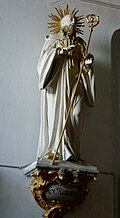 NonnosusVenerable · Prior of Monte SoratteSep 2
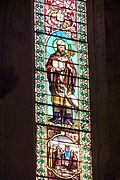 Agricola of AvignonSaint · Bishop of AvignonSep 2
 Antoninus of PamiersMartyr · Apostle of the RouergueSep 2
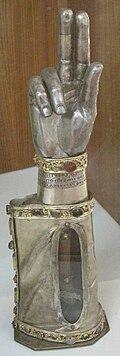 Justus of LyonSaint · Bishop of LyonSep 2
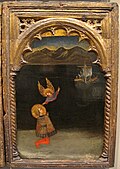 Elpidius the CappadocianVenerable · Abbot of CappadociaSep 2
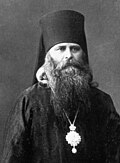 Barsanuphius LebedevHieromartyr · Bishop of KirillovSep 2
- Maxima of RomeMartyrSep 2
 Vladimir MorinskyHieromartyr · PriestSep 2
 Damascene TsedrikHieromartyr · Bishop of GlukhovSep 2
 German RyashentsevHieromartyr · Bishop of VyaznikiSep 2
- Hieu of TadcasterVenerable · Abbess of TadcasterSep 2
- John MelnichenkoHieromartyr · PriestSep 2