
Saint
Justus of Lyon
Bishop of Lyon
Thirteenth bishop of Lyon, later a hermit in Egypt; remembered on 2 September.
- Feast
- September 2old style September 15
- Reposed
- 3904th century
- Place
- Wadi El Natrun
- Order
- Hierarchs
Life
Saint Justus was the thirteenth bishop of Lyon, in Gaul, in the second half of the fourth century, and later a hermit in the desert of Scetis in Egypt. He is venerated by both the Orthodox and the Catholic Church and is commemorated on 2 September. His life shows a gentle and learned shepherd who left the bishop's throne for repentance and quiet.
Early life
He was born in the first half of the fourth century at Tournon on the Rhône, into a noble family, said by some sources to be that of the governor of the Vivarais. His parents had him taught under Saint Paschasius, bishop of Vienne. After Paschasius died, his successor Claudius made Justus a deacon of the Church of Vienne. A biographer close to his time describes him as a meek and merciful man.
Bishop of Lyon
Around 350 the see of Lyon fell vacant, and Justus, by some accounts against his own wish, was chosen bishop. As bishop of the capital of Gaul he took part in the Council of Valence in 374, which dealt with the discipline of clergy and faithful, and in the Council of Aquileia in 381, called by Saint Ambrose of Milan. There the bishops Palladius and Secundianus, supported by the empress Justina, had asked for a general council to review the Church's position on Arianism. Ambrose agreed only to a provincial council, but the emperor Gratian allowed other bishops to attend. Justus was one of the thirty-two bishops who rejected Arianism and condemned Palladius and Secundianus.
He kept up a correspondence with Ambrose, of which only two letters from Ambrose survive, explaining passages of Scripture. They suggest that Justus was respected for his learning.
The hermit
After the council, a man in a violent fit of madness killed several people with a sword in the streets of Lyon and took refuge in the church. The bishop defended the right of sanctuary despite threats. In the end a city magistrate persuaded him to hand the man over, giving his word that the matter would be treated according to law. But as soon as the man left the church, the mob seized him and put him to death.
Justus held himself guilty and unworthy to lead the community any longer. He resigned his see and withdrew to his house at Tournon, and his friends could not persuade him that he was not to blame, nor make him change his mind. One night he left in secret, by way of Arles to Marseille, intending to sail for Alexandria. The cathedral lector Viator suspected his plan and followed him, caught up with him at Marseille, and the two sailed together for Egypt.
In the desert of Scetis, some tens of miles south of Alexandria, they joined the community of monks there, at the time led by Saint Macarius of Egypt, a disciple of Saint Anthony the Great. The monks lived in separate cells and gathered only on Saturdays for the Divine Liturgy. They lived by the work of their hands and on the poorest food, and their life was made of fasting, prayer, silence and night vigils.
Some years later a pilgrim who had recognised Justus brought the news to Lyon. The people, eager to have their bishop back, sent a delegation led by the priest Antiochus. He found Justus but could not persuade him to return, and later Antiochus himself became bishop of Lyon.
Repose and veneration
Saint Justus fell asleep in the Lord in a monastery of Scetis, near present-day Wadi El Natrun, in the year 389 or 390. Antiochus brought his body, and that of Viator, who died shortly after him, back to Lyon and laid them in the Basilica of the Maccabees, which he then renamed after Saint Justus. At the end of the fourth century a monk of Lyon wrote the saint's life. His name is borne today by one of the principal churches of Old Lyon.
Commemorated the same day September 2
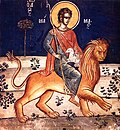 Mammes of CaesareaMartyrSep 2
 NonnosusVenerable · Prior of Monte SoratteSep 2
 Agricola of AvignonSaint · Bishop of AvignonSep 2
 Antoninus of PamiersMartyr · Apostle of the RouergueSep 2
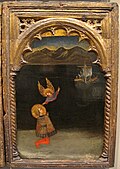 Elpidius the CappadocianVenerable · Abbot of CappadociaSep 2
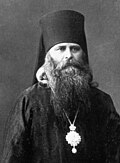 Barsanuphius LebedevHieromartyr · Bishop of KirillovSep 2
- Maxima of RomeMartyrSep 2
 Vladimir MorinskyHieromartyr · PriestSep 2
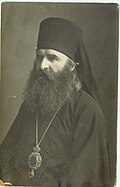 Damascene TsedrikHieromartyr · Bishop of GlukhovSep 2
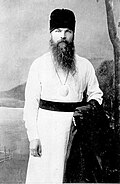 German RyashentsevHieromartyr · Bishop of VyaznikiSep 2
- Hieu of TadcasterVenerable · Abbess of TadcasterSep 2
- John MelnichenkoHieromartyr · PriestSep 2