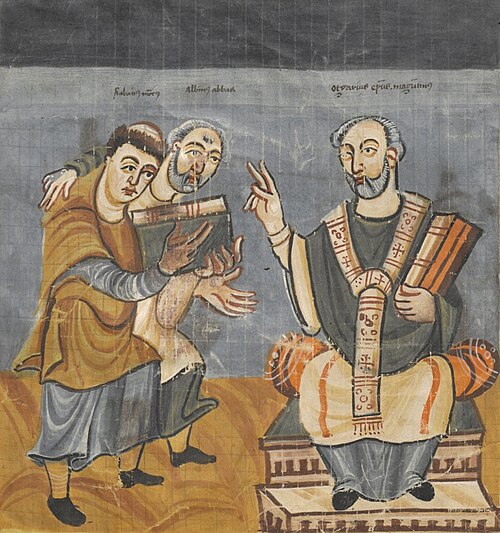
Venerable
Alcuin of York
An English scholar, abbot at Tours and teacher at the court of Charlemagne, reposed in 804.
- Feast
- May 20old style June 2
- Reposed
- 8049th century
- Place
- York
- Order
- Venerables
Life
Saint Alcuin of York (Ealhwine, Albinus, Flaccus) was an Anglo-Saxon scholar, poet and teacher from York in Northumbria, abbot of Marmoutier at Tours and teacher at the court of Charlemagne. He was born around 735 and reposed on 19 May 804. The Orthodox calendar commemorates him among the saints of the West before the Great Schism.
Almost nothing is known of his parents and family. He seems to have been related to Saint Willibrord. He came to the cathedral of York in the time of Archbishop Ecgbert, a disciple of Bede, in the golden age of the school there, renowned for the liberal arts, literature, science and religious learning. He became a teacher in the 750s, and after Æthelbert became archbishop in 767 he headed the school; he was a deacon but was never ordained priest. Although there is no evidence that he took monastic vows, he lived as a monk. In 781 King Ælfwald of Northumbria sent him to Rome to ask the pope to confirm York's status as an archbishopric, and on the way home he met Charlemagne at Parma.
Reluctantly persuaded to join Charlemagne's service, he later wrote that the Lord was calling him to the service of King Charles. From 782 he was master of the Palace School at Aachen, where until 790 he taught Charlemagne himself, his sons Pepin and Louis, and the young clerics of the palace chapel, bringing assistants from York and raising the standard of learning, so that the school came to be called the school of Master Albinus. As adviser he objected to forcing pagans to be baptised on pain of death: faith, he wrote, is a free act of the will, not a forced one. His arguments prevailed, and in 797 Charlemagne abolished the death penalty for paganism. He composed the epitaph of Pope Adrian I, set over his tomb at Rome before Charlemagne's coronation on Christmas Day 800.
In 790 he returned to England, then Charlemagne called him back to help in the fight against the Adoptionist heresy in Toledo; at the Council of Frankfurt in 794 he upheld the orthodox doctrine against Felix of Urgel. His letters and his poem on the Viking attack on Lindisfarne in 793 are the only significant contemporary account of that event.
In 796, in his sixties, Charlemagne put him in charge of Marmoutier Abbey at Tours, with the understanding that he would be available when the king needed counsel. There he encouraged the monks' work on the Carolingian minuscule script, ancestor of modern Roman letters, which he preserved and restored to purity of form. Four Bibles were prepared at Tours under his direction in 799 to 801, and he left theological, moral and grammatical works and poems. He reposed on 19 May 804, ten years before the emperor, and was buried at the church of Saint Martin.
Commemorated the same day May 20
 LydiaApostle · Seller of Purple in PhilippiMay 20
 Dovmont of Pskov (Timothy)Right-Believing · Prince of PskovMay 20
 Æthelberht of East AngliaRight-Believing · King of East AngliaMay 20
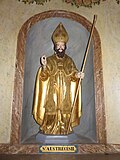 Austregisilus of BourgesSaint · Bishop of BourgesMay 20
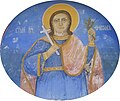 ThalelaeusMartyr · Physician of AegaeMay 20
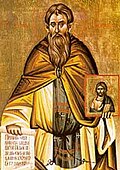 Stephen of PiperiVenerable · Saint of the Serbian ChurchMay 20
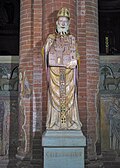 Theodore of PaviaSaint · Bishop of PaviaMay 20
 PlautillaApostleMay 20
- Thalassius the LibyanVenerable · Abbot in the Libyan desertMay 20
- Alexander of AegaeMartyrMay 20
- AnastasiusSaint · Bishop of BresciaMay 20
- AquilaMartyr · Martyr of ThebaisMay 20