Hieromartyr
Alexander Ivanovsky
Priest
Priest martyred in 1919 at Vishnivtsi in Ukraine.
Life
Saint Alexander of Ivanivka (Alexander Alexeevich Balanutsa, 1874 - night of 27 August 1919), hieromartyr, was an Orthodox priest of the village of Ivanivka, Oleksandriia district, Kherson province, killed by Makhno's men in the church cellar. He is a locally venerated saint of the Oleksandriia eparchy of the Ukrainian Orthodox Church; he is not a saint venerated throughout the whole Church. The text of our source breaks off in the middle of the chapter on canonization, at the decision of the Holy Synod of the Ukrainian Orthodox Church of 9 December 2020, so we cannot cite more about it.
Beginnings
He was born in 1874 in a large family: he had three brothers (Michael, Eugene, Nicholas) and a sister, Maria. He probably did not come from the clerical estate, since, after primary school, he entered the teachers' seminary of Novyi Buh, where teachers for parish schools were trained. After a year he was dismissed, in 1896, not for poor progress (he had studied diligently and well), but because his aspirations were toward the spiritual life and service of God. After this he entered the Dormition monastery of Odessa as a novice, hoping to devote his life to God. But the young man had a talent as reader and singer, which the diocesan leadership noticed, and in 1896, by resolution of His Grace Tikhon, bishop of Elisavetgrad, he was appointed acting psalm-reader at the church of Saint Arsenius in the village of Maximovka (Chorbyna), Elisavetgrad district, and also teacher at the parish school there. He accepted the appointment with humility. As teacher he was strict but patient, seeking to bring the material thoroughly to the pupils, and his pupils showed a high level of knowledge. His pedagogical work was marked in 1903 with thanks from the diocesan leadership. On 26 July 1906 he was appointed teacher at the model school attached to the Odessa seminary, continuing his teaching path, and deacon at the seminary church of Saint Andrew. He was ordained deacon on 29 August 1906, on the day of the Beheading of the holy Prophet, Forerunner and Baptist John.
Family and priesthood
Before ordination he married Raisa Feodorovna Sharevskaya (born 1881), a graduate in 1896 of the Odessa diocesan school for girls, an orphan. In 1903 she had worked as a teacher at the two-class school of Shamovka, where for diligence and professionalism she was thanked by the diocesan leadership. In the marriage three children were born: the eldest son Nicholas and two daughters, Anna (26 July 1916) and Xenia (6 February 1920). Every year on 30 November, when the memory of the holy Apostle Andrew the First-Called is honored, the day was solemn at the seminary; in the church of Saint Andrew the Divine Liturgy was celebrated in episcopal rite, in which the teacher and deacon Alexander Balanutsa regularly took part. On 15 July 1907 he took part, with Archpriest Michael Marchenko, in the wedding of Lyubov, daughter of the well-known Odessa pastor (now a glorified saint) the righteous Jonah Otamansky, with Basil Krupsky, a native of the Elisavetgrad district.
On 10 August 1913 the Holy Governing Synod blessed the opening of a new parish at the newly built church of the Archangel Michael in the village of Ivanivka, Oleksandriia district, Kherson province. On 17 December 1913 the psalm-reader and deacon of the church of Saint Andrew at the Odessa seminary, Alexander Balanutsa, was given the priest's place at the church of Michael in Ivanivka. The ordination took place a few days later in the Transfiguration cathedral of Odessa. He gave himself to the ministry with zeal. At every Liturgy Fr. Alexander delivered a sermon on a Gospel theme, urging parishioners to firm faith, prayer, attendance at church on Sundays and feast days and works of mercy. For several years he served at Ivanivka, winning the respect and love of parishioners. In 1914 the First World War began; many parishioners were mobilized. To the rear came many wounded in need of care. Charitable societies collected money and aid, and every parish tried to make its contribution. Fr. Alexander urged parishioners to support those struck by the war and himself took an active part in collections for the wounded, the sick, prisoners of war and soldiers' widows, which was regularly reported in the "Kherson Diocesan Gazette". In 1917, for holy Pascha, Archbishop Nazarius of Kherson and Odessa awarded Fr. Alexander the skufia. A little later, on 3-4 August of the same year, he was confirmed in the deanery council for the Novohiorhiivsk district of Oleksandriia county for a term of three years, with additional administrative duties.
Martyrdom
The events of the revolution of 1917 and the change of power brought repressions against the clergy, the plundering and closure of churches. In 1919 a wave of killings of clergy swept through the Oleksandriia and Elisavetgrad districts. In the night of 27 August 1919 Fr. Alexander Balanutsa was cruelly killed by Makhno's men in the church cellar, near the church and the house in which he lived with his family and which also held the church school. Before death the priest suffered tortures and beatings and died of the grave injuries received. After the killing the faithful buried the body of Fr. Alexander quickly and secretly in the village cemetery, in an oak coffin, placing inside a small wooden icon of Saint Nicholas the Wonderworker. The place of burial was honored by the locals, and later a cross was placed on it. Five months after his martyric death his daughter Xenia was born in Elisavetgrad. His wife Raisa lived with the children in the village of Oboznivka. Despite the hardships and difficult circumstances of Soviet times, the children received an education: the son Nicholas became a soldier, and the daughters teachers.
Veneration
On 7 August 2020 the honored remains of Fr. Alexander Balanutsa were found. On 9 December 2020, by decision of the Holy Synod of the Ukrainian Orthodox Church, he was placed among the locally venerated saints of the Oleksandriia eparchy, as the title of the source shows; the text breaks off here. Our calendar gives his commemoration on 21 June, 4 August and 27 August.
Commemorated the same day June 21
 Nicholas IIPassion-Bearer · Emperor of RussiaJun 21
 Julian of TarsusMartyrJun 21
 Luarsab II of KartliMartyr · King of KartliJun 21
 Anastasia of SerbiaVenerable · Wife of Stefan NemanjaJun 21
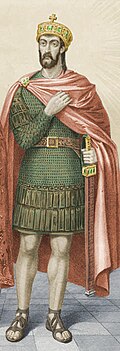 Archil of KakhetiMartyr · Georgian prince of KakhetiJun 21
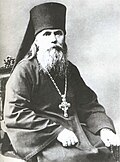 George LavrovConfessor · Archimandrite of Danilov MonasteryJun 21
 Julian of OrtaSaint · DeaconJun 21
 Fyodor IvanovichRight-Believing · Prince of StarodubJun 21
- Vasil DimitrovSaintJun 21
- Abraham of PinegaVenerable · Venerable of PinegaJun 21
- AgofredusVenerableJun 21
- Alexis SkvortsovHieromartyrJun 21