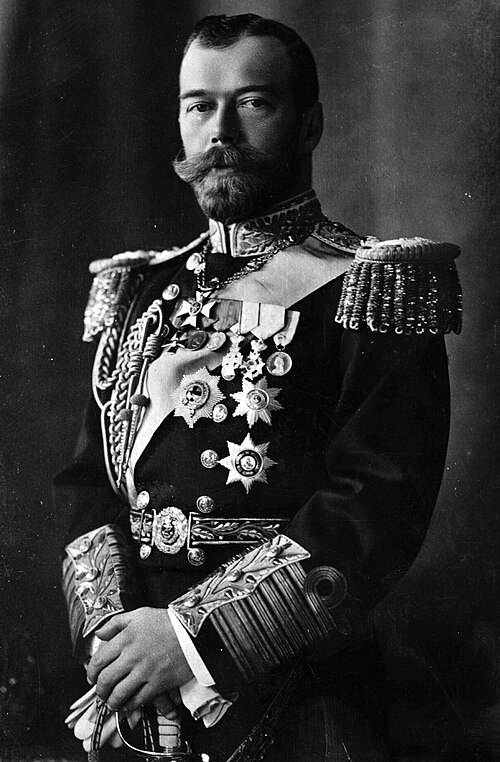
Passion-Bearer
Nicholas II
Emperor of Russia
Last emperor of Russia, killed with his family at Yekaterinburg in 1918.
Life
Saint Tsar Nicholas II was the last emperor of Russia. He reigned from 1894 to 1917 and was killed by the Bolsheviks at Yekaterinburg in the night of 16 to 17 July 1918 (new style), together with his wife, their five children and several faithful servants. The Russian Church honours him as a passion-bearer, for the Christian way in which he accepted suffering and death.
Childhood and accession
He was born on 18 May 1868 (6 May Old Style) at Tsarskoye Selo, the son of Emperor Alexander III. The Orthodox Church in America says that as a child he was deeply religious, guileless and free of malice. In his youth he travelled in the Far East, and at Otsu in Japan a policeman struck at him with a sabre. He was crowned in 1894, after his father's death. He married Princess Alix of Hesse, who received the name Alexandra in Orthodoxy. They had five children: Olga (1895), Tatiana (1897), Maria (1899), Anastasia (1901) and Alexei (1904), the heir to the throne, who suffered from hemophilia.
The reign
At the start of his reign he urged states to reduce their armies and settle disputes peacefully. The Hague Peace Conference of 1899 came from his initiative. His reign also saw hard moments: the Khodynka tragedy of 1896, the lost war with Japan, Bloody Sunday in January 1905 and the revolution that followed. Under pressure he signed the October Manifesto of 1905 and allowed the election of the Duma. In 1915 he took supreme command of the army.
With his family he attended the glorification of Saint Seraphim of Sarov on 19 July 1903, and there he was given a letter written by Seraphim more than seventy years before. The tsar never revealed what it contained. Many historians judge him a weak ruler, and opinion on his political decisions remains divided.
Abdication and suffering
In March 1917, after the February Revolution, he abdicated. The family was held under guard at Tsarskoye Selo, then at Tobolsk, and in the spring of 1918 it was brought to Yekaterinburg, to the Ipatiev House, called "the house of special purpose".
In the night of 16 to 17 July 1918 they were woken and led down to a basement room of the house. There the tsar, the tsarina, their five children and four servants who had chosen to remain with them were killed: Dr Yevgeny Botkin, Anna Demidova, the cook Ivan Kharitonov and the footman Alexei Trupp. The bodies were hidden. According to accounts, the daughters did not die at once.
Veneration
The remains were located and exhumed in the 1990s. Those of the tsar and his immediate family were buried on 17 July 1998, the eightieth anniversary of the killing, in the Cathedral of Saints Peter and Paul in Saint Petersburg.
The Russian Orthodox Church Outside of Russia recognised them as martyrs in 1981. The Russian Orthodox Church inside Russia canonised them in 2000, not as martyrs, since their deaths did not result directly from their confession of faith, but as passion-bearers. The canonisation was disputed, some regarding the tsar as a weak ruler. The Russian calendar commemorates them on 4 July Old Style, that is 17 July New Style.
Commemorated the same day June 21
 Julian of TarsusMartyrJun 21
 Luarsab II of KartliMartyr · King of KartliJun 21
 Anastasia of SerbiaVenerable · Wife of Stefan NemanjaJun 21
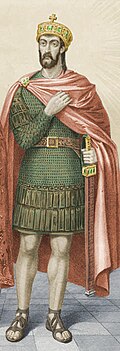 Archil of KakhetiMartyr · Georgian prince of KakhetiJun 21
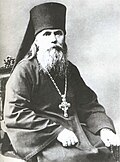 George LavrovConfessor · Archimandrite of Danilov MonasteryJun 21
 Julian of OrtaSaint · DeaconJun 21
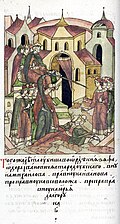 Fyodor IvanovichRight-Believing · Prince of StarodubJun 21
- Alexander IvanovskyHieromartyr · PriestJun 21
- Vasil DimitrovSaintJun 21
- Abraham of PinegaVenerable · Venerable of PinegaJun 21
- AgofredusVenerableJun 21
- Alexis SkvortsovHieromartyrJun 21