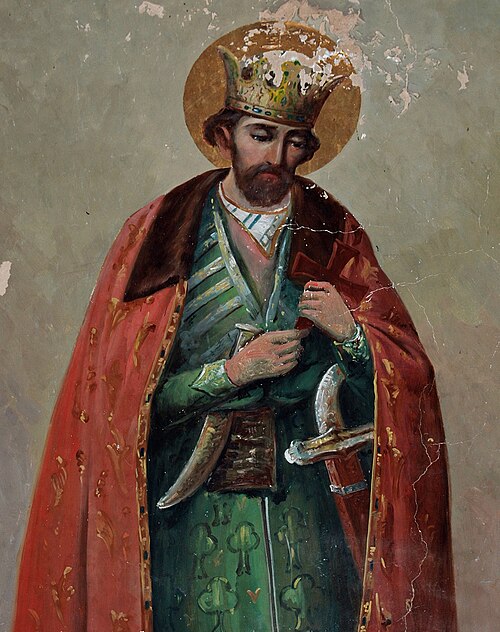
Martyr
Luarsab II of Kartli
King of Kartli
King of Kartli in eastern Georgia from 1606 to 1615; he died in Persian captivity at Shiraz in 1622.
Life
Saint Luarsab II the Martyr was king of Kartli in eastern Georgia from 1606 to 1615, of the Bagrationi dynasty. He died a martyr in Persian captivity at Shiraz in 1622. The Georgian Church declared him a saint and commemorates him on 1 July, the day of his martyrdom. He is also commemorated on 21 June by the old calendar.
Reign
He ascended the throne of Kartli at fourteen, after the sudden death of his father, George X, in 1606. His mother was Princess Tamar Lipartiani. During his minority the country was actually run by the royal tutor Shadiman Baratashvili. When Shah Abbas I drove the Ottoman armies out of eastern Georgia, leaving a Persian force at Tbilisi, he confirmed Luarsab as king. The Ottomans tried to remove him and sent a large army, destroyed in 1609 by the Georgian general Giorgi Saakadze at Tashiskari. After this victory Luarsab again received the citadel of Tbilisi. In 1610 the shah married his sister Tinatin. In late 1611 Luarsab married Makrine, sister of Saakadze, of lesser nobility. The great nobles, led by Shadiman Baratashvili, convinced him that Saakadze was a Persian agent coveting the crown. They made the king divorce Makrine and forced Saakadze to go to Persia. Shah Abbas demanded more loyalty and obedience from the Georgians and encouraged a khan of Kazakh, Mohammad, to trouble the lands of Kartli. In 1612 Luarsab had the khan killed and allied with another Georgian king, Teimuraz I of Kakheti, to face an expected Persian aggression. At the same time he married his sister Khoreshan to Teimuraz.
Captivity and martyrdom
In early 1614 a large Persian army invaded Kakheti, destroying settlements on the way, then Kartli. Luarsab and Teimuraz fled to the kingdom of Imereti in western Georgia, where George III refused to hand over the refugees. Abbas threatened Kartli with ruin, promising peace if Luarsab surrendered. In October 1615 Luarsab surrendered, saying: "If I do not go, he will plunder the lands and move the inhabitants to Persia", to save his kingdom from destruction. Refusing to accept Islam, he was imprisoned first at Astarabad, then near Shiraz, where he stayed some seven years. The Georgians tried to free him through the mediation of Tsar Michael Feodorovich of Russia, but the negotiations gave no result. In 1622, by order of the shah, he was put to death at the fortress of Qal‘eh-ye Golāb in southwest Iran, by strangling, or according to other sources hanged, with two servants, on 21 June (1 July by the civil calendar). Tradition says that heavenly light was seen at his tomb.
Commemorated the same day June 21
 Nicholas IIPassion-Bearer · Emperor of RussiaJun 21
 Julian of TarsusMartyrJun 21
 Anastasia of SerbiaVenerable · Wife of Stefan NemanjaJun 21
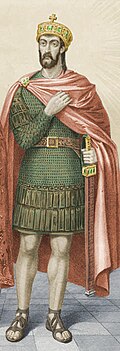 Archil of KakhetiMartyr · Georgian prince of KakhetiJun 21
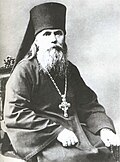 George LavrovConfessor · Archimandrite of Danilov MonasteryJun 21
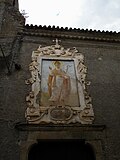 Julian of OrtaSaint · DeaconJun 21
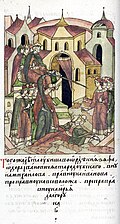 Fyodor IvanovichRight-Believing · Prince of StarodubJun 21
- Alexander IvanovskyHieromartyr · PriestJun 21
- Vasil DimitrovSaintJun 21
- Abraham of PinegaVenerable · Venerable of PinegaJun 21
- AgofredusVenerableJun 21
- Alexis SkvortsovHieromartyrJun 21